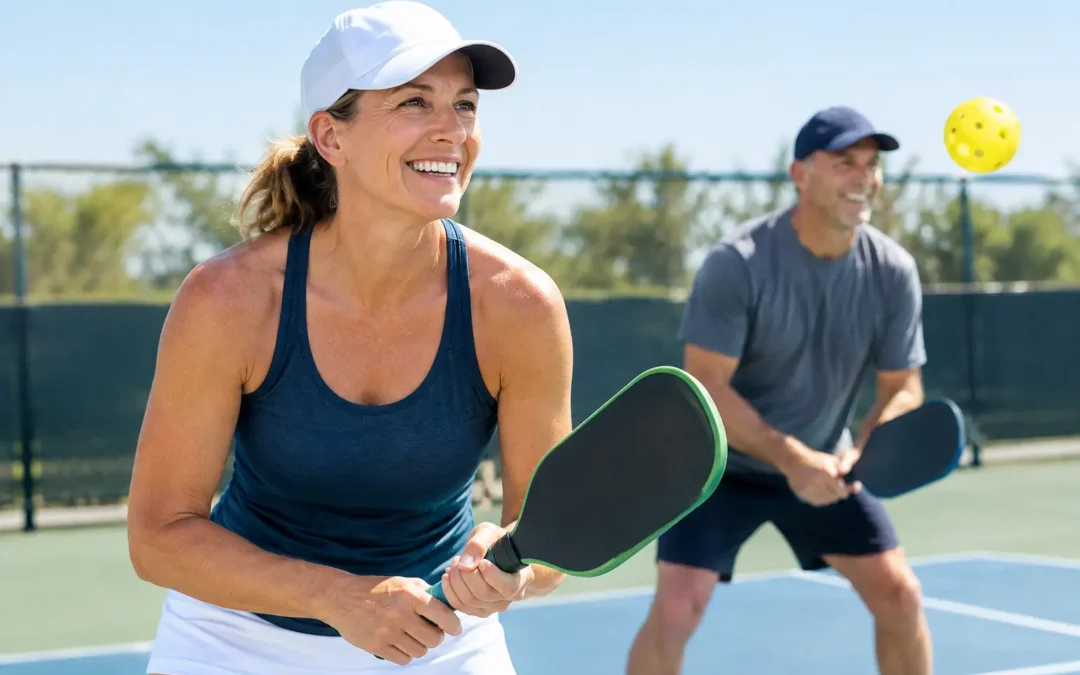
A first-time player may arrive thinking pickleball will be a pleasant way to get moving. Then, somewhere between the first clean serve, a surprising dink exchange, and the post-game conversation at the fence, they start checking the schedule for their next game. That is why adults get hooked on pickleball: it delivers exercise, competition, progress, and connection in one remarkably accessible experience.
For adults across The Hamptons and Eastern Long Island, the appeal is not just that pickleball is popular. It is that the sport meets people where they are. A former tennis player can find a competitive outlet again. A beginner can learn the basics without feeling shut out. Friends, couples, coworkers, and neighbors can share a court even when their athletic backgrounds are very different.
Why Adults Get Hooked on Pickleball: It Feels Good Quickly
Pickleball has a low barrier to entry, but it is not a low-ceiling sport. That combination is powerful. With a paddle, a few fundamental rules, and a little guidance, most new players can get a rally going in their first session. They experience the satisfaction of making contact, placing a ball in play, and contributing to a point almost immediately.
That early success matters. Many adult sports require a long runway before the game becomes enjoyable. Golf can be frustrating before a player develops a repeatable swing. Tennis asks for more court coverage, timing, and stroke production. Pickleball gives players a meaningful taste of the game sooner, especially on the compact court.
The smaller court also makes movement feel manageable. Players still get a legitimate workout, particularly in active doubles play, but they are not constantly sprinting from baseline to baseline. For adults returning to activity, managing old injuries, or looking for a sustainable routine, that balance can be the difference between trying a sport once and building it into the week.
Of course, accessible does not mean effortless. Better players quickly learn that soft-game control, footwork, shot selection, patience, and communication matter. The beauty is that the next improvement is always visible. One week, it is a more reliable serve. The next, it is getting to the kitchen line with purpose instead of rushing forward. Progress is tangible, and that keeps people coming back.
The Game Delivers Competition Without Isolation
Pickleball is competitive, but it is rarely lonely. Doubles is the center of the sport for many adults, and every game creates a small team experience. Partners talk through strategy, cover for each other, celebrate good points, and learn how to reset after mistakes.
That social structure is a major reason pickleball has grown so quickly in seasonal and year-round communities alike. A game gives people a reason to show up, but the relationships often become the reason they stay. Players meet neighbors they may never have encountered otherwise. New residents find an instant entry point into a community. Regular games develop their own rhythm, from morning open play to evening leagues and weekend events.
The format also keeps things moving. Games are short enough to rotate partners and opponents, which means a single session can introduce players to many people. That makes pickleball more welcoming than sports where newcomers can spend long stretches on the sidelines or feel locked into a fixed group.
There is a trade-off here. Open play can feel intimidating when established groups are playing at a higher level, and mismatched games are not always fun for either side. Organized sessions, skill-based clinics, and thoughtfully run events help solve that problem. They give players a clearer path to find the right pace, competition, and people.
A Sport That Gives Adults a Reason to Improve
Many adults are not chasing a professional ranking. They are chasing the feeling of being better than they were last month. Pickleball rewards that mindset because its learning curve never really flattens out.
At the beginning, players focus on keeping the ball in play. Soon they are working on return depth, third-shot decisions, kitchen-line positioning, and the difference between simply hitting a dink and constructing a dink rally. Later, they may train for faster hands, better resets, smarter stacking, or tournament composure.
This creates a satisfying loop: play reveals a weakness, instruction provides an answer, practice makes the answer usable, and the next game offers proof. Adults who enjoy measurable improvement respond to that cycle. It feels productive without feeling like a chore.
Quality instruction accelerates the process. A certified coach can identify why a serve lacks consistency or why a player keeps getting caught in transition. More importantly, good coaching prevents players from building habits that are difficult to unwind later. At Around The Post Pickleball, certified instructors have taught more than 3,500 players, helping beginners establish sound fundamentals while giving experienced recreational players a clear training path toward stronger, more confident play.
Pickleball Creates the Right Kind of Pressure
A close game produces real adrenaline. One point can shift momentum, and the race to 11 makes every serve matter. Yet pickleball’s pressure is usually contained. Lose a game, rotate, laugh about the missed overhead, and get ready for the next one.
That emotional rhythm is part of the draw. Adults often carry plenty of high-stakes pressure from work, family, and daily responsibilities. On the court, they can compete hard in a setting where the consequences are refreshingly small. The brain gets the challenge it wants, while the player gets a release from everything else.
The game also rewards decision-making more than brute force alone. Power can be useful, especially at higher levels, but control and patience often win points. Players learn to resist attacking the wrong ball, recognize openings, and work with a partner instead of trying to hit every winner. That makes pickleball engaging for a wide range of ages and athletic profiles.
The Best Habit Is a Well-Run Pickleball Routine
People get hooked when a sport becomes easy to keep in their lives. A dependable clinic, league, drill session, or standing game turns good intentions into a real routine. Instead of asking, “When should we play?” players know where to be and who will be there.
Professional organization matters more than it may seem. Clear skill groupings, quality instruction, fair rotations, and well-managed events protect the experience. Players can spend their energy improving and having fun rather than wondering whether they will get a game or whether the competition will be a fit.
For hosts and organizations, that same structure makes pickleball a standout social activity. A private party or corporate event works because people do not need to be experts to participate. With an experienced team leading the session, guests can learn, compete, and connect without the awkwardness that often comes with traditional networking events.
The Hook Is Different for Every Player
Some adults fall for pickleball because it gets them outside. Others love the tactics, the fitness, the tournament atmosphere, or the simple fact that their friends are playing. A tennis background can help, but it is not required. Neither is a history of organized sports.
What matters is finding the right entry point. Beginners benefit from learning rules, scoring, paddle skills, and court positioning in a supportive setting. Intermediate players often need focused drilling and feedback to break through a plateau. Competitive players need quality opponents, purposeful reps, and events that test their game under pressure.
The sport is at its best when players respect that range. A welcoming pickleball community makes room for the person holding a paddle for the first time and the player preparing for their next bracket. Both are there for the same reason: the next point is always waiting.
If pickleball has caught your attention, give yourself enough time to experience more than one casual game. Take a clinic, join a structured session, and play with people who make you want to return. The real hook is not one perfect shot. It is discovering a sport that can keep challenging, connecting, and energizing you long after the first game ends.