
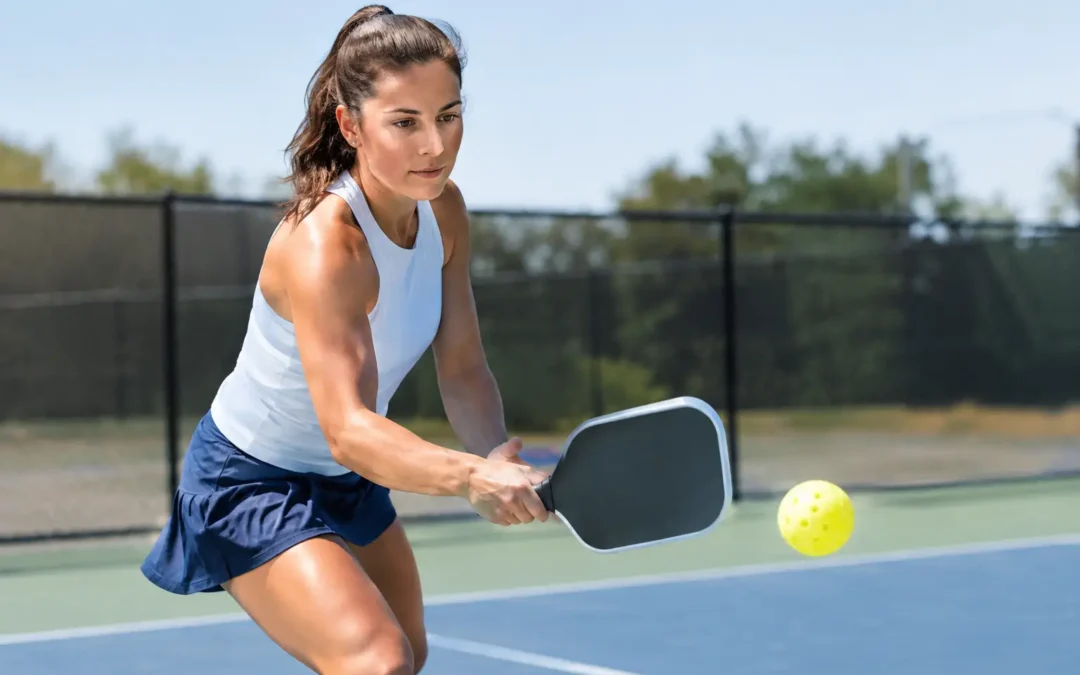
A third shot drop is not supposed to win the rally outright. Its job is more valuable: it gives your team time to move from the baseline to the kitchen line without feeding your opponents an easy attack. Players who master third shot drops stop treating the shot as a hopeful lob and start using it as a reliable way to take back control of the point.
That distinction matters on busy courts across the Hamptons and Eastern Long Island, where stronger recreational players punish anything that lands high in the kitchen or short in the transition zone. A good drop does not need to be perfect. It needs enough height to clear the net, enough softness to prevent an aggressive volley, and enough placement to make the opposing team hit up.
Why the Third Shot Drop Changes Your Game
The serving team begins every point at a positional disadvantage. After the serve and return, the returning team is already at the kitchen line while the serving team is typically pinned near the baseline. If you drive every third shot into two players with their paddles up, you may create pressure, but you also risk keeping your own team back.
The drop gives you a different path forward. When it lands in the kitchen or just beyond it with a low bounce, your opponents must let it bounce or volley from below net height. That buys you and your partner the chance to advance together and establish the balanced, patient dinking game where so many points are decided.
This is why the third shot drop is a percentage shot, not a trick shot. It is especially useful when the return of serve is deep, when both opponents are planted at the line, or when you need to slow a fast rally down. It also creates a calmer rhythm for players who feel rushed after the return.
The Feel You Need to Master Third Shot Drops
Most missed drops come from trying to manufacture softness with a big, last-second deceleration. The paddle stops, the ball pops up, and the opponents have a simple put-away. Better drops come from a compact, connected motion and a clear target.
Start with a relaxed continental grip and keep the paddle face slightly open. Bend your knees enough to meet the ball in a stable athletic position, rather than reaching with your arm. Your shoulder and forearm should guide the paddle in one smooth lift. Think of carrying the ball toward your target, not chopping underneath it.
Contact should usually happen in front of your body, around knee to waist height when possible. A low, deep return forces you to hit upward, so give yourself room and resist the urge to take the ball too early. Letting it drop slightly can make it easier to create the proper arc.
The most useful image is a gentle rainbow. Your ball should rise high enough to clear the net safely, peak before or near the kitchen line, and descend into the opponents’ non-volley zone. The exact height depends on the incoming ball, wind, and net clearance, but a drop that barely skims the tape is not automatically better. A safe, unattackable drop is better than a low ball that dies in the net.
Use Your Legs, Not a Bigger Swing
If your drop consistently lands short, the answer is rarely a longer backswing. A bigger swing creates more moving parts and makes touch harder to repeat. Instead, load gently through your legs and use a small upward lift from the lower body.
If the ball keeps sailing long, check the paddle face before blaming your touch. An overly open face at contact can send the ball too high and too deep. Make a small adjustment, then hit several balls to the same target before changing anything else.
Target Space, Not the Tape
The safest early target is the middle third of the kitchen. It gives you margin over the net and reduces the chance that your ball sits up at an opponent’s feet near the sideline. As your consistency improves, you can use placement more deliberately.
A crosscourt third shot drop gives you more court to work with and is often the highest-percentage option, particularly from the right side. The diagonal path is longer, so the ball has more room to descend. A drop down the middle can also be effective because it creates uncertainty over who takes the next ball and limits sharp angle attacks.
Dropping behind a player who crowds the kitchen line can work, but it is a more advanced choice. If the ball lands too deep, it becomes an easy overhead or aggressive forehand. Earn the right to use that variation by first proving that you can land a neutral drop consistently.
Avoid aiming for the sideline just because it looks open. On a third shot, a few extra inches of safety are worth far more than a highlight-reel winner. Your goal is to arrive at the line in a strong position, not to end every point from the baseline.
Move as a Team After the Drop
One of the most common errors is hitting a solid drop and then admiring it from the baseline. The drop only works if it is paired with movement. As the ball travels, both partners should begin moving forward together, staying connected enough that one player is not stranded several steps behind the other.
Do not sprint blindly to the kitchen line. Split step around the transition zone as your opponents prepare to hit the next ball. If they can volley comfortably above net height, be ready to stop and reset. If they let the ball bounce or contact it low, continue forward.
Communication matters here. The player who hits the third shot should call “go” when the ball is clearly effective, while the partner should avoid racing ahead before reading the ball. A team that moves in sync makes the court smaller and handles the next shot with far more confidence.
When a Drive Is the Better Third Shot
A drop is essential, but it is not the only third-shot option. If the return is short, floats high, or lands in your preferred strike zone, a controlled drive can be the smarter play. Aim at the opponent’s body, their outside hip, or the space between them rather than trying to blast the ball past two players at the kitchen.
The best drives create a weak block that you can drop on the next ball. That is the key trade-off: a drive should set up your advance, not trap you at the baseline. If you drive hard and your opponents volley it comfortably, be prepared to hit a fifth-shot drop or reset rather than forcing another low-percentage attack.
At Around The Post Pickleball, our certified instructors see this progression often: players improve fastest when they stop labeling themselves as either a “drop player” or a “drive player.” Strong players read the return, recognize the opportunity, and choose the shot that helps their team reach the kitchen safely.
Practice Drills That Build Real Match Touch
Repetition helps, but random repetition can reinforce bad habits. Practice your third shot with a specific purpose and a clear standard for success.
The Two-Bounce Target Drill
Place a target area in the middle of the opponent’s kitchen. From the baseline, feed or receive balls and hit drops that clear the net with margin and bounce in that zone. Count only balls that would force an opponent to hit upward. Ten makes out of fifteen is a useful benchmark before you make the drill harder.
The Drop-and-Advance Drill
Have two players stand at the kitchen line while you and a partner begin at the baseline. Hit the third shot drop, move forward together, and play out the rally. Your kitchen-line opponents should volley only balls they can take above net height and let lower balls bounce. This teaches the decision that matters most in a match: when to keep moving and when to stop.
The Deep-Return Challenge
Ask a partner to return serves deep to your backhand and forehand. Many players can drop an easy ball but lose touch when the return pushes them behind the baseline. Work on creating height and depth without rushing. In outdoor conditions, especially on breezy Northeast courts, give yourself permission to add a little more arc rather than fighting the wind with a flatter ball.
Fix the Miss You Actually Have
A ball into the net usually means you are not creating enough lift, you are contacting too low without bending your knees, or you are trying to be too precise. Give the shot more arc and focus on clearing the net by a comfortable margin.
A ball that sits up is often caused by opening the paddle face too much, contacting late, or guiding the ball with only the wrist. Keep the motion compact and finish toward the target. A pop-up does not always mean you swung too hard – it may mean your paddle angle changed at the last moment.
When drops land deep, check whether you are leaning backward or contacting the ball too far in front. Stay balanced over your feet and let your shoulder carry the ball forward with a modest finish. The goal is a repeatable stroke, not a delicate one.
Give yourself a simple match goal for your next session: hit the third shot with enough margin to start your move forward. As that ball becomes familiar, the kitchen line stops feeling like a place you have to rush toward and starts becoming the position you expect to earn.