
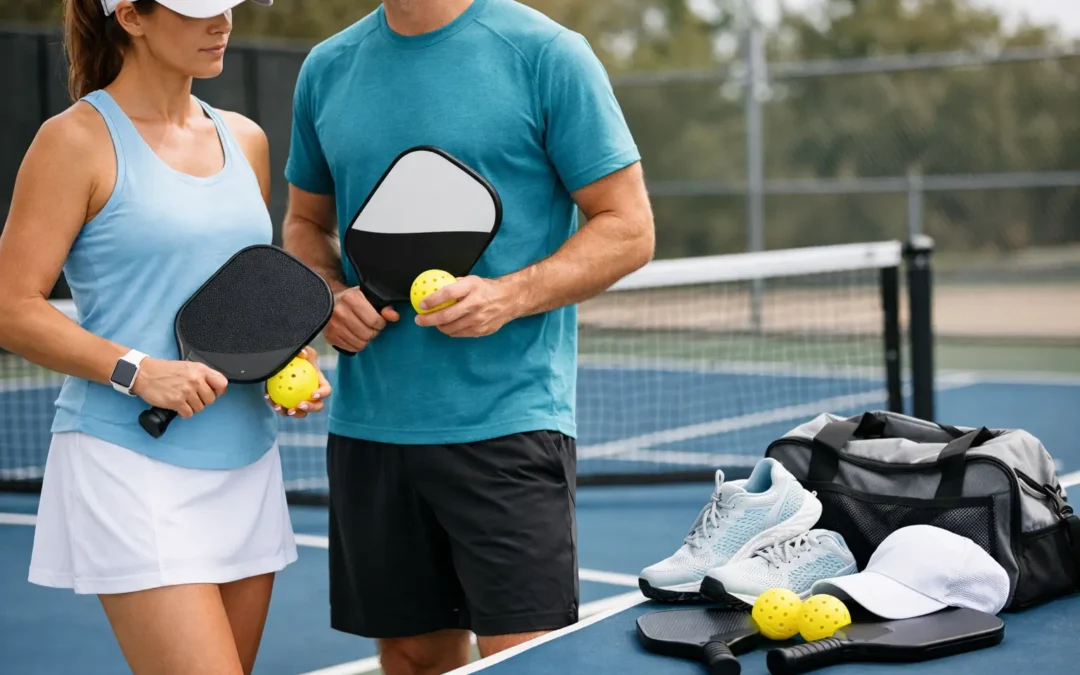
Show up to your first clinic in running shoes and a heavy cotton T-shirt, and you’ll feel the mistake by the first few drills. Pickleball lessons move faster than many beginners expect. If you’re wondering what to wear pickleball lessons, the goal is simple: choose clothing and shoes that let you move, stop, rotate, and stay comfortable for the full session.
At Around The Post Pickleball, we’ve taught thousands of players across Eastern Long Island and the Hamptons, and one thing is consistent – players learn better when they aren’t distracted by sore feet, slippery soles, overheating, or clothes that restrict movement. You do not need a country club wardrobe or a pro-level kit. You need the right basics.
What to wear pickleball lessons starts with footwear
If there is one place not to cut corners, it’s your shoes. Pickleball includes quick lateral movement, short sprints, controlled stops, and balance changes that standard walking shoes or most running shoes are not built to handle. Running shoes are designed primarily for forward motion. In a lesson, especially one with footwork drills, that can leave you feeling unstable.
A court shoe is the better choice. Tennis shoes, pickleball shoes, or cross-training shoes with strong side support and a grippy non-marking sole are usually your best bet. The key is lateral stability. You want to feel planted when you push off, recover to the kitchen line, or adjust for a wide ball.
That does not mean every player needs to buy the most expensive shoe on the wall before lesson one. If you already own tennis or court shoes in good condition, those are likely fine. But worn-out sneakers, casual trainers, and soft-soled lifestyle shoes are a poor match for instruction. They can affect both comfort and performance, and they increase the odds of slips or rolled ankles.
The best clothes for pickleball lessons
Your clothes should move with you, not against you. That usually means athletic apparel made from lightweight, breathable performance fabric. Moisture-wicking tops, flexible shorts, skorts, joggers, or athletic leggings all work well depending on weather and personal preference.
The biggest clothing mistake beginners make is wearing stiff or heavy fabric. Cotton is comfortable when you first put it on, but during a lesson it tends to hold sweat, get heavy, and feel sticky. Technical fabrics keep you drier and help regulate temperature, which matters more than people think during an hour of drilling and repetition.
Fit matters too. You do not want anything so loose that it gets in the way of your swing, but you also do not want clothing so tight that it limits shoulder rotation or makes lunging uncomfortable. A good test is this: can you reach overhead, squat slightly, rotate your torso, and take a wide step without adjusting your clothes? If not, choose something else.
For most adults, a short-sleeve or sleeveless athletic top paired with shorts, a skort, or stretch athletic pants is the easiest answer. If you prefer more coverage, that is completely fine. Long sleeves and leggings can work well, especially in cooler conditions, as long as the fabric breathes.
What women often wear to lessons
Women usually do best in athletic tops with supportive sports bras, paired with skorts, shorts, leggings, or tennis-style dresses that allow free movement. The specific style is less important than mobility and comfort. If you like a dress, make sure it stays in place and does not distract you when serving or bending for low balls.
What men often wear to lessons
Men typically wear moisture-wicking shirts with athletic shorts designed for movement. Shorts with a little stretch tend to feel better than rigid gym shorts, especially during split steps and quick directional changes. Avoid anything too long or baggy if it interferes with footwork.
Dress for the weather, not just the calendar
Outdoor lessons in the Northeast can change fast. A summer morning in the Hamptons may start cool, then turn hot halfway through a session. Spring and fall lessons can be even trickier, especially near the water.
Layers solve most of this. Start with a breathable base layer and add a light quarter-zip, athletic jacket, or pullover you can remove once you warm up. Heavy hoodies are usually not ideal for instruction because they can limit shoulder movement and become uncomfortable once you start sweating.
In hot weather, lighter colors and breathable fabrics help. In cooler weather, you still want flexibility first. You are trying to stay warm without dressing so heavily that your footwork and swing mechanics suffer. If you know you run warm, dress lighter than you think. If you tend to get cold early in the session, bring one easy layer you can peel off.
Accessories that help and accessories that get in the way
A few accessories can make lessons noticeably better. A hat or visor is useful for sunny outdoor courts, especially when players are tracking lobs or working on overheads. Sunglasses can help too, but only if they stay put and do not distort your vision.
Sweatbands are optional, but some players love them in humid weather. A supportive pair of socks matters more than most people realize. Cushioned athletic socks can reduce friction, improve comfort, and help prevent blisters during longer clinics or boot camps.
Jewelry is where less is usually better. A wedding band is one thing. Dangling earrings, loose bracelets, or necklaces that bounce around can become distracting. The same goes for anything in your pockets. Keys, phones, and bulky items will get in your way the second you start moving.
What not to wear to pickleball lessons
This is where a little honesty helps. Some outfits are technically playable, but they make learning harder. Jeans, casual sandals, boots, platform sneakers, and fashion-first athleisure that restricts movement are poor choices. So are clothes you constantly need to pull up, pull down, or adjust between points.
Avoid slick-soled shoes, especially if you are playing on a court surface that requires traction for quick stops. Also skip anything overly heavy. A lesson should feel athletic and comfortable, not like you dressed for errands and happened to bring a paddle.
If you are brand new, do not overthink looking the part. Players improve fastest when they feel comfortable enough to focus on instruction instead of worrying about whether they look experienced. Pickleball is social, but lessons are for learning.
What to wear pickleball lessons if you are a beginner
Beginners often ask if there is a hidden dress code. There really is not. The better question is whether your outfit supports movement, safety, and confidence. If this is your first lesson, keep it simple: court shoes, breathable athletic clothes, and a light layer if the weather calls for it.
You do not need specialty pickleball apparel to start. In fact, many new players are better off using quality gear they already own, then upgrading once they know how often they’ll play. Shoes are the one category worth prioritizing earlier because they affect stability and comfort right away.
There is also a confidence piece here. Lessons work best when players can settle in quickly, move naturally, and stop thinking about what they’re wearing. The right outfit does not make you a better player overnight, but it removes friction from the learning process.
A quick word on indoor vs. outdoor lessons
Indoor lessons are a little easier to plan for because temperature and court conditions are more consistent. You can usually wear standard athletic clothing and indoor-safe court shoes without much adjustment. Outdoor lessons require more flexibility because of sun, wind, heat, and cooler starts.
If you alternate between indoor and outdoor sessions, build around the same core setup: proper court shoes, performance clothing, and one removable layer. Then adjust for conditions rather than reinventing your outfit each time.
Comfort and performance go together
The best answer to what to wear pickleball lessons is not flashy. It is functional. Wear shoes built for court movement, clothes that breathe and stretch, and layers that match the conditions. Keep accessories minimal and avoid anything that makes you think about your outfit instead of the next ball.
That approach works whether you are stepping into your first beginner clinic, sharpening fundamentals in a private lesson, or training in a more competitive group. When your gear supports the way pickleball is actually played, you can focus on the part that matters most – improving, competing, and enjoying the game.