
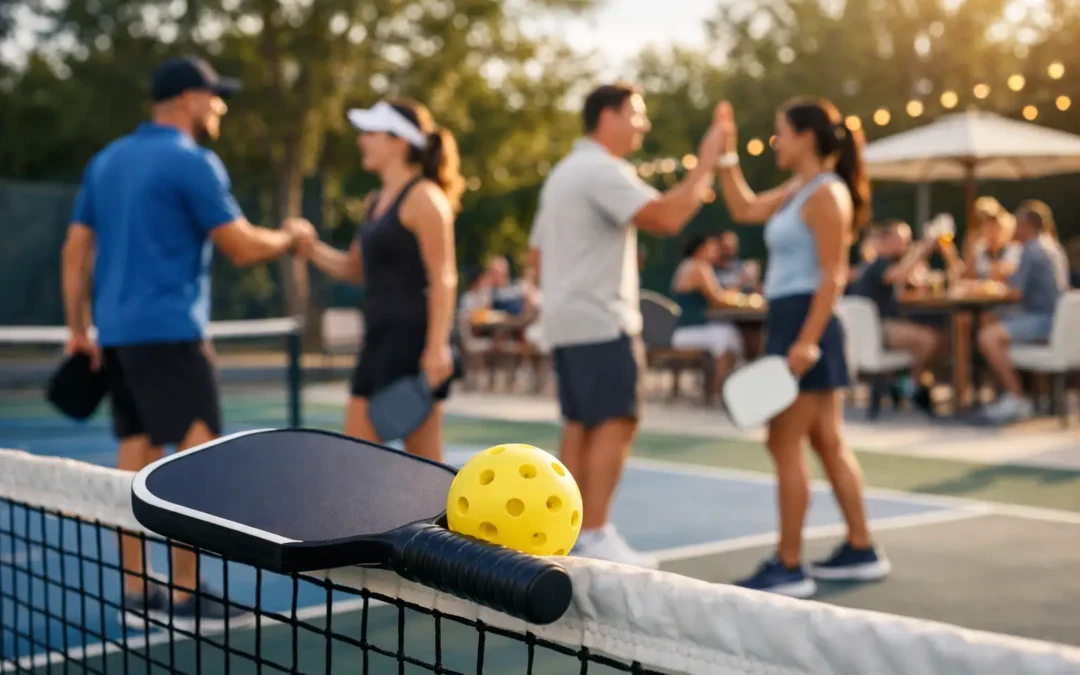
A great pickleball event is not just a court reservation and a few paddles on a table. The best private pickleball event packages are built around flow, coaching, guest experience, and the kind of details that make people want to stay longer, play again, and talk about it afterward.
That matters even more in places like the Hamptons and Eastern Long Island, where expectations are high and free time is valuable. If you are planning a corporate outing, client event, birthday celebration, team social, or private group experience, the difference between casual play and a professionally run event shows up fast. Guests notice whether the format makes sense, whether beginners feel comfortable, whether stronger players stay engaged, and whether the event actually feels worth hosting.
What private pickleball event packages should include
At the most basic level, private pickleball event packages need courts, equipment, and someone to keep the session moving. But that baseline is not what creates a premium experience. What people remember is whether the event feels organized from the first welcome to the final game.
A strong package usually starts with format design. That means deciding whether the group needs open play, guided instruction, team competition, round robin matches, or a mix of all four. A birthday group with mostly beginners needs a different structure than a company hosting clients who already play. One of the most common mistakes in private events is treating every group the same.
Instruction is another major separator. Certified coaches do more than teach grips and scoring. They help brand-new players get into rallies quickly, give intermediate players real feedback, and keep courts balanced so no one feels lost or overmatched. For mixed-skill groups, that is often the difference between an event that feels inclusive and one that quietly leaves half the guests standing on the sidelines.
Equipment quality matters more than people expect. Good paddles, enough balls, visible court setup, and reliable event staffing send a message right away. If the experience is meant to feel polished, those details cannot be improvised.
Why the best events are built around the group
There is no single perfect package because pickleball events work best when they are built around the people attending. That is true whether the goal is pure fun, real instruction, or a more competitive social atmosphere.
For corporate groups, the right event usually balances low-pressure access with enough structure to avoid awkward downtime. Not everyone will arrive knowing the rules. A quality event gives beginners a quick entry point, keeps the pace upbeat, and adds enough coaching so guests feel successful early. If the group includes experienced players, a split-court model often works better, with one area focused on fundamentals and another on live games or challenge play.
For private parties, the energy tends to matter as much as the instruction. Hosts want something active, social, and memorable without making guests feel like they signed up for a clinic by accident. In those cases, light coaching, mini-games, rotating partners, and short competitive formats can create a better rhythm than full technical instruction.
For more serious players, packages can lean into drills, strategy, and organized match play. That audience usually values credible coaching, efficient court use, and clear progression over novelty. They want to improve, compete, and leave feeling like the session had purpose.
Private pickleball event packages for corporate outings
Corporate pickleball has grown quickly because it solves a problem many team events do not. It gets people moving, talking, and laughing without requiring a high athletic barrier. But that only works when the event is managed professionally.
The best corporate private pickleball event packages create easy on-ramps for non-players while still giving athletic guests enough challenge. A quick welcome session, paddle orientation, and simple scoring lesson can get a full group into the action quickly. From there, coaches and event leads should be directing traffic, creating pairings, and adjusting formats as the group settles in.
There is also a brand issue at play. Companies are not just buying court time. They are buying an experience that reflects well on the people organizing it. If guests are confused, waiting too long, or separated into skill mismatches, the event feels amateur. If it is smooth, upbeat, and well staffed, it feels intentional and high value.
That is why premium providers often combine event operations with real teaching credentials. In a corporate setting, confidence matters. People are far more likely to engage when there is a clear structure and qualified staff leading the session.
What hosts should ask before booking
A package can sound impressive on paper and still be the wrong fit in practice. Before booking, hosts should ask how the event will be tailored to the group, not just what is included.
Start with skill levels. Will the provider handle complete beginners, mixed groups, or stronger recreational players? Ask how courts will be divided and how guests will rotate. If the answer is vague, that usually means the format is not well developed.
Ask about coaching credentials and event staffing. A private event runs differently when it is led by certified instructors who know how to teach and manage court flow. That is especially important when guests are new to pickleball and need quick wins early.
It also helps to ask what happens if the vibe shifts. Maybe the group is more competitive than expected. Maybe some guests want more instruction and others just want games. Strong event teams can adjust in real time without making the experience feel disjointed.
Finally, ask what success looks like. Some hosts want a high-energy social event. Others want a more elevated client experience or measurable player development. The right provider should be able to speak clearly about outcomes, not just logistics.
The value of a professionally run experience
A lot of people underestimate how much coordination private events require until they try to run one themselves. On paper, pickleball looks simple. In reality, a strong event depends on court pacing, guest management, coaching presence, scheduling, and atmosphere all working together.
That is where experience counts. A company that has taught thousands of players and operated successful events understands the patterns. Beginners need early encouragement. Better players need real engagement. Large groups need transitions that feel fast, not chaotic. And hosts need confidence that the event will reflect well on them.
In a market where pickleball is often treated as casual, professional execution stands out. It turns a trendy activity into a real hospitality experience. That distinction matters for private communities, corporate planners, and hosts who want more than a basic recreational booking.
Around The Post Pickleball has built its reputation in that space by combining certified instruction, event leadership, and strong local traction across the Hamptons and Eastern Long Island. That mix is rare, and it is exactly what many private groups are looking for when they want an event that feels both fun and credible.
When custom packages make more sense than fixed ones
Fixed packages can work for straightforward groups, especially when attendance, skill level, and goals are predictable. But custom planning often produces a better result.
If your guest list includes total beginners, experienced players, and a few people who are mostly there for the social side, a rigid package can create friction. Custom event planning allows for multiple lanes of activity at once. One court might focus on intro instruction while another runs king-of-the-court games and another supports friendly doubles play.
Customization also matters for timing. A 90-minute activation has a different tempo than a three-hour private event with breaks, food, and awards. Neither is automatically better. It depends on the audience, the location, and what you want guests to remember.
That is the trade-off with private pickleball event packages. The simpler the package, the easier it is to book. The more tailored the experience, the better it usually performs for mixed groups and premium occasions.
What guests remember after the last point
People rarely leave talking about how many balls were in the basket. They remember whether they felt included, whether the coaches were sharp and welcoming, whether the matches were fun, and whether the event had momentum.
That is why the strongest private pickleball events are designed as experiences, not just activities. They create confidence for first-timers, good reps for improving players, and enough energy to make the whole group feel part of something worth showing up for.
If you are planning a private event, the smartest move is not choosing the cheapest package or the one with the longest feature list. It is choosing the team that knows how to read a group, manage a court, and turn pickleball into a genuinely well-run gathering people will want to repeat.