
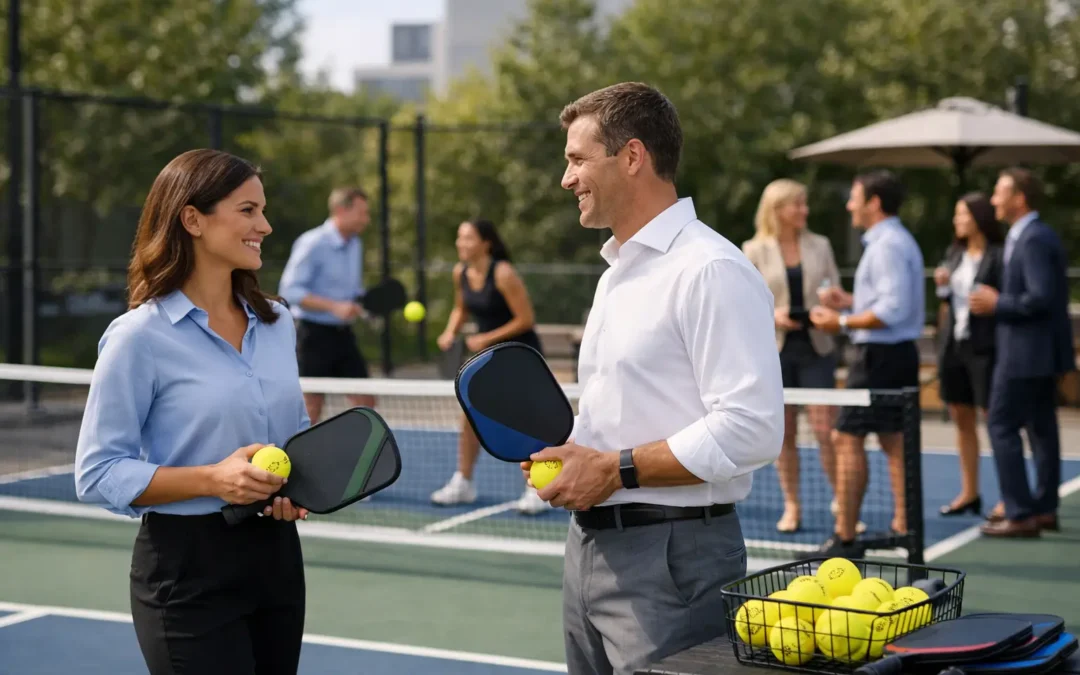
A corporate event can look great on paper and still lose the room the moment people feel excluded. That is why the best pickleball corporate event formats are not always the most competitive ones. They are the formats that give first-timers a real place to start, give athletic teammates a reason to lean in, and create the kind of shared momentum that lasts after the final point.
Pickleball works especially well for company groups because it is social by design. Players rotate quickly, conversation happens naturally between points, and a good organizer can scale the experience for a team that includes complete beginners alongside regular players. The format matters because it determines whether the day feels like an intimidating sports tournament or a genuinely inclusive team experience.
Choose the Format Around the Team, Not the Trend
Before selecting brackets, scoring, or prizes, consider who will actually be on court. A sales team filled with competitive former athletes can handle a different experience than a mixed office group where half the guests have never held a paddle. The strongest events meet people where they are, then give them a small, satisfying challenge.
Group size, available court time, season, and the event goal should guide the decision. Is the priority team bonding? Client entertainment? A wellness initiative? A department celebration? A format that works beautifully for 20 colleagues may feel scattered with 80 guests unless there is enough court capacity and a clear rotation plan.
For organizations in The Hamptons and across Eastern Long Island, the setting can also shape the event. A polished summer outing may call for social play, music, refreshments, and a relaxed finals match. A focused offsite may benefit from coached instruction and team challenges that reinforce communication. Professional event management keeps both approaches organized without making the day feel overly formal.
1. The Learn-and-Play Social Is the Most Inclusive Option
For a group with many new players, a guided clinic followed by rotating social games is often the best choice. It starts with the essentials: court positioning, serving, scoring, dinking, and the basic strategy that helps beginners avoid feeling lost. Then players move into short games with frequent rotations.
This format removes the biggest barrier to participation: the fear of letting down a partner. Instead of placing inexperienced guests straight into a competitive bracket, everyone receives coaching first and plays in smaller, manageable bursts. Skilled players still get value because certified instructors can offer adjustments that improve shot selection, movement, and consistency.
A learn-and-play social is ideal for wellness days, employee appreciation events, client gatherings, and company teams that want a low-pressure introduction to the sport. It also creates more conversation than a traditional tournament. People change partners, meet colleagues outside their department, and have a reason to cheer each other on.
The trade-off is that it produces less of a dramatic championship moment. If your group wants an obvious winner and a crowd around a final court, add a short showcase match or a lighthearted closing challenge.
2. Team Challenge Events Build Energy Without Overdoing Competition
A team challenge divides guests into company-colored teams, departments, or mixed groups and gives them multiple ways to earn points throughout the event. Match wins matter, but they are not the only path to success. Teams can score through target-serving contests, dink rallies, paddle-up trivia, fastest-improvement recognition, or cooperative challenges led by instructors.
This is one of the best pickleball corporate event formats when the goal is broad participation. It gives non-athletes an opportunity to contribute and prevents the event from being dominated by the few strongest players. It also makes company culture visible in a positive way: teams communicate, encourage one another, and celebrate small wins.
The key is to keep scoring simple. Guests should understand how their team is doing without stopping play to decode a complicated point system. A visible leaderboard helps, but the atmosphere should remain upbeat rather than cutthroat.
Team challenges are particularly effective for groups of 30 to 100 guests when there are enough courts and staff to keep activities moving. They require more production than open play, but that structure is exactly what keeps larger groups engaged.
3. Round-Robin Play Is Best for Competitive, Social Groups
A round-robin event lets pairs play several short games against different opponents, with standings based on wins, total points, or point differential. It is a dependable choice for teams that already have some pickleball experience and want a clear competitive structure without the pressure of immediate elimination.
Because every pair plays multiple matches, participants get more court time than they would in a single-elimination bracket. The format also creates natural storylines as the standings develop. A close game in the middle of the schedule can matter just as much as a late match, which keeps energy high across the event.
For corporate groups, partner selection deserves attention. Random pairings are excellent for cross-department connection. Assigned pairs work better if the event is part of a sales incentive, leadership retreat, or client relationship program where specific people should spend time together. Balanced pairings also matter. Putting two advanced players against two first-timers may be memorable for the wrong reasons.
Round robins need disciplined scheduling, especially when the group is large. Shorter games and a reliable court rotation prevent backups. An experienced tournament operator can make the format feel effortless to guests while managing the details behind the scenes.
4. A Ladder Format Keeps Everyone Moving
In a ladder, players or pairs begin across several courts and move up after a win or down after a loss. The top court becomes the place to watch, while every court still has a meaningful next game. It is fast, flexible, and naturally self-sorts players by level as the session continues.
This format is excellent for a group with a wide skill range. Beginners are not stuck playing advanced opponents all afternoon, and stronger players gradually find more challenging games. Since matches are short, no one waits long to get back on court.
The ladder format does need clear instructions and attentive court hosts. Players must know when to rotate, where to go next, and whether partners stay together or split. When organized well, it feels active and social rather than complicated. It is a smart option for a two-hour corporate session where the goal is maximum participation.
5. The Pro-Am Format Creates a Premium Experience
For executive groups, client entertainment, or a high-end company celebration, a pro-am format adds a level of access and polish. Guests rotate through coached games with certified instructors or high-level players, receive real-time tips, and take part in friendly featured matches.
The appeal is not simply playing alongside a stronger player. It is the feeling that the event has been designed around the guest experience. New players gain confidence from direct coaching, while better players get tactical feedback they can use immediately. A pro-am can include an exhibition, a skills competition, or a finals match featuring top performers from the group.
This format works best when the guest list is smaller or when the event has enough instructors to maintain a personal touch. It costs more than open social play, but it delivers more coaching value and a more elevated hospitality feel. Around The Post Pickleball has taught more than 3,500 players and brings certified IPTPA and PPR coaching depth to experiences built for both newcomers and serious recreational players.
How to Make Any Corporate Pickleball Format Successful
The best format can still fall flat if the event skips the practical details. Start with a welcome that explains the flow of the day in plain language. Guests should know where to check in, how to get equipment, when they are expected on court, and what happens if they have never played before.
Build in a real beginner pathway. A separate fundamentals station or a brief coached orientation gives hesitant guests permission to participate without embarrassment. At the same time, offer advanced players a challenge court, strategy coaching, or a competitive finals bracket so they do not feel held back.
Pace matters as much as programming. Short games, clear rotations, water breaks, shaded rest areas, and time for food or conversation keep an active event from becoming exhausting. For outdoor events, a weather plan is not optional. Court availability, backup timing, and communication protocols should be settled before invitations go out.
Finally, use the awards moment wisely. Recognize more than the winning team. Best teammate, most improved player, longest rally, and strongest spirit can be just as meaningful in a corporate setting. The goal is for people to leave saying they had fun, met someone new, and would actually play again.
A successful corporate pickleball event does not ask every guest to become a competitor. It gives every guest a reason to step on court, contribute to the day, and share an experience worth talking about back at work.