
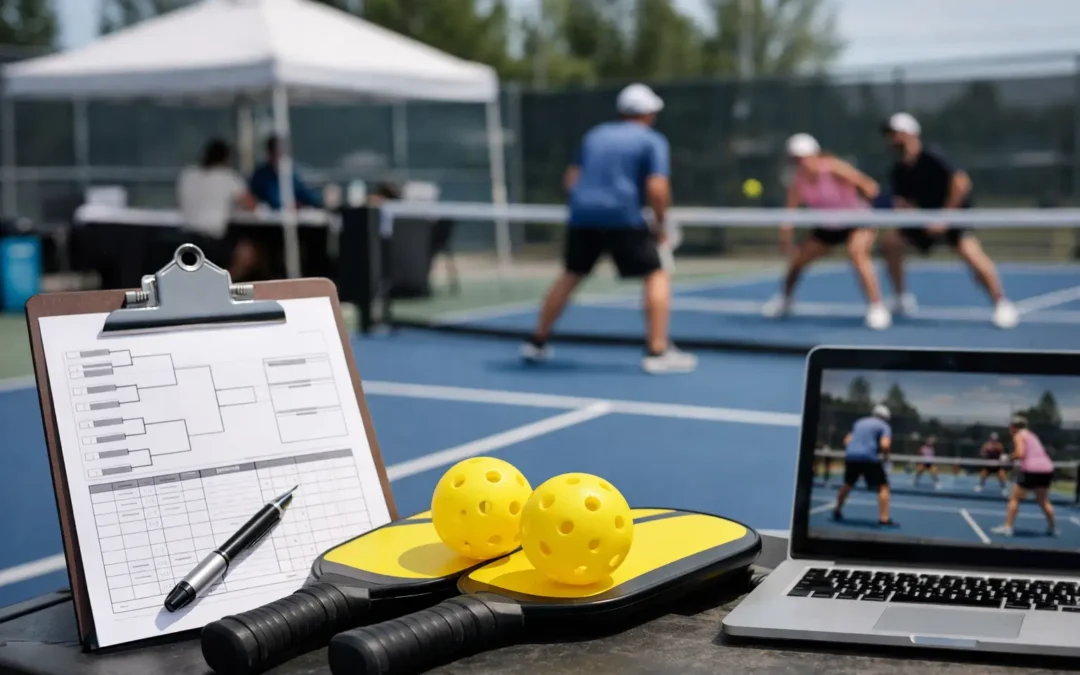
A tournament can look effortless from the player’s side: check in, find a court, compete, meet new people, and head home with a medal or a new partner. That experience only happens when the operation behind it is disciplined. This pickleball tournament operations case study looks at the working model behind a high-touch regional event, where player experience, competitive integrity, and social energy must all be managed at the same time.
For a growing pickleball community, the goal is not simply to fill a draw. It is to create an event players trust enough to return to, recommend, and build into their seasonal calendar. In The Hamptons and across Eastern Long Island, that standard matters. Players have options, and organizers have a short window to prove that an event is worth the entry fee, travel time, and weekend commitment.
The Challenge: Deliver Competition Without Chaos
The event model began with a familiar challenge: interest was high, but participant expectations varied widely. Some players wanted a serious competitive test. Others were entering their first organized tournament and needed a welcoming path into the format. Everyone expected clear communication, accurate schedules, fair divisions, and courts that stayed active rather than sitting idle.
Those needs can pull an organizer in different directions. A packed schedule may maximize court usage but leave no room for weather, late matches, or player questions. Too many divisions can create a more tailored experience, but may result in thin brackets. A looser social atmosphere helps new players feel comfortable, but cannot come at the expense of rules enforcement or match flow.
The answer was not one giant operational fix. It was a sequence of decisions made before registration opened, followed by active management from check-in through the final medal match.
Pickleball Tournament Operations Case Study: Start With the Draw
Tournament operations begin long before players arrive. The first meaningful decision is the event structure: divisions, skill ranges, age groupings, gender formats, mixed doubles options, match format, and capacity. These choices determine whether the day runs efficiently or becomes a constant series of corrections.
A strong registration process collects more than names and email addresses. It establishes partner information, stated skill level, division preference, availability, and a clear understanding of tournament rules. It also gives organizers an early read on demand. If one division fills quickly while another remains light, the team can make responsible adjustments before schedules are built.
Skill classification deserves particular attention. Self-rating is useful, but it is not perfect. A 3.0 player entering a 4.0 division can create lopsided matches and frustration on both sides of the net. The best approach is transparent: publish division standards, review entries when necessary, and communicate directly when a move would create a more competitive bracket. The goal is not to police players. It is to protect the quality of play.
Bracket design also involves trade-offs. Round robin formats give players more guaranteed matches and work well for community-driven events. Single elimination moves quickly and raises the stakes, but one early loss can feel disappointing after a full day of preparation. Pool play followed by a medal round often provides the best balance when court time allows. It rewards performance while ensuring participants receive a meaningful tournament experience.
At Around The Post Pickleball, the operational lens reflects the same high-touch standard used in instruction and events: players should know where they belong, what they are playing for, and what happens next.
Scheduling Is a Player Experience Decision
A schedule is not just a spreadsheet. It is a promise.
Players plan around start times, travel, childcare, work, and weather. When an organizer posts a start time, then changes it repeatedly or leaves participants waiting without updates, confidence drops quickly. A professional schedule accounts for the realistic length of matches, transition time between rounds, warm-up needs, and a buffer for the unexpected.
The most common mistake is building a schedule around ideal conditions. In reality, matches run long. A deciding game can stretch past expectations. Players may need a medical timeout. A court may need to be dried after light rain. If the schedule has no breathing room, one delay becomes a chain reaction.
A better operating model uses staggered arrivals and waves of play. Early divisions check in and begin before later groups arrive. Court assignments are visible, but updates are controlled from one central source rather than passed around through rumor. Tournament staff should be easy to identify and positioned where questions arise: check-in, court entry, and the scoring desk.
Communication must be proactive. Before event day, players need parking guidance, check-in times, rules, what to bring, and a clear weather policy. On site, they need brief, useful updates. “Court 3 is running 15 minutes behind” is more valuable than a vague request for patience. Players are generally understanding when they know what is happening.
The On-Site System: Visible, Calm, and Consistent
The strongest operations are visible without feeling overmanaged. Players should see a clear check-in area, designated courts, scoring procedures, water access, and staff who can resolve issues quickly. They should not have to hunt down basic information between every match.
Check-in is where the tone of the event is set. A warm welcome matters, especially for first-time tournament players, but speed matters too. Staff should confirm attendance, direct players to the right area, flag no-shows immediately, and make sure teams understand the match format. A delayed or disorganized check-in creates pressure before the first ball is served.
Once play starts, the score desk becomes the operational center. Results need to be recorded accurately and posted promptly. In round robin play, a missed result can affect several teams. In elimination play, a delayed score can leave the next opponents waiting and cause courts to sit empty. The process should be simple enough for participants to follow and controlled enough to prevent confusion.
Rules questions are another pressure point. Most are straightforward: serve order, line calls, timeouts, or a disputed score. The key is consistency. Tournament leadership must make decisions quickly, apply the stated rules fairly, and avoid debating every call in front of a crowd. Calm authority protects the event atmosphere.
There is also a social component that should not be treated as an afterthought. Pickleball is competitive, but it is also a connector. Thoughtful downtime, spectator-friendly viewing, music when appropriate, and a clear awards moment help turn a bracket into an experience. The best tournament memories often happen between points: players reconnecting, partners celebrating, and newcomers realizing they have found a community.
What Produced Better Results
The operating model produced better outcomes because it focused on the points where player confidence is won or lost. Registration was structured. Divisions were reviewed. Schedules were built with realistic buffers. Staff had defined responsibilities. Participants received timely information rather than being left to guess.
That approach supports both retention and reputation. A player who loses every match may still return if the division was fair, the event was organized, and the environment felt positive. Conversely, a player who wins may not come back if check-in was chaotic, matches were delayed for hours, or there was no clear process for results.
It also makes growth more manageable. Sold-out tournaments are a strong signal of demand, but growth should not mean cramming more players into a format that cannot support them. Sometimes the right decision is a waitlist, an added session, or a second event date. Capacity should be set by court availability, staffing, and the experience organizers can honestly deliver.
The Lesson for Hosts and Organizers
Professional tournament operations are not about making an event feel rigid. They are about removing the avoidable friction that keeps people from enjoying the competition. Fair brackets, reliable communication, capable staff, and a welcoming environment give every level of player a reason to participate.
For hosts, clubs, and organizations planning their next pickleball event, the most useful question is not, “How many players can we fit?” Ask, “What will players say about the day when they leave?” Build the operation around that answer, and the tournament has a far better chance of becoming a local tradition.