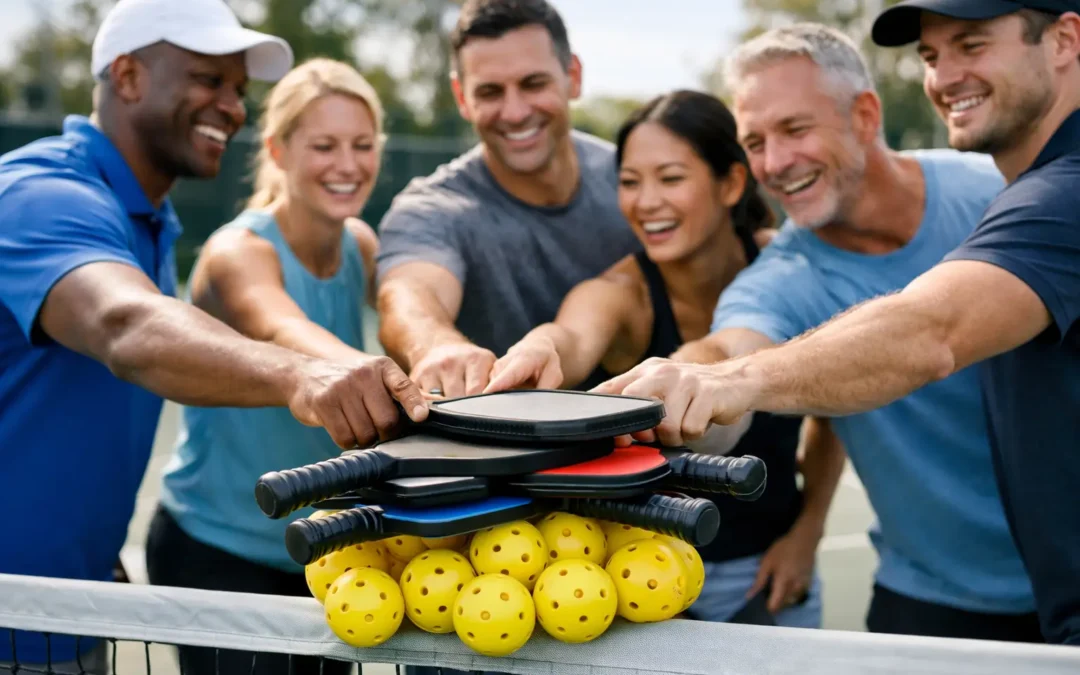
A corporate event falls apart fast when half the group feels intimidated and the other half feels bored. That is exactly why pickleball team building activities have gained so much traction with companies, private groups, and community organizations. The game is active without being overwhelming, social without feeling forced, and competitive enough to keep people engaged.
What makes pickleball especially effective for team building is the balance. Beginners can learn the basics quickly, stronger players still have room to compete, and doubles play naturally creates communication, strategy, and momentum. When the event is structured well, people leave feeling included instead of split between “athletes” and “everyone else.”
Why pickleball team building activities work so well
Most team events struggle with one of two problems. They are either too passive, which leads to awkward small talk and low energy, or too intense, which can alienate less athletic participants. Pickleball sits in the sweet spot between those extremes.
The court is smaller than tennis, the learning curve is manageable, and the pace allows conversation to happen naturally. That matters in a team setting. People are not just swinging paddles. They are reading partners, encouraging each other, solving small problems under pressure, and sharing quick wins. That kind of interaction builds rapport faster than a conference room icebreaker ever will.
There is also a practical advantage. You do not need a group full of experienced players for the event to succeed. In fact, many of the best results come from mixed-skill groups because everyone starts with enough uncertainty to relax a little. Executives, managers, clients, and new hires all end up on more equal footing.
The best pickleball team building activities for mixed groups
Not every format works for every group. A leadership team offsite has different goals than a company summer party or client appreciation event. The strongest programs usually mix instruction, light competition, and social play so the experience feels organized but not rigid.
1. Coach-led beginner challenge
This is often the best starting point for groups with little or no experience. A certified instructor teaches the basic grips, rules, serving, and court positioning, then turns those fundamentals into short partner challenges. Teams might compete in serve-to-target drills, cooperative rally counts, or dink consistency contests.
The value here is not just learning technique. It gives people an early win. Instead of feeling thrown into a match they do not understand, players build confidence first. That shifts the mood of the whole event.
2. Rotating partner round robins
If your goal is interaction across departments or friend groups, rotating partner formats work extremely well. Every few rounds, players switch partners and opponents. That prevents cliques from staying together and keeps the event moving.
This format is ideal when you want broad engagement rather than a single winning team dominating the day. It also creates repeated introductions without making them feel forced. People connect because they are trying to win points together, not because someone handed them a networking prompt.
3. Team relay stations
For groups that like variety, relay-style stations bring great energy. One station might focus on serving accuracy, another on volleys, another on teamwork drills where two players must complete a set number of controlled shots. Teams rotate through each station and earn points along the way.
This approach works especially well for larger corporate groups because it reduces waiting time and keeps everyone active. It also lowers pressure. Not everyone wants to jump right into match play, but most people will gladly try a station challenge with teammates cheering them on.
4. Mini tournament brackets
When your group wants a stronger competitive edge, a mini tournament can be the right fit. The key is keeping it short, well-seeded, and appropriate for the player mix. Full-length competitive brackets can be great for experienced players, but for general team building, shorter games with a consolation side usually produce better results.
That way, stronger players still get their challenge, while newer players do not feel knocked out after one rough game. It depends on the group, but most corporate events benefit from formats that reward participation as much as performance.
5. King or queen of the court
This is a high-energy format where players rotate based on wins and losses, moving up or down across designated courts. It creates a steady flow of games and keeps the atmosphere lively.
It is best for groups with at least some comfort on court, or after an instructional session has already happened. For complete beginners, this format can move a little too fast at the start. With the right setup, though, it is one of the easiest ways to maintain momentum for an hour or more.
6. Themed partner challenges
Sometimes the event needs to feel more social than sporty. Themed challenges can help. Think best team name, coordinated colors, fun prizes, or partner tasks that reward communication and creativity as much as shot-making.
This works well for celebrations, company outings, and hospitality-driven events where the atmosphere matters just as much as the competition. The trick is keeping it polished. Lighthearted should never mean disorganized.
7. Skills and strategy competitions
Not every successful team building event has to end with a tournament. A series of structured competitions around dinking, placement, teamwork communication, and situational play can be just as effective.
For groups interested in growth and performance, this format often lands especially well. It feels purposeful, measurable, and professionally run. That matters to organizations that want more than just a casual recreational hour.
What separates a good event from a forgettable one
The activity itself is only part of the equation. Execution matters more than most people expect. A well-run pickleball event starts with the right court setup, the right coach-to-player ratio, and a format matched to the group’s experience level.
If the games are too advanced, beginners check out. If the instruction drags on too long, stronger players lose interest. If there is no clear rotation system, people stand around. The best events solve those problems before anyone steps on court.
That is where professional event structure makes a real difference. Groups respond better when the session feels intentional from the first welcome to the final match. Certified coaching helps, but so does pacing, energy, and knowing how to keep mixed-skill groups engaged at the same time.
In a market like the Hamptons and Eastern Long Island, where expectations are high and group experiences need to feel premium, details matter. Around The Post Pickleball has built its reputation on exactly that mix of instruction, event management, and community credibility.
How to choose the right pickleball team building activities
Start with the actual goal. If the event is meant to break the ice, beginner clinics and relay stations usually work better than a serious bracket. If the goal is morale and celebration, social formats with rotating partners can create more connection than a winner-take-all tournament. If your group values performance and challenge, skills competitions and short-format match play may be the better fit.
Group size also changes the answer. Smaller teams can handle more personalized coaching and flexible match formats. Larger groups often need stations, timed rotations, and clearer segmentation by skill level. There is no single best format for every event.
It also helps to think about who is attending. A mixed group of first-time players and experienced recreational players needs different programming than a team of already active pickleball fans. The strongest events do not force everyone into the same lane. They create enough structure for beginners to feel supported and enough challenge for stronger players to stay interested.
Why pickleball keeps people talking after the event
Plenty of team activities are fun in the moment and forgotten by the next morning. Pickleball tends to stick because it creates a shared experience people can revisit. Teammates remember the long rally, the surprising upset, the partner who learned fast, the manager who turned out to be quietly competitive.
It also has a built-in next step. Unlike one-off entertainment, pickleball can turn into an ongoing part of community and company culture. People want to play again. They ask about lessons, leagues, clinics, or another event. That kind of after-effect is rare, and it is one reason the sport has become such a strong choice for organizations that want more than a placeholder activity.
The best team building does not force connection. It creates the conditions for it. With the right format, the right coaching, and the right energy, pickleball gives groups a reason to compete, laugh, learn, and leave more connected than they arrived.