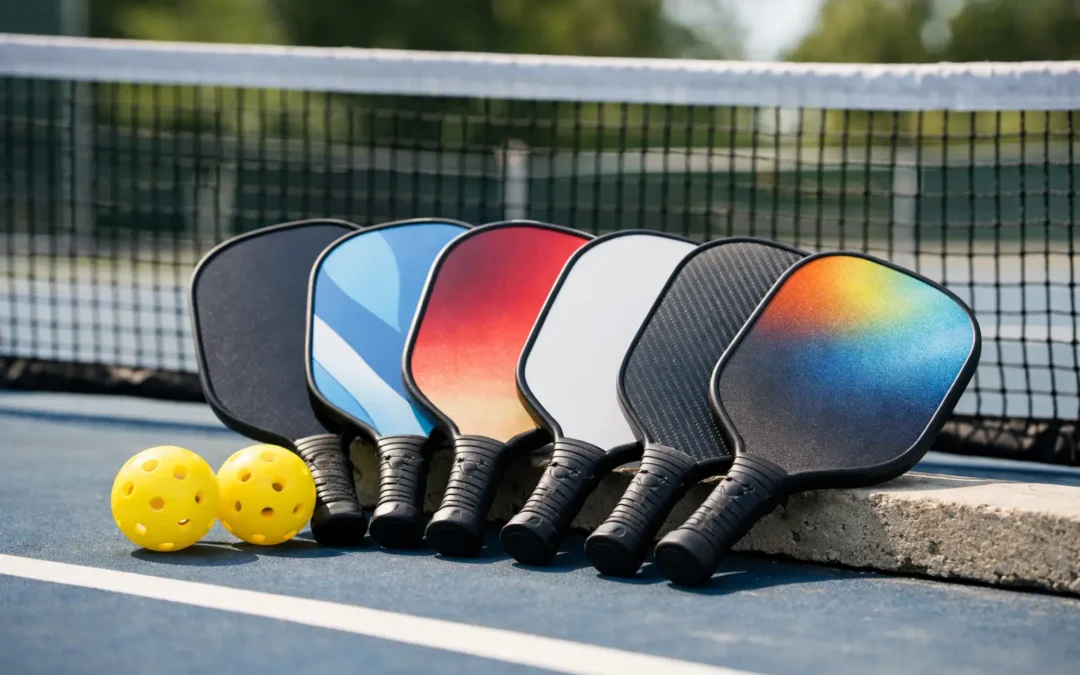
A paddle that feels too heavy can make your first few pickleball sessions feel like work. One that is too light or poorly balanced can leave you struggling to control the ball at the kitchen line. This pickleball paddle for beginners review focuses on what actually helps new players build confidence: comfort, control, forgiveness, and a price that makes sense before you know exactly how often you will play.
At Around The Post Pickleball, our certified instructors have taught more than 3,500 players across The Hamptons and Eastern Long Island. We see the same pattern every season: beginners do not need the most expensive paddle in the rack. They need a paddle that supports sound fundamentals while they learn to serve, return, volley, and move with purpose.
What Beginners Should Look for First
A beginner paddle should make the game easier to learn, not ask you to compensate for its quirks. The right choice usually falls into a comfortable middle ground: moderate weight, a standard shape, a forgiving sweet spot, and a grip that fits your hand without strain.
Price matters, but it should not be the only deciding factor. A very inexpensive paddle may be perfectly fine for a one-time family game, yet it can feel unstable and wear out quickly if you begin playing weekly. On the other hand, spending top dollar on a high-performance model before you understand your style of play is rarely necessary.
For most new recreational players, a quality entry-level or lower mid-range paddle is the smart place to start. It gives you enough consistency to develop good habits and enough durability to carry you through clinics, social games, and your first local round robin.
Pickleball Paddle for Beginners Review: 6 Features That Matter
1. A midweight paddle is the safest all-around choice
Weight has an immediate effect on how a paddle feels. Most beginners will be best served by a midweight paddle, generally around 7.6 to 8.2 ounces. This range offers enough stability for blocking faster shots and enough substance behind serves and groundstrokes, without feeling cumbersome during quick exchanges.
Lightweight paddles can be easier to maneuver, particularly for players with shoulder or elbow sensitivity. The trade-off is that they may twist more when the ball hits near the edge. Heavier paddles can provide added power and stability, but they can fatigue the arm and make touch shots harder to manage for a new player.
If you are unsure, start in the middle. It is the most versatile choice while you learn what your body and game prefer.
2. Standard shapes offer more forgiveness
Elongated paddles are popular because they can add reach and create leverage on drives and serves. They also tend to have a narrower sweet spot. For a player still learning consistent contact, that can mean more mishits and less predictable control.
A standard-shaped paddle is usually the better beginner option. Its broader hitting surface is more forgiving, especially on returns, volleys, and defensive shots at the kitchen line. You may give up a little reach, but you gain confidence where it matters most early on: making clean, repeatable contact.
As your skill improves, you may decide an elongated model suits your style. There is no need to rush there on day one.
3. A wider sweet spot helps you learn faster
The sweet spot is the area of the paddle face that produces the most solid and controlled contact. A paddle with a larger, more accessible sweet spot does not replace good technique, but it makes the learning process less punishing.
Beginners often contact the ball slightly off center while adjusting to pickleball’s pace, bounce, and compact swing mechanics. A forgiving paddle keeps those shots more playable. That means longer rallies, less frustration, and more opportunities to work on footwork and shot selection instead of chasing balls after every mishit.
Look for paddles described as control-oriented, forgiving, or designed with a large sweet spot. These terms are more useful to beginners than marketing claims about maximum power.
4. Grip size should feel secure, not oversized
A grip that is too large makes it harder to use your fingers and wrist for touch, especially when dinking or resetting a hard shot. A grip that is too small can feel unstable and may encourage you to squeeze the handle too tightly.
Many adult beginners do well with a grip around 4.25 inches. Players with smaller hands may prefer 4.0 or 4.125 inches. If you are between sizes, choosing slightly smaller is usually safer because you can build up the grip with an overgrip later.
Hold the paddle as if you are shaking hands with it. Your hand should feel relaxed, with enough room for your fingers to wrap naturally around the handle. You should not have to grip it like a hammer to keep it from moving.
5. Composite faces are a strong starting point
Beginner paddles come in several materials, including wood, composite, fiberglass, carbon fiber, and graphite-style surfaces. Wood paddles are durable and inexpensive, but they are typically heavier and less refined. They work for casual group use, but they are not usually the best option for someone planning to play regularly.
Composite paddles are a dependable entry point because they blend comfort, pop, and durability at approachable prices. Fiberglass faces often provide a little more immediate power, while carbon fiber and graphite-oriented faces are often associated with a softer, more controlled feel. The exact result depends on the paddle’s core, construction, and balance, so material alone should not make the decision.
For most beginners, a well-made composite paddle with a polymer honeycomb core is a sensible purchase. It offers a comfortable feel without paying for advanced performance features you may not yet use.
6. Do not overlook approved construction and durability
If you plan to play in organized leagues, tournaments, or structured events, choose a paddle that is approved for sanctioned play. Rules and approval lists can change, so check the current product details before purchasing rather than assuming every paddle is eligible.
Also inspect practical details. A protective edge guard can help a paddle survive accidental court contact. A quality handle wrap improves comfort. A dependable warranty can matter if you are investing beyond the lowest price tier. These are not flashy features, but they affect how long the paddle remains enjoyable to use.
How Much Should a Beginner Spend?
For a player who expects to take lessons, join clinics, or play consistently, the practical sweet spot is often around $60 to $120. In that range, you can find a paddle with a modern polymer core, a comfortable grip, and enough stability to grow with your game.
Below that range, there are useful starter options, especially if you are buying multiple paddles for guests or testing whether pickleball is for you. Just understand that very low-cost bundles can vary widely in balance, grip quality, and durability. They may get you on court, but they may not give you the most consistent learning experience.
Above that range, you begin paying for premium materials, specialized shapes, enhanced spin potential, and more refined feel. Those features can be worthwhile for committed players, but a new player will usually benefit more from a certified lesson than from an extra $100 of paddle technology.
Match the Paddle to How You Plan to Play
Your first paddle should reflect your likely playing environment. If you are joining beginner clinics and social open play, prioritize comfort and control. If you have a tennis background and naturally generate pace, avoid choosing a power-focused paddle simply because it sounds familiar. Pickleball rewards patience, placement, and soft hands near the kitchen.
If you are dealing with tennis elbow, shoulder discomfort, or arthritis, consult a qualified medical professional when appropriate and consider a lighter or more arm-friendly paddle. Technique matters here, too. Gripping too tightly and swinging too big can create problems no paddle will solve.
For seasonal players in The Hamptons or Eastern Long Island, a reliable midweight paddle is especially practical. It can move comfortably from a first clinic to a backyard game, a community court, or a professionally organized event without feeling out of place.
Test Before You Commit When You Can
Paddle specifications are useful, but feel is personal. Two paddles with the same listed weight can play differently because of balance. One may feel quick at the net, while another feels more solid on a drive. Whenever possible, hit a few balls before buying.
Pay attention to whether the paddle feels stable on off-center contact, whether your hand stays relaxed, and whether you can control a simple dink without fighting the face. Do not judge it only by how hard you can hit a serve. The paddle that helps you keep a seven-ball kitchen rally alive is often the paddle that will help you improve faster.
A good first paddle is not a lifetime commitment. It is a dependable tool for learning the game, meeting new people, and enjoying the early wins that make pickleball so addictive. Choose one that feels comfortable in your hand, then give yourself the better advantage: time on court with clear instruction and a welcoming group of players.