A court can look faded long before it is truly worn out. But on Eastern Long Island, a few hairline cracks can quickly become bigger problems after winter moisture, freeze-thaw cycles, and summer heat take their turn. Choosing among pickleball court resurfacing options means looking beyond fresh color and asking a more useful question: what does the existing surface need to play safely and hold up season after season?
For a home court, club, HOA, school, or hospitality property, resurfacing is a chance to improve more than appearance. The right system can sharpen ball visibility, improve traction, address minor surface flaws, and create a court that feels worthy of the players and events it will host. The wrong system can cover symptoms for a short time while cracks, puddling, or base movement continue underneath.
Start With the Court You Have
Resurfacing is not one universal service. The best approach depends on whether the court is asphalt or concrete, the condition of its base, the severity and pattern of cracking, drainage, shade exposure, and how heavily it will be used.
A court with faded paint, slight texture loss, and isolated surface wear may be a good candidate for a standard acrylic resurfacing system. A court with recurring cracks, low spots, or obvious heaving needs more investigation before color coatings are considered. A professional site evaluation should include the playing surface, perimeter, drainage paths, fencing, and surrounding vegetation. Water that reaches the court from an uphill lawn, roofline, or poorly directed irrigation system can shorten the life of even a well-applied surface.
On the East End, timing also matters. Surface work needs the right weather window for preparation, application, and curing. Planning before the busy spring and summer calendar gives property owners more flexibility and helps avoid taking a court offline during peak use.
Acrylic Coating Systems: The Go-To Resurfacing Choice
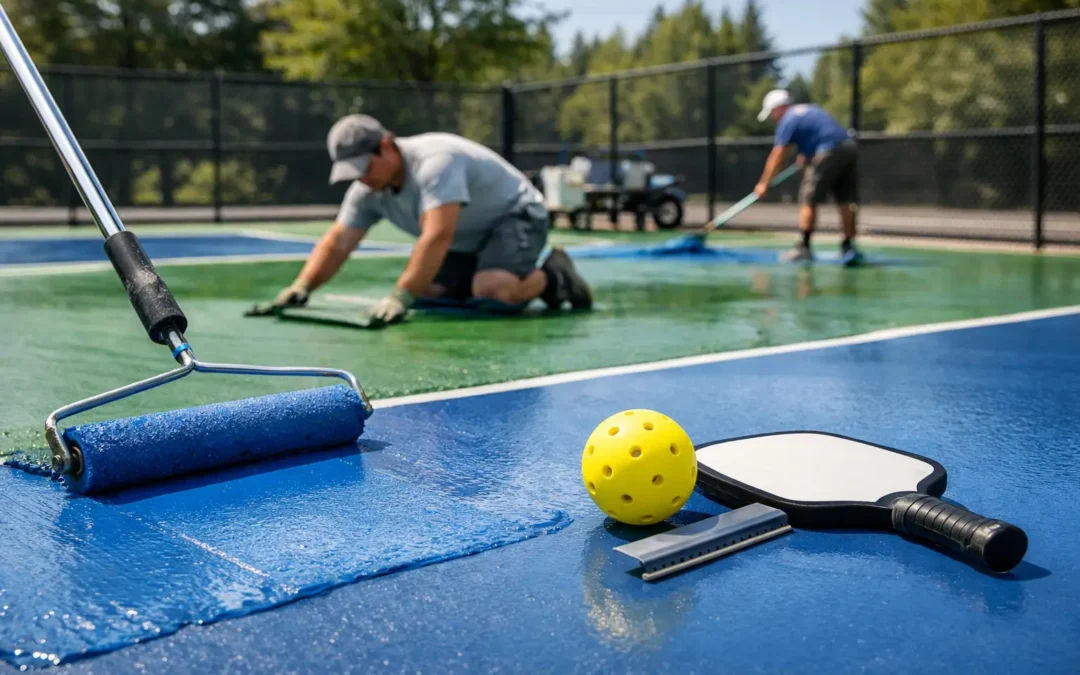
For sound asphalt and concrete courts, acrylic coating systems are the most common pickleball court resurfacing option. This process typically begins with cleaning, crack treatment, and localized patching. Contractors then apply acrylic resurfacer coats, textured color coats, and crisp game lines designed for pickleball play.
Acrylic systems are popular for good reason. They provide a consistent, non-slip playing surface, allow for custom court colors, and can restore a tired court without the expense and disruption of rebuilding it. They also make a major visual difference. Clear contrast between the court body, non-volley zone, and boundary lines helps players track the ball and improves the overall experience for beginners, guests, and competitive players alike.
The trade-off is that acrylic coatings are not structural repairs. They can fill fine surface imperfections and help protect the pavement, but they cannot stop a base that is moving. If larger cracks are widening, branching heavily, or returning soon after past repairs, a coating-only solution may look good initially but may not deliver the lifespan you expect.
Standard Color Resurfacing
Standard resurfacing is best for courts with generally stable pavement and cosmetic wear. It is often the most efficient route when the court has lost color, developed minor roughness, or needs fresh lines after years of play.
This approach works especially well for properties converting an existing tennis court layout into dedicated pickleball play. Depending on available space and local needs, the project may include one court, multiple striped courts on a tennis footprint, or a redesigned dedicated pickleball layout.
Crack Repair and Acrylic Resurfacing
Many courts need more than a wash and new color. Crack repair is commonly paired with acrylic resurfacing to address narrow, non-structural cracks before the coating is installed. Flexible crack fillers and membrane systems can help manage minor movement and create a cleaner finished surface.
There is no permanent cosmetic fix for every crack. Courts move with temperature changes, moisture, roots, and underlying soil conditions. A qualified contractor should be candid about whether a crack repair is a reasonable maintenance measure or whether the court needs more substantial pavement work first.
When an Overlay Makes Sense
An asphalt overlay can be the right answer when the existing surface has widespread deterioration but the underlying base remains stable enough to support new pavement. In simple terms, a new layer of asphalt is installed over the existing court, then the surface is prepared and coated for pickleball.
An overlay can create a more uniform plane than patching numerous worn areas. It may be a stronger long-term investment than repeatedly treating a court with extensive shallow cracking and surface fatigue. However, it adds height to the court, which can affect gates, fencing, drainage edges, and transitions around the playing area. Those details need to be planned, not improvised after paving begins.
Overlays are not a cure for failed drainage or major base instability. If the court has settled in one area, holds standing water, or shows large structural cracks, the cause must be corrected first. Adding asphalt over an active problem can simply move the problem closer to the new surface.
Concrete Repairs, Leveling, and Coatings
Concrete pickleball courts have different repair needs from asphalt. A concrete slab may remain structurally sound for decades, but it can develop cracks, spalling, uneven joints, or slick areas that affect play. Depending on the condition, repairs may include patching damaged sections, treating cracks, grinding minor high points, improving drainage, and installing an acrylic sport coating system.
Concrete expansion joints require careful treatment. They exist because the slab needs room to move. Filling or coating them without the right system can lead to premature failure. The goal is a court that plays consistently while respecting the way the concrete was designed to expand and contract.
For concrete with serious settlement, broken panels, or extensive movement, selective removal and replacement may be more practical than trying to level everything with surface materials. It costs more upfront, but it can prevent a cycle of recurring repairs and court closures.
Modular Tiles: A Different Kind of Upgrade
Modular sport tiles are sometimes grouped with pickleball court resurfacing options, although they are technically a surface cover rather than a coating. Interlocking tile systems can be installed over certain existing hard courts and offer quick color, defined game lines, and a more forgiving feel underfoot than a traditional painted surface.
They can be attractive for multi-use recreation areas, temporary installations, and owners who want a distinct visual finish. They also come with considerations: the base still needs adequate drainage and stability, debris can collect at edges or seams, and the ball response differs from an acrylic court. For serious players who want a familiar tournament-style pace and bounce, a professionally coated hard court often remains the preferred choice.
Full Reconstruction: The Right Call for a Failed Court
There is a point where resurfacing becomes a short-term answer to a long-term problem. Full reconstruction is worth considering when the base has failed, drainage is poor, the court has significant heaving or settlement, or cracks are broad and persistent across much of the surface.
A rebuild allows the project team to correct grading, install a properly compacted base, address drainage, and create a court built around the intended use. That may include fencing, lighting, windscreens, seating, pathways, and space for spectators or social events. For a property that plans to host regular groups, clinics, or corporate outings, those surrounding details matter just as much as the paint color.
Reconstruction requires a larger budget and longer timeline, but it gives owners the cleanest path to a dependable court. It is often the better value when a patch-and-coat approach would need to be repeated every few years.
Choosing Colors, Texture, and Lines for Better Play
Once the repair strategy is clear, the finish decisions become more fun. Blue and green remain popular because they offer strong ball contrast and a classic sport-court look, while charcoal, red, and custom combinations can better match a home or club setting. The best palette is one that makes white, yellow, and neon pickleballs easy to see in changing sunlight.
Texture should be balanced. Too little texture can feel slick, particularly after dew or light moisture. Too much texture can be hard on balls, shoes, and players’ joints. A properly specified acrylic system gives players reliable traction without making the court feel overly abrasive.
Line layout deserves precision. A pickleball court is 20 by 44 feet, and small layout errors become obvious once games begin. Clean, accurately measured lines create a professional experience and prevent the frustrating boundary debates that interrupt otherwise great play.
What Affects Resurfacing Cost and Timing?
The scope of work drives price more than the color selection alone. The biggest variables are surface condition, crack repairs, patching, drainage work, court size, access for equipment, whether the project includes fencing or lighting changes, and the selected system. A straightforward acrylic refresh is very different from an overlay or reconstruction project.
Property owners should also think about lifecycle value. A lower initial bid may leave out preparation steps that protect the finished surface. Thorough cleaning, proper crack treatment, compatible materials, correct drying conditions, and careful line striping are where a court earns its durability.
Before scheduling work, clarify how long the court will be unavailable, what weather conditions can affect the schedule, how the surface should be maintained, and what type of warranty applies to the work. A clear answer to each question makes planning easier, especially for seasonal homes and properties with active event calendars.
A pickleball court should invite people to play, stay, and come back with friends. Whether your court needs a fresh acrylic finish, targeted repairs, an overlay, or a complete rebuild, start with an honest assessment of the surface beneath your feet. Around The Post Pickleball brings the same local, player-first perspective used across instruction, events, and court development to help Eastern Long Island properties build courts that look sharp and play even better.