
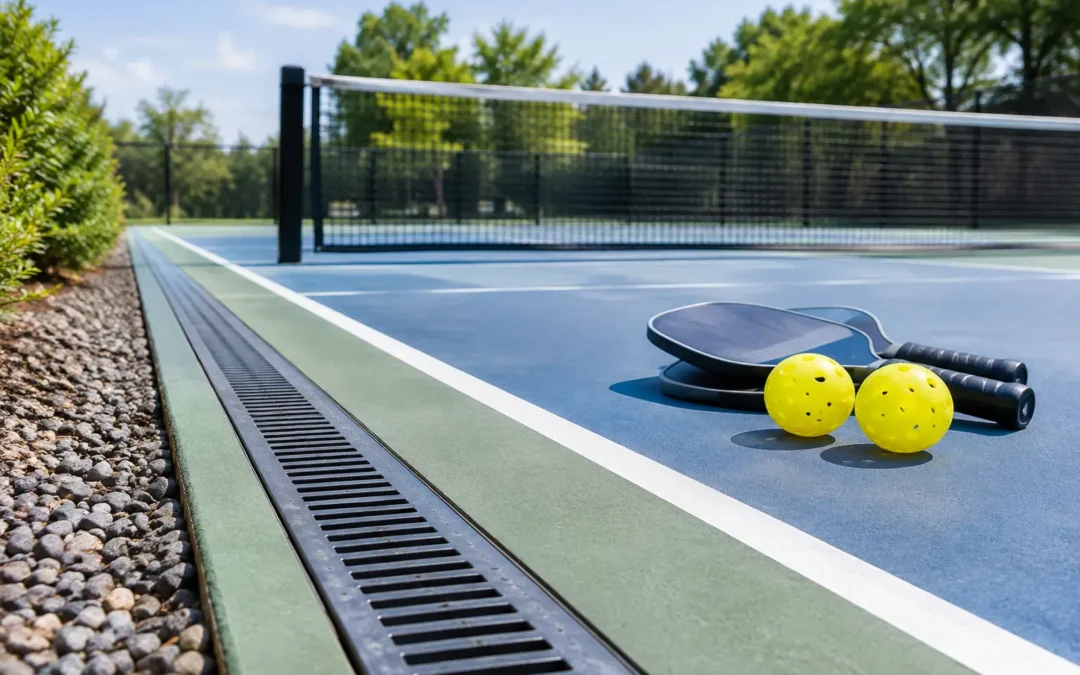
A court can have beautiful color, quality fencing, and a premium playing surface, then still become the court nobody wants to use after a hard rain. Standing water delays play, encourages slick spots and algae, and can shorten the life of the surface below your feet. This pickleball court drainage guide covers the planning decisions that help homeowners, clubs, and hosts across The Hamptons and Eastern Long Island protect their investment and get back on court faster.
Drainage is not a finishing detail. It is part of the court system from day one. On the East End, sandy soils can drain quickly in one location and poorly a few yards away, while seasonal water tables, coastal storms, mature landscaping, and flat properties create very different conditions. The right solution depends on the site, not on a one-size-fits-all construction package.
Start With the Water, Not the Surface
Before a contractor excavates, identify where water comes from, where it naturally travels, and where it can safely leave the property. Watch the site during or shortly after a significant rain if possible. Puddles in the lawn, wet foundation areas, runoff from roofs, and water flowing down a nearby driveway all matter because they can end up at the court.
A proper site review should account for existing grade, soil behavior, groundwater conditions, adjacent structures, trees, and local drainage requirements. A court placed in a low point may require more than a slight slope. It may need swales, collection basins, subsurface drainage, or regrading beyond the court footprint.
The goal is simple: rainwater should move away from the playing surface without being directed toward a home, neighbor, septic system, or protected area. That sounds obvious, but it is where costly mistakes happen. Moving water off a court is only successful when there is an approved, practical destination for it.
Pickleball Court Drainage Guide: Get the Slope Right
Court slope is the first line of defense against standing water. A pickleball court must feel level to players, yet it cannot be perfectly flat. Construction teams generally build in a subtle, consistent slope that encourages sheet flow toward a designated edge or drainage point.
The exact pitch should be determined by the site plan and surface system, but a common target is roughly 1 percent, or about one-eighth inch per foot. Over a full court area, that is enough to guide water without making players feel as if they are playing uphill or downhill. Too little slope allows puddles to form. Too much can affect comfort, ball behavior, and the quality of competitive play.
A single-plane slope is often the cleanest approach for a standalone court because it creates a predictable direction of flow. In tighter sites, a crowned or multi-directional design can work, but it needs careful layout. Poorly planned transitions create low spots, and low spots are where water exposes every shortcut in the build.
Slope also needs to extend beyond the painted lines. Runoff should clear the full playing area, including the perimeter space where players serve, chase lobs, and enter the court. Water trapped along fence lines can migrate back toward the surface or undermine edge conditions over time.
Do Not Assume an Existing Slab Is Ready
Converting an old tennis court, patio, or slab can be an excellent option, but only after the existing grade is evaluated. Cracks, settled areas, and prior patchwork may signal drainage or base problems below. Resurfacing over an unresolved low spot can make the court look finished for a season while the water issue continues underneath.
A professional assessment can determine whether the surface can be repaired and coated, needs leveling work, or should be removed and rebuilt. The most affordable option upfront is not always the best value if it leads to recurring repairs and lost playing time.
Build a Base That Moves Water Correctly
The playing surface gets attention because it is visible. The base is where long-term performance is decided. A properly prepared base supports the court, handles freeze-thaw movement, and keeps water from lingering beneath the surface.
For many outdoor courts, the process includes excavation, compacted aggregate layers, and a finished asphalt or post-tension concrete surface, depending on the design. Material depth, compaction, and edge restraint should reflect soil conditions and the local climate. Northeastern winters are unforgiving when water enters weak spots, freezes, expands, and turns a small crack into a bigger repair.
Drainage stone and geotextile fabric may be appropriate in areas with challenging soils or persistent moisture. These components can help separate materials and move water through the system rather than allowing fine soil to clog the aggregate layer. They are not automatic add-ons for every site. A sandy, well-drained property and a low-lying property with heavy or compacted soil should not receive the same recommendation.
Surface water and groundwater are different problems. A court can shed rain perfectly and still suffer from a high water table pushing moisture into the base. When groundwater is a concern, subsurface drainage design becomes especially valuable.
Choose the Right Runoff Strategy
Most courts rely on a combination of slope and perimeter drainage. The best setup is the one that handles the volume of water your site receives while staying easy to maintain.
A shallow swale can direct runoff across a landscaped area without the look of a traditional drain. This works well when the property has room and the final discharge area can absorb water safely. A French drain, typically a perforated pipe surrounded by drainage stone, can collect subsurface water and move it toward an approved outlet. Channel drains may be useful beside a court, walkway, or building where concentrated runoff needs to be intercepted.
Catch basins are another option for sites that receive heavy flows from roofs, driveways, or neighboring grades. They can be effective, but they require maintenance. Leaves, sand, mulch, and tennis ball fuzz do not belong in a drainage system. If a drain is difficult to access and clean, it may become a problem at the exact moment a storm tests it.
Avoid relying on the court fence as a drainage plan. Fences contain balls, not water. If runoff is forced against the fence perimeter, it can create erosion, puddling, and muddy entry areas that players carry back onto the court.
Plan for the Hamptons and Eastern Long Island Climate
Local conditions change the conversation. Summer storms can drop water quickly, and shoulder-season weather can leave shaded areas damp for days. Coastal wind may move sand and debris onto drains, while winter freeze-thaw cycles punish weak base preparation.
Shade is a major factor that is easy to underestimate. A court beneath dense trees or on the north side of a building may drain adequately but dry slowly. That can mean slick algae growth, surface staining, and more frequent cleaning. Selective landscaping changes, better air movement, and thoughtful court orientation can improve dry time without sacrificing the feel of the property.
Irrigation deserves attention as well. Sprinkler heads should not spray onto the court, and runoff from nearby beds should not cross the playing surface. A court that is constantly wet at one baseline may have an irrigation issue, not a grading issue.
Protect the Court After Construction
Drainage maintenance is simple when it is built into the routine. After heavy weather, inspect the court for persistent puddles, soft spots near edges, washed-out landscaping, and debris blocking drains or swales. Clean gutters and downspouts nearby, especially if roof runoff is part of the drainage plan.
Small cracks should be addressed before water works its way below the surface. Keep vegetation from growing into drainage paths, and avoid piling mulch, soil, or decorative stone against the court edge where it can block flow. If water regularly remains more than an hour or two after rain on a sunny, breezy day, bring in a qualified court professional rather than waiting for the next resurfacing cycle.
Around The Post Pickleball has taught more than 3,500 players and helped create the kind of well-run courts and events that keep local pickleball communities moving. For a private home, club, or event-ready venue, drainage planning is what turns a good-looking court into a reliable place to play.
The best time to solve water problems is before the first ball is served. Give the court a clear path for runoff, build the base for your actual site conditions, and you will spend more days playing instead of waiting for the surface to dry.