
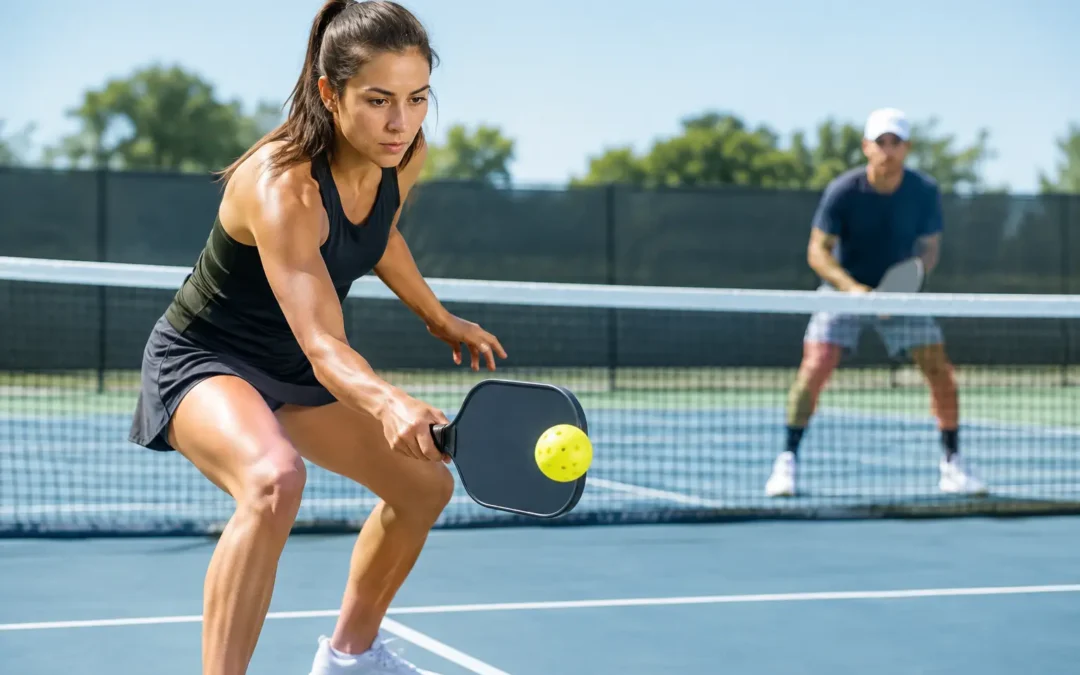
The third shot drop is the point where a serving team stops defending from the baseline and starts earning its way to the kitchen. That is why mastering third shot drops changes so many matches. A well-placed drop buys time, forces a softer reply, and lets you and your partner move forward together. A rushed or floating drop does the opposite: it gives the return team an easy ball to attack.
For recreational players across The Hamptons and Eastern Long Island, this shot can feel frustrating because it asks for touch, judgment, and discipline at the same time. The good news is that a reliable third shot drop is not a trick shot. It is a repeatable skill built through smart setup, clean contact, and purposeful practice.
What a Third Shot Drop Is Designed to Do
After your serve and your opponent’s return, the returning team is usually already established at the non-volley zone line. You and your partner are back near the baseline. The third shot is your opportunity to neutralize that positional disadvantage.
A drop should travel in a high, controlled arc and land in or near the kitchen, ideally making the opposing player hit upward. You are not trying to hit a winner. You are asking a tougher question: can your opponents attack a ball that arrives low, soft, and close to their feet?
When the answer is no, you have time to advance. That is the real payoff. The drop is a transition tool, not simply a soft shot. Players who understand that purpose stop judging every drop by whether it lands perfectly on the kitchen line. A useful drop may be a little deeper or wider than planned if it prevents an aggressive volley and gives your team a safe path forward.
Mastering Third Shot Drops Starts Before Contact
Most poor drops begin with poor preparation. A deep, fast return can push you behind the baseline and make you feel as if you must force the ball forward. Resist that urge. Move your feet first, create space from the ball, and get balanced before you swing.
Use a compact motion. Your paddle should stay in front of your body, with a relaxed grip and a slightly open face. Think of lifting the ball rather than hitting it. The shot needs enough height to clear the net with margin, then enough softness to fall before the opposing team can volley it at shoulder height.
Your legs provide the shot’s foundation. Bend early, stay stable, and let a small upward movement create the lift. Players often overuse their wrist or take a big backswing when they are trying to manufacture touch. Both habits make the paddle face less predictable. A quiet wrist and smooth shoulder-led motion produce far more consistent results.
Contact the ball out in front, usually around knee to waist height. If the return is low, give it more arc rather than trying to brush up sharply. If it is high and sits up, recognize that a drop may not be the best choice. Good decision-making is part of good technique.
Give Yourself More Net Clearance
A drop that barely clears the net looks impressive until it clips the tape. At the recreational and intermediate levels, a safer target is often 2 to 4 feet above the net. That added height gives you room for imperfect contact while still allowing the ball to descend into the kitchen.
The ball should feel as though it is rising gently, pausing, and dropping. If it travels on a straight line, it is likely becoming a drive. If it rises too high and lands deep, it becomes an invitation for an overhead or an aggressive roll volley. The ideal trajectory is controlled, not delicate.
Choose Targets That Make Your Opponents Uncomfortable
The middle of the court is the highest-percentage target for many third shot drops. It reduces angle, creates uncertainty about who will take the ball, and limits the chance that either opponent can pull you wide. A middle drop is especially effective when both opponents are eager to poach or when their backhands meet near center.
A crosscourt drop gives you more court to work with and can be a smart option when you are pulled wide. The longer diagonal path gives the ball extra time to descend. The trade-off is that you may expose your partner if the ball sits up, so both players need to understand the next movement.
Dropping to a player’s backhand can be effective, but do not treat it as an automatic rule. Some players have a more dangerous backhand roll than forehand. Watch what happens in the first few rallies. Are they comfortable taking balls out of the air? Do they attack middle balls? Do they struggle with low volleys? The best target is the one that earns your team a neutral response, not the one that sounds best in a drill.
Move as a Team After the Drop
A quality third shot means little if one player charges the kitchen while the other stays near the baseline. After contact, both partners should move forward with intention, then split-step as the opponents prepare to hit. Your pace depends on the ball you hit.
On an excellent drop that pulls an opponent up and forces them to lift, you may be able to advance quickly to the non-volley zone line. On a decent but slightly high drop, stop in the transition zone and prepare for a reset. On a poor drop, do not sprint into an attack. Stay balanced, defend the next ball, and look for another opportunity to work forward.
This is where patient teams separate themselves. They do not assume every third shot earns immediate kitchen position. They use a sequence of soft shots, resets, and controlled movement until they establish equal footing at the line.
Know When a Drive Is the Better Third Shot
The third shot drop is essential, but it is not mandatory on every point. A drive can be the better choice when the return is short, high, or sitting in your strike zone. It can also work well against opponents who crowd the kitchen, particularly if you can drive at the hip or through the middle.
The key is intention. A drive should create a weak block, a pop-up, or a predictable next ball. Blasting the ball hard because the drop feels uncomfortable is not a strategy. If your drive repeatedly comes back as an easy volley, you are helping the returning team maintain control.
Strong players vary the look. They use the same compact preparation for drops and drives whenever possible, making it harder for opponents to read the shot. The goal is not to become a drop-only player. The goal is to become difficult to predict.
Practice the Shot Under Real Pressure
Hitting dozens of drops from a hand-fed ball can help you feel the motion, but it does not fully prepare you for a deep return, moving feet, and two opponents ready to attack. Progress your practice.
Start by dropping from the baseline to a large target area in the kitchen. Then have a partner return serves with different depth and pace. Finally, play points where the serving team earns the rally only after both players have reached the kitchen. That constraint makes the purpose of the drop clear: you are building a better position, not collecting pretty shots.
Track patterns instead of obsessing over a single miss. Are your drops falling into the net? Add height and relax your grip. Are they sailing long? Shorten the swing and soften the push from your legs. Are they landing well but being attacked? Improve your target, trajectory, or transition timing.
At Around The Post Pickleball, certified instruction is built around these practical details because players improve faster when feedback connects technique to the actual rally. With more than 3,500 players taught, we have seen that confidence on the third shot usually arrives when players stop trying to be perfect and start learning to be purposeful.
The next time you serve, do not treat the third ball as an obstacle between you and the fun part of the point. Treat it as your invitation forward. Give it shape, give it margin, move with your partner, and let each controlled drop make the kitchen feel a little closer.