
A clean third-shot drop that works in a quiet indoor gym can feel completely different when an East End breeze catches the ball. That is exactly why indoor outdoor pickleball lessons matter. Great players do not just memorize strokes – they learn how to read the court, control the ball, communicate with a partner, and make smart decisions wherever they play.
For players in The Hamptons and across Eastern Long Island, the season rarely stays in one setting. Indoor courts keep games moving through colder months and rainy stretches. Outdoor courts bring sun, wind, faster play, and the social energy that makes pickleball such a draw. Training in both environments creates a more complete, more confident player.
Why Indoor and Outdoor Play Feel Different
The dimensions of the court do not change, but the ball, lighting, sound, air movement, and pace can. Indoors, players often notice clearer ball tracking, little to no wind, and a more consistent bounce. The enclosed space can also make the game feel faster because there are fewer environmental variables competing for attention.
Outdoors, conditions become part of every point. Bright sun can affect an overhead. Wind can push a lob long, hold up a drive, or make a soft drop drift into the kitchen. Temperature changes how lively the ball feels, while surface texture may affect bounce and footwork. Players who only practice in perfect conditions can get frustrated when their usual shot does not produce the usual result.
That does not mean one environment is better than the other. Indoor play is excellent for building repeatable mechanics and drilling with precision. Outdoor play is where adaptability gets tested. The strongest development plan uses both.
What Indoor Outdoor Pickleball Lessons Should Teach
A quality lesson should not simply move the same drills from one venue to another. It should show players what to keep consistent and what to adjust. Certified instruction brings a clear progression to those decisions, whether a student is picking up a paddle for the first time or competing at the 4.0 level.
Keep the Fundamentals Stable
Your ready position, grip awareness, paddle preparation, balance, and court positioning should travel with you. A compact swing still helps control a fast volley. A split step still prepares you to react. Moving with your partner and protecting the middle still win points in every building and on every outdoor court.
Beginners benefit most from learning these foundations before chasing power. When contact, footwork, and basic shot selection are sound, players can make adjustments without rebuilding their game each time they change locations.
Learn to Adjust the Ball, Not Panic About It
Outdoor conditions ask for more margin and better judgment. On a windy day, a player may need to aim farther inside the lines, use a firmer paddle face on a crosscourt dink, or choose a lower, more controlled return instead of a high ball that hangs in the air. If the sun is in a difficult position, communication before the serve and a smarter target can be more valuable than forcing a hero shot.
Indoor adjustments can be subtler but just as useful. A quicker-feeling ball may reward earlier preparation and shorter backswing mechanics. The sound and pace of an indoor game can make players rush, especially during fast exchanges at the kitchen line. Lessons should train calm hands and disciplined shot selection, not just faster reactions.
Build a Game Plan for Your Level
A newer player may focus on serving deep, returning deep, getting to the non-volley zone with balance, and keeping the ball in play. Those priorities work everywhere. An intermediate player can add reliable third-shot drops, transition-zone resets, purposeful dinking, and a better understanding of when to speed up.
For advanced recreational players, environment-specific coaching often centers on patterns. Can you recognize when wind makes a drive less reliable? Can you maintain a soft-game advantage when the ball is moving differently? Can you identify an opponent struggling with the sun, then use placement without becoming predictable? These are competitive skills, but they are also practical skills for organized local play.
The Best Lesson Format Depends on Your Goal
Private instruction is ideal when you want direct feedback on a particular part of your game. Maybe your backhand dink breaks down outdoors, your overhead timing disappears under indoor lights, or you need a clear plan for advancing from recreational games to stronger competition. One-on-one coaching creates space to diagnose the issue and build a targeted fix.
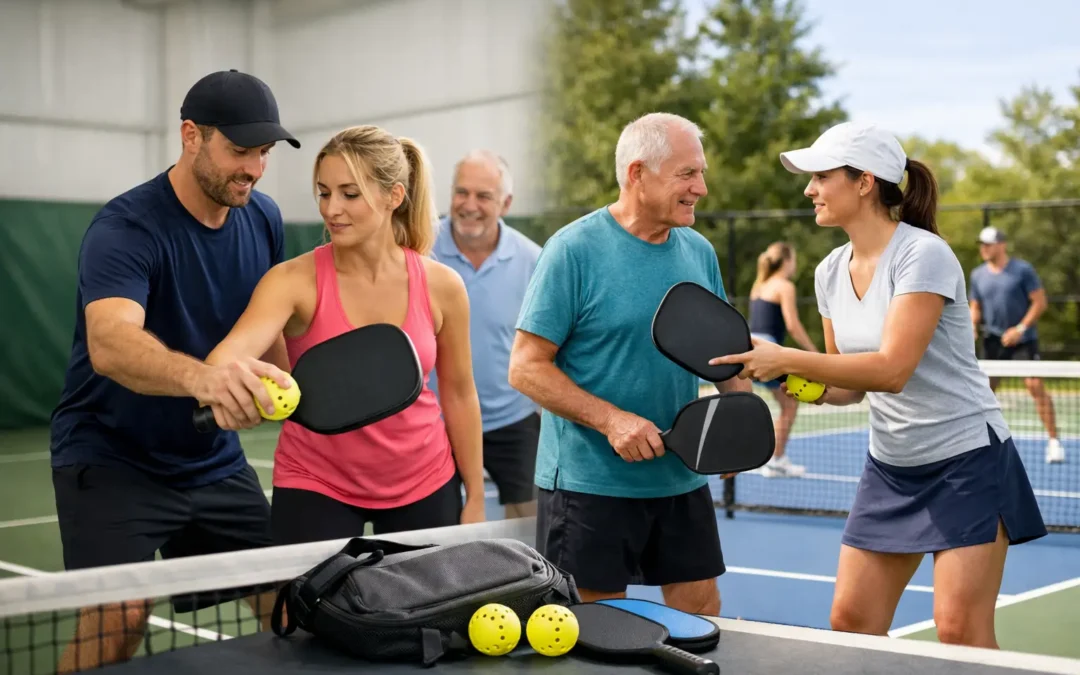
Small-group lessons are especially valuable for players who want live repetitions with movement, communication, and decision-making. Pickleball is not played in isolation. You need to recognize your partner’s position, recover after a wide ball, cover a middle attack, and respond to different styles across the net. A well-run group gives you those situations while still providing coaching.
Clinics and boot camps suit players who want concentrated training around a theme. The best programs are organized by skill level and include purposeful repetition, not just open play with occasional advice. Look for sessions that explain the objective of each drill, give players time to apply it in points, and provide specific feedback they can use in their next match.
Questions to Ask Before Booking a Lesson
The instructor matters as much as the court. Ask about teaching credentials, experience coaching players at your level, class size, and how the session will be structured. A certified coach should be able to explain not only what to do, but why a shot, movement pattern, or tactical choice fits the situation.
It is also reasonable to ask whether the program offers indoor and outdoor options throughout the year. Consistency matters. A player who trains indoors all winter should have a plan for carrying those skills into spring and summer play. Likewise, a regular outdoor player may need help adjusting to indoor conditions when the weather changes.
Around The Post Pickleball has taught more than 3,500 players through certified instruction, structured clinics, and competitive programming across the region. That depth matters because every level needs a different kind of coaching. A first-time player needs clarity and encouragement. A seasoned player needs honest feedback, high-quality reps, and an environment that raises the standard.
How to Get More From Every Session
Come to a lesson with one clear priority. “I want to improve” is understandable, but it is too broad to measure. A better goal might be to keep your returns deeper, improve your backhand reset, stop backing up on overheads, or recognize when to move from dinking into an attack.
Give yourself permission to be uncomfortable during drills. If your coach asks you to slow down, use more margin, or repeat a shot that has been unreliable, the early results may feel awkward. That is part of changing a habit. The value comes from taking the new pattern into point play before reverting to what feels familiar.
After each lesson, choose one cue to carry into your next game. It could be “paddle up,” “split step,” “watch the ball to contact,” or “aim three feet inside the sideline in the wind.” One memorable adjustment is far more likely to stick than a long list of technical thoughts.
Training for the Social Side of the Game
Pickleball improvement is not only about strokes. Players return because the game creates connection, friendly competition, and a reason to stay active. Indoor and outdoor programming gives you more chances to be part of that community, whether you are joining a clinic, preparing for a tournament, planning a private event, or simply looking for better games.
The right lesson environment should feel welcoming without lowering the standard. You should leave with more useful reps, clearer decisions, and a stronger sense of where your game can go next. A court may change with the season, but confident players bring their fundamentals, adaptability, and competitive energy with them.