
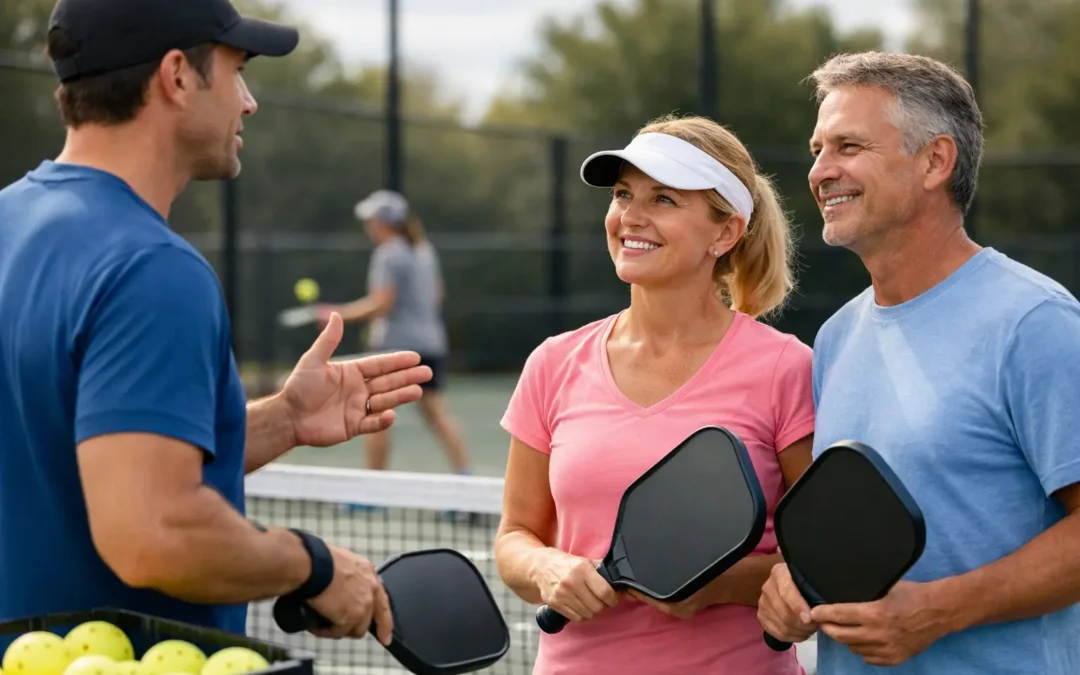
You can feel the difference between random play and real progress fast. One week your drops are landing, your footwork feels sharp, and your confidence is up. The next, timing disappears and old habits creep back in. That is why so many players ask how often should adults take pickleball lessons. The honest answer is not one-size-fits-all. It depends on your level, your goals, how often you play, and how serious you are about improving.
For most adults, the sweet spot is one lesson per week when they are actively trying to get better. That gives you enough coaching to build sound mechanics and enough time between sessions to practice what you learned. More than that can be great if you are training with purpose. Less than that can still work, but progress usually slows unless you are very intentional on your own.
How Often Should Adults Take Pickleball Lessons at Each Level?
Beginners usually benefit the most from consistent instruction early. If you are new to the game, one lesson a week for the first six to eight weeks is a strong rhythm. That schedule helps you learn the fundamentals before bad habits settle in – grip, ready position, serve, return, third-shot choices, kitchen movement, and basic partner positioning.
A lot of adults assume they should just play more and figure it out as they go. Playing does help, but unstructured play often reinforces the same mistakes. If your paddle face is off, if you are backing up instead of holding the line, or if you are driving every third shot without a plan, those patterns get harder to fix later. Early coaching saves time.
For intermediate players, lesson frequency depends on whether you want general improvement or measurable gains. If you are around the recreational 3.0 to 3.5 range and want to clean up shot selection, reset better under pressure, and become more consistent in transition, a lesson every one to two weeks works well. Weekly lessons create momentum. Every other week can still be effective if you are playing and drilling in between.
Advanced recreational players and competitive adults often need a more focused mix. If you are chasing tournament results or trying to break through a rating plateau, one private lesson plus one drill-based clinic per week can be the right formula. At that level, improvement is less about learning the rules and more about refining speed-ups, counters, dinks under pressure, serve-plus-one patterns, and decision-making in live points.
The Best Lesson Schedule Depends on Your Goal
If your goal is confidence, not competition, consistency matters more than intensity. A weekly clinic or private lesson can give you structure without making pickleball feel like work. This is especially true for adults who want to enjoy open play more, meet people, and stop feeling like they are always a step behind.
If your goal is fast improvement, you may want more than one instructional touchpoint each week. That could mean a private lesson to correct mechanics and a clinic to apply those skills in realistic drills. The trade-off is simple – more instruction can accelerate results, but only if you have time to absorb it and practice with intent.
If your goal is tournament play, the standard rises. Better players punish loose technique and poor decision-making, so your training has to be more specific. In that case, weekly lessons are often the minimum, not the maximum, especially during a tournament build-up.
Why Weekly Lessons Work for Most Adults
Adults learn best when coaching and repetition stay close together. Weekly lessons create a practical cycle: learn a concept, practice it during the week, get feedback, then adjust. That rhythm keeps progress moving without overwhelming your schedule.
It also helps with retention. Pickleball looks simple from the outside, but timing, spacing, and touch are learned skills. If too much time passes between lessons, players often spend the first half of the next session just getting back to where they were.
There is also a confidence factor. Players improve faster when they know exactly what they are working on. Weekly instruction gives you a clear focus instead of the familiar pattern of playing a lot, feeling stuck, and wondering why your game is not changing.
When More Than One Lesson a Week Makes Sense
There are seasons when taking more lessons is the right move. If you are brand new and want to get game-ready quickly, two sessions a week for a short period can help build a foundation fast. That works especially well when one session teaches technique and the other reinforces it through guided play.
The same is true if you are preparing for an event, getting back into the game after time away, or trying to correct a specific weakness. Maybe your soft game is breaking down. Maybe you are losing hands battles at the kitchen. Maybe your return and transition are keeping you on defense. In those cases, a short burst of concentrated coaching can create noticeable improvement.
The caution is that more lessons are not automatically better. If you stack too much instruction without enough repetition, everything starts to blur. Adults do best when they can leave a session with one or two priorities, not ten.
When Less Frequent Lessons Can Still Work
Not every adult needs weekly coaching all year. If you already have solid fundamentals and a regular play group, a lesson every two to four weeks may be enough to keep sharpening your game. Think of it as a tune-up rather than a rebuild.
This approach works best for players who are disciplined between sessions. They drill, they play with intention, and they pay attention to patterns in matches. If that sounds like you, less frequent lessons can still produce steady gains.
It is less effective for players who only play socially once in a while or who struggle to self-correct. In that situation, long gaps between lessons usually mean slower progress and repeated frustration.
Private Lessons, Clinics, and Drills Each Solve a Different Problem
Private lessons are the fastest way to fix specific issues. They are ideal when you need detailed feedback on technique, court positioning, strategy, or partner communication. If your improvement matters and you want coaching tailored to your exact game, private instruction is hard to beat.
Clinics are excellent for adults who want structure, repetition, and live coaching in a group setting. They are also a great fit for players who enjoy the social side of pickleball and want to improve alongside others at a similar level.
Drill sessions bridge the gap between knowing and doing. Plenty of players understand what they should do, but struggle to execute under pressure. Repetition solves that. It is one reason experienced instruction matters – certified coaches know how to build sessions that actually transfer into matches.
In a strong program, these formats work together. A player might take a private lesson twice a month, attend a weekly clinic, and play recreationally in between. That is often more effective than only taking private lessons or only showing up for games.
How to Tell If You Need More or Fewer Lessons
If you are improving, winning more of the right points, and feeling more confident in common patterns, your current lesson schedule is probably working. Progress does not have to mean dramatic change every week. Sometimes it looks like fewer unforced errors, better court awareness, or smarter shot choices.
If you keep hitting the same wall, that is a sign your routine may need adjusting. Maybe you need more frequent feedback. Maybe you need drills instead of just games. Maybe you need instruction that matches your level and goals more closely.
Players across The Hamptons and Eastern Long Island often find that the best results come from a structured mix of coaching and play, not guesswork. That is where a professional program makes a difference. Around The Post Pickleball has taught more than 3,500 players through certified instruction, clinics, camps, and competitive experiences designed to help adults improve in a way that feels organized, social, and measurable.
A Simple Rule for How Often Adults Should Take Pickleball Lessons
If you want the simplest answer to how often should adults take pickleball lessons, start with once a week. Stay there long enough to build momentum. If you are brand new or pushing toward competition, add more. If you are steady, experienced, and practicing well between sessions, you can space lessons out.
The right schedule is the one that keeps you improving without burning you out. Good coaching should make the game clearer, more enjoyable, and more rewarding every time you step on the court. If your lessons are doing that, you are on the right track.