
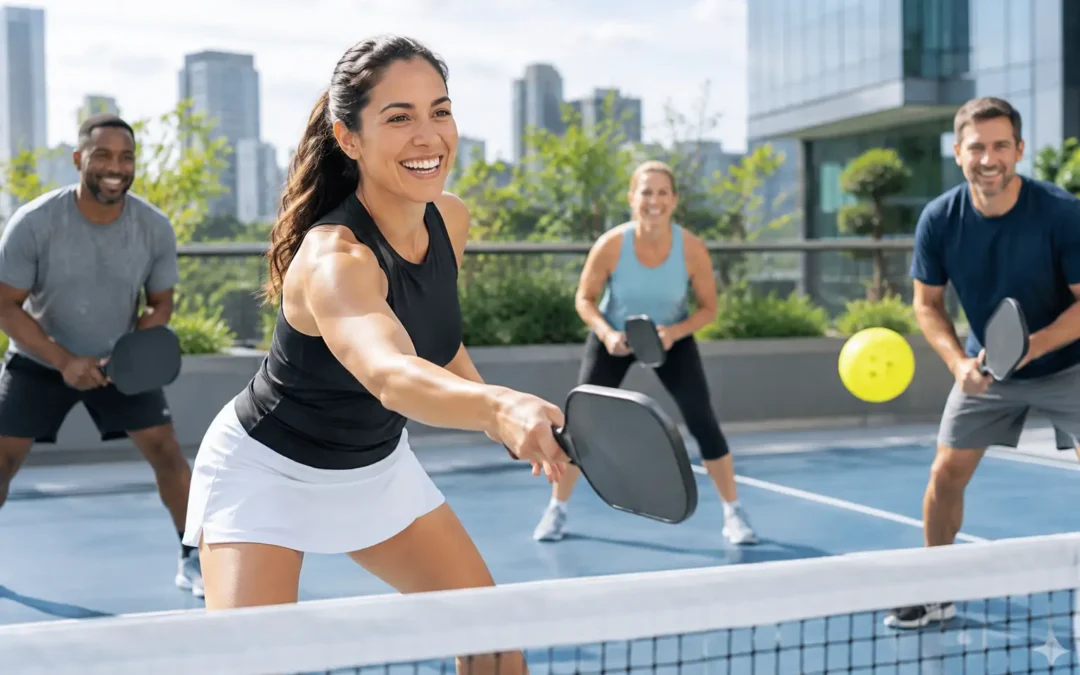
A team that spends the afternoon laughing through a rally, learning a new serve, and cheering a colleague’s first clean volley returns to work differently. The conversation is easier. The hierarchy is softer. People have shared something real outside a conference room. So, can pickleball improve workplace wellness? Yes, when it is thoughtfully organized as more than a one-off recreational perk.
Pickleball is unusually well suited to workplace groups because it combines low-barrier movement with genuine social energy. Employees do not need years of athletic experience to participate, yet the game offers enough strategy and progression to keep competitive personalities engaged. For organizations looking to build healthier, more connected teams, that balance matters.
Can Pickleball Improve Workplace Wellness in Meaningful Ways?
Workplace wellness is not just a step challenge or a fruit bowl in the break room. It is the broader experience of whether people feel energized, included, supported, and connected at work. A well-run pickleball program can contribute to all four.
First, it gets people moving without making fitness the main test. Pickleball involves walking, lateral movement, hand-eye coordination, and short bursts of activity, but it is generally more approachable than many traditional company sports. A beginner can learn the basic rules and join a game quickly. An experienced player can work on shot selection, court positioning, and teamwork. That shared entry point is valuable in a mixed workplace group.
Second, the game creates natural interaction. Doubles partners must communicate. They call balls, adjust positioning, encourage each other after mistakes, and solve small problems in real time. Unlike a seated networking event, the connection has a purpose. People get to know one another while doing something together, rather than being asked to manufacture small talk.
There is also a useful mental reset in play. For an hour or two, employees focus on the next shot instead of their inboxes. The benefit is not that pickleball eliminates stress. It does not. But a structured break that includes movement, fresh air or a change of setting, and positive social contact can help people return with a clearer head.
Why Pickleball Works Across Different Teams
The best workplace activities do not accidentally exclude the people who need connection most. Pickleball has a strong advantage here: the learning curve is friendly, especially when the experience begins with coaching instead of immediately dropping participants into games.
A good instructor can teach the kitchen, scoring, serving, and basic positioning in plain language. More importantly, they can set the tone. New players need permission to miss shots and ask questions. Stronger players need a format that still challenges them without taking over the court. When teams are grouped thoughtfully and games are rotated well, beginners feel welcomed and experienced players stay interested.
This is where professional organization makes a visible difference. At Around The Post Pickleball, certified instructors have taught more than 3,500 players across skill levels, from first-time participants to 4.0 competitors. That experience helps turn a mixed group into an event where people are playing, learning, and enjoying themselves rather than standing on the sidelines waiting for direction.
For companies in The Hamptons, Eastern Long Island, and the broader Northeast, pickleball also offers something traditional off-sites often miss: a setting that feels active and premium without becoming overly formal. It can fit a summer team outing, a client appreciation event, a leadership retreat, or a department celebration.
The Wellness Benefits Depend on the Format
Not every pickleball event automatically improves wellness. A badly designed event can reinforce the same workplace dynamics a company hopes to escape. If advanced players dominate every game, if the rules are unclear, or if people feel pressured to perform physically, the experience can become uncomfortable rather than restorative.
The strongest corporate programs make participation flexible. Employees should be able to play, observe, cheer, take breaks, or join a clinic at their own pace. They should not have to disclose injuries, prove athletic ability, or compete against coworkers in a high-stakes format. Wellness works better when people retain choice.
The event length matters, too. A 90-minute to two-hour program often gives enough time for instruction, play, and informal socializing without draining the group. For a larger organization, rotating courts and using short games keeps energy high and minimizes waiting. For a smaller leadership team, a more focused clinic can create room for skill-building and conversation.
A tournament-style format can be a great fit for a group that wants excitement, but it should be calibrated carefully. Friendly scoring, mixed-skill pairings, and recognition beyond winning make the day more inclusive. Celebrate the best rally, most improved player, strongest teammate, or most enthusiastic beginner alongside the champions.
Movement Is Only Part of the Value
It is tempting to measure wellness programming only by physical activity. That misses much of what makes pickleball valuable at work.
A colleague may remember that their manager encouraged them after three missed serves. A new employee may meet people from another department for the first time. A remote-heavy team may finally have a shared experience that is not another screen-based meeting. Those moments can strengthen belonging, which is a real part of a healthy workplace culture.
Pickleball also gives people a low-pressure way to demonstrate strengths that are rarely visible in their job title. One person may be patient at teaching a partner. Another may remain calm during a close game. Someone quiet in meetings may become the person everyone wants on their team. These small shifts can humanize coworkers and create more generous day-to-day interactions.
That said, leaders should not oversell a single event. One afternoon of play will not repair burnout caused by unreasonable workloads, poor communication, or weak management. Pickleball is a complement to a serious wellness strategy, not a substitute for it. Its role is to create momentum, connection, and a positive shared memory that supports a healthier culture over time.
How to Build a Workplace Pickleball Experience That Lands
Start with the goal, not the activity. If the goal is to welcome new hires, prioritize instruction and mixed teams. If the goal is client entertainment, invest in polished event flow, quality courts, hospitality, and an accessible introduction to the game. If the goal is employee morale, make the atmosphere relaxed and make sure no one is left out because they have never held a paddle.
Next, ask about the group before setting the format. The number of participants, range of mobility, prior experience, available court space, and desired level of competition all shape the right plan. A company of 12 can have a highly personal coaching experience. A group of 80 needs clear rotations, court captains, and a production-level approach to logistics.
Experienced leadership matters here. Certified coaching through organizations such as IPTPA and PPR brings structure to the instruction, while professional event management keeps the experience moving. Participants notice when check-in is smooth, rules are explained clearly, teams are balanced, and the schedule leaves room to enjoy the occasion.
Finally, give the event a life after the last point. Share photos internally, recognize participants, and invite employees to continue playing through recurring clinics or casual sessions. A single corporate event can introduce the sport, but a repeatable opportunity is what turns it into a lasting wellness habit.
A Better Off-Site Starts With a Better Shared Experience
The most successful workplace wellness programs are not the ones employees feel obligated to attend. They are the ones people talk about afterward because they felt included, energized, and pleasantly surprised by what they could do. Pickleball creates that kind of room: for movement, for laughter, for learning, and for colleagues to see each other beyond the job.
The next time your team needs an off-site that feels more memorable than another meal or meeting, consider putting paddles in their hands. A few well-organized games may be the start of a healthier, more connected work community.