
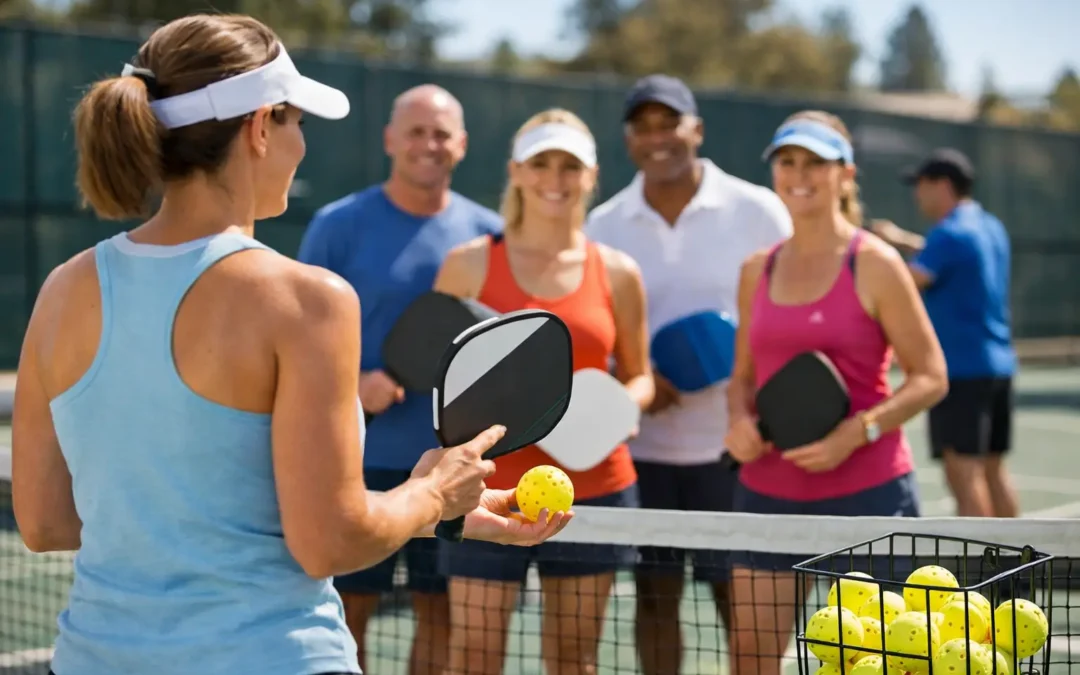
A great clinic changes more than your third-shot drop. It changes how confidently you walk onto the court, how quickly you recognize a winning pattern, and who you call when you want to play next week. The best pickleball clinics for adults combine real instruction with a social, well-run experience – especially for players who want more than random games and generic advice.
For adults in The Hamptons, Eastern Long Island, and across the Northeast, the right clinic should feel organized from the first warm-up to the final point. You deserve coaching that meets your current level, challenges your habits, and gives you a clear path forward.
What Separates a Good Clinic From a Great One
A clinic is not simply a group lesson with extra people on the court. At its best, it is a focused learning environment built around a specific outcome: developing reliable serves and returns, improving dinking consistency, becoming more effective at the non-volley zone, or learning how to defend against faster, more aggressive teams.
The strongest programs begin with smart player grouping. Beginners need a welcoming setting where they can learn scoring, court positioning, and fundamental contact without feeling rushed. Intermediate players need repetition with purpose, plus coaching that explains why a shot worked or broke down. Advanced recreational players need pace, pressure, and tactical detail that carries into competitive play.
When every skill level is mixed into one session, the experience can become frustrating. Newer players may feel overwhelmed, while stronger players spend too much time waiting for a challenge. A well-designed clinic protects the value of everyone’s time by matching the instruction, drills, and pace to the group.
Look for Certified Coaching and a Clear Teaching Plan
Pickleball is approachable, but good instruction is not accidental. Coaches should be able to break down a skill into usable steps, spot the source of an error, and offer a correction that makes sense in the moment. “Keep your paddle up” may be useful, but it is not enough on its own. Players improve faster when a coach can explain footwork, paddle angle, decision-making, and the purpose behind each movement.
Certification matters because it signals that an instructor has trained in a recognized teaching system. IPTPA and PPR credentials are meaningful indicators of coaching depth, especially when paired with real experience teaching adults across a wide range of levels. The best instructors can make a complete beginner feel capable without oversimplifying the game, and they can push a 3.5 or 4.0 player without turning every session into a lecture.
Ask how the clinic is structured before you sign up. A strong answer usually includes a progression: brief explanation, demonstration, intentional drilling, coached repetition, and game play that reinforces the lesson. If the entire session is open play with occasional tips, it may be fun, but it is not likely to produce measurable improvement.
Drills Should Have a Purpose
Adults do not need endless drills for the sake of drills. They need exercises that solve common game problems. A kitchen-line drill should improve dink placement, patience, and recovery. A transition-zone drill should teach players when to reset, when to drive, and how to move forward as a team. Serve-and-return work should connect to the next ball, not end after one swing.
The difference is context. You can practice a forehand a hundred times, but if you do not understand when to use it in a point, the skill may disappear as soon as the score matters. Great clinics build from technique into tactics, then make players apply both under realistic pressure.
The Best Pickleball Clinics for Adults Build Confidence Through Repetition
Confidence is often described as a personality trait. On a pickleball court, it is usually the result of preparation. Players become confident when they have seen the same situation enough times to know what to do next.
That is why quality clinics balance instruction with volume. Participants should hit a meaningful number of balls, receive feedback while the movement is still fresh, and repeat the correction before moving on. Standing in line for long stretches is rarely a good use of a clinic hour. Neither is playing full games from start to finish without a coaching objective.
At the same time, adults need room to compete. Game-based drills and coached points reveal habits that stationary practice can hide. Maybe your third-shot drop looks solid in a basket drill but floats too high when opponents are at the kitchen. Maybe you can dink crosscourt comfortably but rush the ball when a partner is watching. Those are useful discoveries, not failures. The right coach turns them into a plan for the next round.
Choose a Clinic That Matches Your Goals
Before choosing a program, be honest about what you want from it. A beginner clinic is the right move if scoring still feels confusing, you are unsure where to stand with a partner, or you want to learn foundational shots correctly from the start. There is no advantage to jumping into a higher-level group before the basics are dependable.
If you already play regularly, look for clinics that name the skills and situations they address. “Intermediate clinic” can mean almost anything. A better description might focus on third-shot strategy, doubles positioning, attacking high balls, defending speed-ups, or building a more consistent soft game.
For experienced players, drill-heavy sessions and competitive training groups often provide the most value. The key is finding a program with enough pace to expose your weaknesses while still offering actual coaching. Purely competitive play can sharpen instincts, but it can also reinforce the same mistakes. Pure instruction without pressure can feel productive but fail to transfer into match play. The best format usually includes both.
Small Groups Create More Useful Feedback
Group clinics are naturally social, and that is part of their appeal. Still, group size affects the quality of instruction. Smaller groups generally mean more repetitions, more personal feedback, and fewer stretches spent watching others play.
That does not mean every clinic needs to be tiny. A larger group can work well when there are enough courts, a clear rotation, and qualified instructors managing the session. What matters is whether the program feels active and attentive. You should leave knowing what to practice, not wondering whether the coach saw you hit a ball.
Court Culture Matters More Than People Think
Adults come to pickleball for different reasons. Some want a serious competitive outlet. Others want an active way to meet people, spend time outdoors, and enjoy the energy of a well-organized community. The best clinics make room for both.
A supportive environment is not one where nobody is challenged. It is one where players can miss, ask questions, and keep working without embarrassment. That culture matters most for beginners, but it also matters for experienced players who are trying to change long-established habits.
Look for a provider with a reputation for running organized experiences, not just lessons. Smooth check-in, appropriate court assignments, quality equipment, clear communication, and instructors who keep the energy high all shape the day. Those details are especially valuable in seasonal markets, private clubs, and busy summer schedules where court time is at a premium.
Around The Post Pickleball has taught more than 3,500 players and brings the same high-touch approach to clinics that it brings to sold-out tournaments, private events, and corporate experiences. For adult players, that means professional instruction can still feel like the part of the week you look forward to most.
How to Get More From Your Next Clinic
Arrive a few minutes early, warm up with intention, and tell the instructor what you are working on. A simple note – such as struggling with backhand dinks or losing too many points in transition – helps a coach give you more relevant feedback.
During the session, resist the urge to fix everything at once. Pick one priority and commit to it. If your goal is keeping the paddle in front during fast exchanges, let that be the focus even if another part of your game feels imperfect. Improvement sticks when the change is specific.
Afterward, play one or two recreational sessions with the clinic lesson in mind. Do not expect a new technique to feel natural immediately. The goal is to recognize the situation, attempt the right choice, and learn from the result. That bridge between clinic work and real play is where progress becomes visible.
The right adult pickleball clinic should leave you tired, sharper, and eager for the next session. Find one with credible coaching, purposeful court time, the right level of challenge, and a community you want to be part of – then give yourself enough repetitions to let the work show up in your game.