
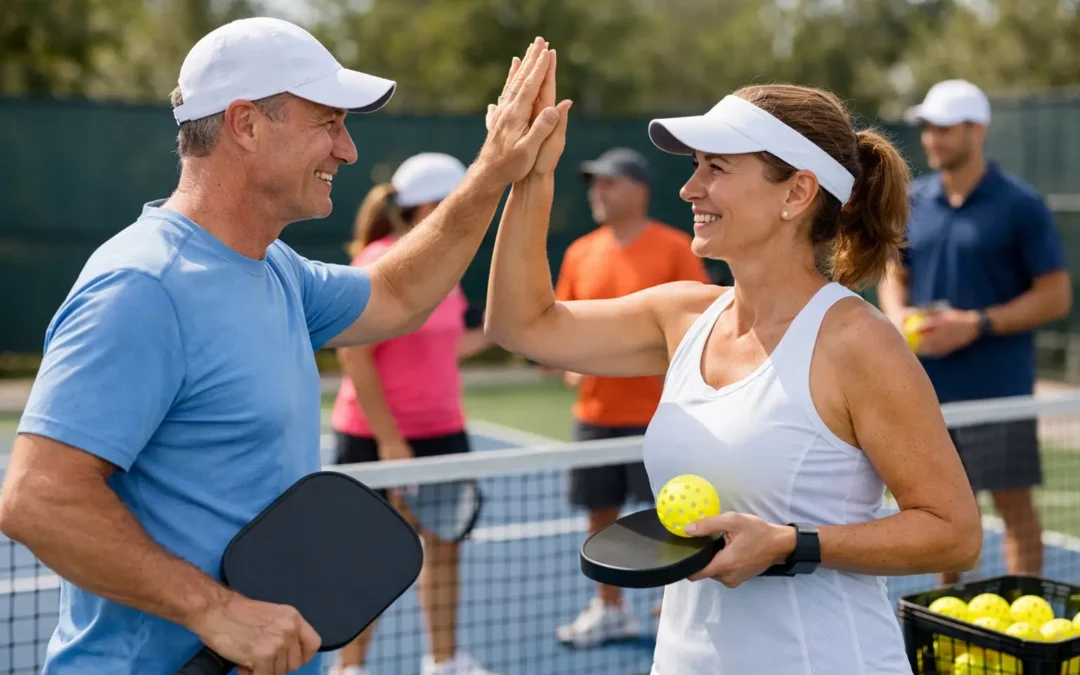
You can tell within the first 20 minutes whether a pickleball camp is worth your time. The courts are organized. The instruction has a purpose. Players are grouped correctly. And instead of standing around waiting for a turn, you are already hitting balls, getting feedback, and seeing where your game can improve. That is the difference in a strong adult pickleball camp experience.
For a lot of adults, camp sounds casual – almost like a social getaway with some pickleball mixed in. Sometimes it is. But the best camps do more than fill court time. They create structure, momentum, and measurable progress in a short window. If you are a beginner, that might mean finally understanding scoring and court positioning without feeling overwhelmed. If you are an improving player, it might mean cleaning up your dinks, sharpening your transition game, and playing with more confidence by the end of the weekend.
What makes an adult pickleball camp experience different
A regular open play session can be fun, but it rarely gives you a roadmap. You play a few games, pick up a couple of habits, and hope repetition solves everything. Camp is different because it is built around progression.
A quality adult pickleball camp experience usually combines technical instruction, repetition, live play, and immediate correction. That mix matters. Too much talking and players lose rhythm. Too much play without coaching and bad habits stick. The right format gives adults what they actually need – clear teaching, enough reps to make a change, and game situations that show whether the change holds up under pressure.
There is also a big social advantage. Adults tend to learn better when the environment is welcoming but purposeful. A camp setting creates that balance. You meet players who care about improving, not just filling a court. That raises the level of energy right away.
What a typical camp day looks like
Most well-run camps start with player evaluation, even if it is informal. Coaches watch movement, stroke mechanics, timing, and court awareness. This early read is important because adults improve faster when they are placed with the right group.
From there, the day usually moves through focused drill blocks. You might spend one segment on serves and returns, another on the soft game, and another on volleys or transition play. Good coaches do not just feed balls and call it instruction. They explain what the shot is for, when to use it, and what common mistake is holding players back.
Later in the session, camp should shift into guided live play. This is where teaching either sticks or disappears. A player may look great in a controlled drill, then rush every third shot in a game. That is why application matters. Coaches who step in, reset the point, and explain the decision-making are often the ones who create the biggest gains.
There is usually some downtime built in, especially in longer day camps or weekend formats. That is not wasted time. Adults need short recovery windows to absorb instruction, ask questions, and stay physically sharp. The strongest programs respect that reality rather than treating camp like an endurance contest.
Who gets the most out of it
Beginners often see the fastest progress because they finally get a clean foundation. Instead of piecing together advice from friends, they learn grips, scoring, positioning, and shot selection in the right order. That removes a lot of frustration.
Intermediate players probably benefit the most overall. This is the group that often feels stuck. They can rally, they know the rules, and they win some games, but they are not sure why they lose the tougher ones. Camp helps identify the gap. Sometimes it is footwork. Sometimes it is transition discipline. Sometimes it is simply poor shot choices at key moments.
Advanced recreational players can gain a lot too, but only if the camp is built for them. Not every camp is drill-heavy enough or tactically sharp enough for stronger players. That is one of the biggest trade-offs to consider. If you are closer to a 4.0 level, you want a camp with certified instructors, clear group separation, and real tactical coaching – not a one-size-fits-all format.
The coaching matters more than the schedule
A glossy agenda can look impressive, but the instructors make the camp. Adults respond best to coaches who can teach, not just play. Those are two different skill sets.
Certified instructors tend to stand out because they know how to break mechanics into simple, usable corrections. They also understand progression. Instead of telling players to hit a better drop, they can show how paddle angle, contact point, and body position affect the shot. That level of instruction shortens the learning curve.
It also helps when coaches understand adult learners. Some players want technical detail. Others need one cue they can trust under pressure. Good camp instruction adjusts to both. Around The Post Pickleball has built its reputation in part on that kind of teaching depth, with certified coaching and programming that serves everyone from first-time players to competitive recreational adults in The Hamptons and Eastern Long Island.
The social side is real – and useful
One reason adults keep signing up for camps is simple: they want more than instruction. They want a better way into the community.
A strong camp introduces you to players who match your pace and goals. That can lead to future games, clinics, leagues, and tournament partnerships. For newer players, that matters a lot. Skill growth is easier when you know where you belong and who to play with next.
There is also a confidence factor that does not get enough attention. Adults are often harder on themselves than junior athletes. They worry about making mistakes, slowing down a group, or looking inexperienced. Camp reduces that pressure because everyone is there to learn. That makes players more coachable, more willing to try adjustments, and usually more relaxed by the second session.
How to know if a camp is actually worth it
Not every adult pickleball camp experience delivers the same value. Some are highly instructional. Others are mostly social with a little coaching around the edges. Neither model is automatically wrong, but you should know which one you are buying.
If your goal is improvement, look for camps that clearly define skill levels, instructor credentials, player-to-coach ratios, and daily structure. Ask whether there is live feedback during games or only during drills. Ask how groups are formed. Ask whether the program is designed for beginners, intermediates, or advanced adults. Those details tell you a lot.
If your goal is a premium social-sport experience, atmosphere matters just as much. Organization, hospitality, pacing, and community feel are part of the product. Especially in markets like the Northeast, players expect events to be polished, efficient, and welcoming. The best camps deliver both quality coaching and a memorable experience on and off the court.
What players usually notice after camp
The first thing is usually clarity. Players leave understanding why a point breaks down instead of just feeling that it did. They start recognizing patterns, anticipating better, and making more intentional choices.
The second change is confidence. That does not mean every shot suddenly works. It means players trust their decisions more. They know where to stand. They know what they are trying to do with the return. They stop guessing as much in the transition zone.
Then come the technical gains. For some, it is a cleaner serve or more reliable dink. For others, it is improved footwork or faster hands at the kitchen. The exact result depends on starting level, coaching quality, and how much the player keeps practicing afterward. Camp can accelerate progress, but it is not magic. The players who improve most are the ones who leave with one or two priorities and continue working on them.
The best adult pickleball camp experience feels intentional
That is really the word that separates a strong camp from an average one. Intentional. The groupings are intentional. The drills are intentional. The coaching is intentional. Even the social energy feels shaped rather than random.
Adults do not need more unstructured court time. Most can find that anywhere. What they want is a better use of their time – instruction that respects their level, competition that fits, and an environment that makes them want to come back.
If you choose the right camp, you should leave a little tired, a lot clearer, and excited to play your next game differently. That is usually the sign you found more than a fun weekend. You found a better way to build your game and your place in the pickleball community.