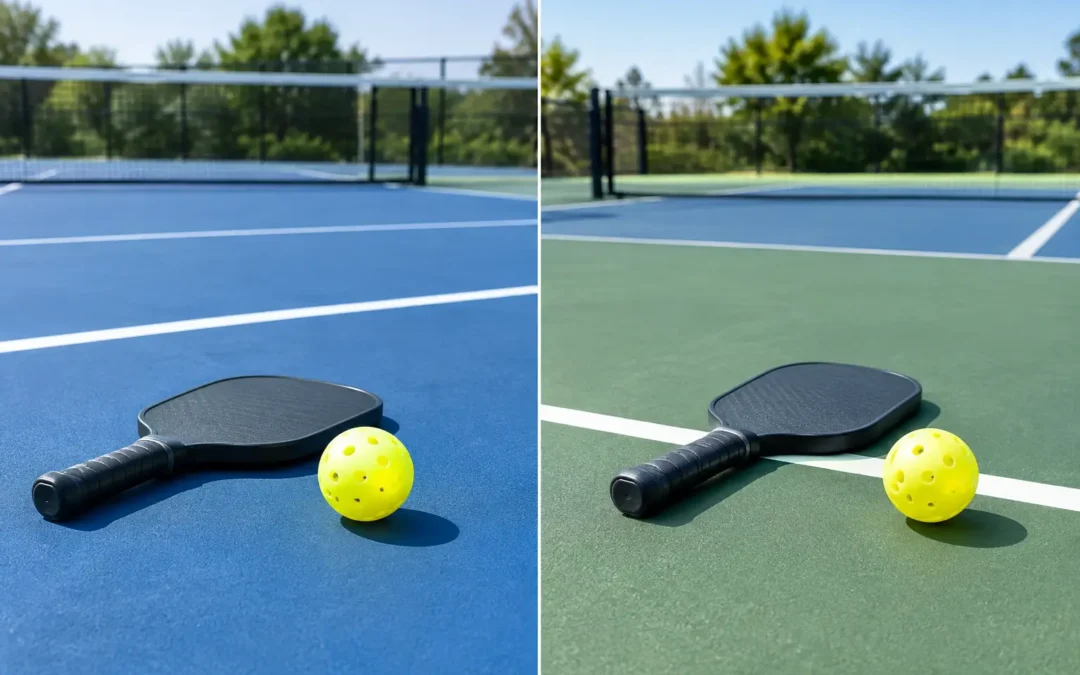
A court surface changes more than how a pickleball sounds at contact. It affects a player’s confidence moving for a wide dink, how legs feel after a two-hour clinic, and whether a backyard court becomes a favorite gathering place or a project that needs constant attention. When weighing acrylic versus cushioned courts, the right choice comes down to how the court will be used, who will use it, and what sits beneath the playing surface.
For homeowners, clubs, schools, and hospitality properties across the Hamptons and Eastern Long Island, this is not a one-size-fits-all decision. Acrylic systems remain the standard for good reason. Cushioned systems bring meaningful comfort benefits, especially for frequent or multi-generational play. Both can create a beautiful, high-performing pickleball court when the base preparation and installation are handled correctly.
What an Acrylic Pickleball Court Is
An acrylic court is a hard-court system applied in layers over a properly prepared asphalt or concrete base. The coating system typically includes resurfacer layers, color coats, and clearly painted game lines. This is the familiar feel of many tennis and pickleball courts: firm underfoot, responsive, and built for consistent ball bounce.
Acrylic surfaces are popular because they deliver a clean, professional playing experience without adding unnecessary complexity. They are also available in a wide range of colors, so a court can match a property’s landscape plan, club identity, or event setting.
The important distinction is that acrylic is the finish, not the foundation. A premium coating cannot hide a failing base forever. Drainage, slope, crack repair, and substrate condition determine whether the finished court performs well through changing Northeast weather.
How acrylic courts play
Acrylic courts feel quick and direct. Players get dependable bounce, sharp directional changes, and clear feedback from their footwork. For players who enjoy drilling, competitive rec play, and tournament-style conditions, that predictability is a major advantage.
The trade-off is impact. A hard acrylic surface does not absorb much shock, so knees, hips, ankles, and lower backs take more of the load over time. That does not make acrylic a poor choice. It simply means active warm-ups, quality court shoes, and sensible scheduling matter more for players who are managing joint concerns.
What Makes a Court Cushioned?
A cushioned court uses an acrylic color system over one or more resilient cushioning layers. Those layers are designed to absorb some impact before it reaches the player’s body. The surface still looks like a traditional painted sport court, but it feels noticeably more forgiving during long sessions.
Cushioning is not the same as a soft, spongy floor. A well-built cushioned court should still provide stable footing and predictable bounce. The goal is controlled shock absorption, not a surface that feels unstable or slow.
The amount of cushioning varies by system. Some installations use a lighter build intended to take the edge off a hard court. Others use thicker systems designed for facilities with high volumes of play. This is why buyers should compare actual system specifications rather than assuming every court described as “cushioned” will feel the same.
How cushioned courts play
The biggest benefit is comfort. Players often notice less pounding during extended lessons, clinics, round robins, and full tournament days. That can be especially valuable for adult players returning to exercise, families with different fitness levels, and properties where guests may play several times a week during peak season.
Cushioned courts can also help a facility feel more welcoming to beginners. A new player who is worried about falling, sore knees, or simply keeping up physically may be more willing to stay on the court when the surface is less punishing.
There are trade-offs. Cushioned systems cost more upfront, and the playing feel may be slightly less crisp than a standard hard court. Highly competitive players often prefer the firmer, more immediate response of acrylic. Neither preference is wrong. It depends on whether the court’s primary job is high-performance training, broad recreational use, or a blend of both.
Acrylic Versus Cushioned Courts: The Real Decision Points
The choice becomes clearer when you look beyond the label and consider how the court will serve its players.
Player comfort and injury considerations
If the court will host frequent play, older adults, or back-to-back social events, cushioning deserves serious consideration. Pickleball’s low barrier to entry is one reason the sport has grown so quickly, but enthusiastic players can quickly go from occasional games to multiple sessions per week. Reducing repetitive impact can make that increased activity more sustainable.
For a court used primarily by experienced, athletic players in shorter sessions, acrylic may provide everything needed. Good footwear, proper movement instruction, and a sound court base go a long way toward supporting safe play on either surface.
Performance and ball response
Acrylic is the more traditional choice for a firm, tournament-style hard-court experience. It provides dependable bounce and a fast, connected feel underfoot. Players who want to train with intensity, practice third-shot drops and drives, or prepare for competitive events often appreciate that consistency.
Cushioned courts generally retain reliable ball response, but they may feel marginally different depending on the system thickness and the underlying base. Before committing, it is smart to play on a sample installation whenever possible. The best court is one that matches the expectations of the people who will use it most.
Budget and long-term value
Acrylic usually wins on initial cost. It is a proven system, widely understood by qualified court contractors, and suitable for most residential and commercial pickleball projects.
Cushioned systems require additional materials and labor, which raises the investment. Still, the higher price can make sense for a premium property, private club, wellness-focused community, or venue that wants to stand apart. A court that keeps guests comfortable and playing longer can add value well beyond its construction cost.
Long-term maintenance is influenced more by the base, drainage, weather exposure, and usage than by the simple acrylic-versus-cushioned distinction. Both types need routine cleaning, timely crack attention, and periodic resurfacing to preserve appearance and playability.
Climate, drainage, and the court base
On Eastern Long Island, surface selection has to account for seasonal weather, moisture, freeze-thaw cycles, and coastal conditions. Standing water is the enemy of any court system. It can accelerate wear, contribute to cracking, and create slick conditions that no player wants.
A proper site evaluation should look at drainage patterns, existing pavement, shade, nearby trees, and the possibility of water moving beneath the court. If the base has structural cracks or poor slope, applying an attractive new surface over it is a temporary cosmetic fix, not a court solution.
This is where experienced court development guidance matters. The surface is the part everyone sees, but the groundwork determines whether it stays beautiful and playable.
Choosing the Right Surface for Your Setting
For a private backyard court where family, friends, and guests will play socially, comfort may carry more weight than maximum speed. A cushioned system can be an excellent fit, particularly when the court is part of a larger entertaining space designed for long afternoons and full-house weekends.
For a dedicated training court or a facility focused on competitive programming, acrylic often makes the most sense. It delivers the familiar response serious players expect and supports a crisp, professional look.
Multi-use venues need an honest assessment of their audience. A club that serves beginners, active retirees, junior players, and competitive adults may find that cushioning broadens participation. A busy community court with budget constraints may get better overall value from a high-quality acrylic system installed over an excellent base.
Around The Post Pickleball has taught more than 3,500 players across the region, and one lesson is consistent: people enjoy the game most when the environment matches their needs. The court should support the experience you want to create, whether that is focused skill development, a lively corporate event, or a dependable place for neighbors to play together.
Do Not Let Surface Choice Distract From Installation Quality
Acrylic and cushioned courts both depend on professional preparation. Before selecting colors or deciding on comfort layers, confirm that the project plan addresses base condition, drainage, slope, fencing, lighting, and the space required around the playing lines. A pickleball court needs room for safe movement, not just enough pavement to fit a 20-by-44-foot layout.
Ask prospective installers how they handle cracks, moisture issues, and local weather exposure. Request clarity on the coating system, warranty terms, expected maintenance, and whether the court will be built specifically for pickleball rather than simply painted with pickleball lines as an afterthought.
A great surface should invite players back tomorrow. Choose acrylic when you want a firm, familiar competitive feel. Choose cushioning when player comfort and extended use are central to the plan. Then give the same attention to the base beneath it, because that is what turns either option into a court worth playing on for years.