
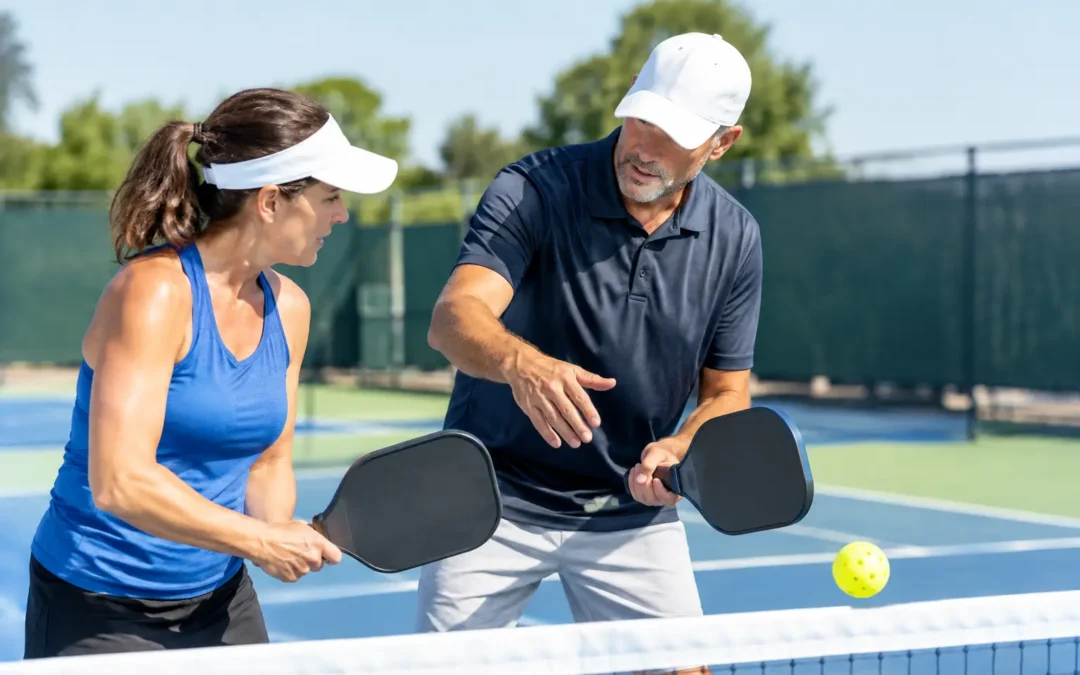
A missed return at 9-9 can feel like a small mistake. But when the same ball keeps finding the net, the issue is rarely just one bad swing. It may be your paddle face, your footwork, your contact point, or a decision made too late. That is the real answer to why hire certified pickleball coaches: good coaching identifies the cause, gives you a clear adjustment, and helps you repeat it when the pressure rises.
For players in The Hamptons and across Eastern Long Island, pickleball is more than a casual way to get moving. It is a competitive outlet, a social calendar, and a game that rewards smart improvement. Certified instruction gives that improvement structure, whether you are learning the score for the first time or preparing to compete at the 4.0 level.
Certified Coaching Builds the Right Foundation
Pickleball looks simple from the outside. The court is compact, the paddle is approachable, and the first few rallies can happen quickly. That accessibility is part of the sport’s appeal. It also causes many players to build habits that work at first but limit them later.
A certified coach teaches the game in the right sequence. Beginners need more than a collection of tips from friends. They need a comfortable ready position, reliable contact, court awareness, scoring confidence, and an understanding of where to stand with a partner. Learning those essentials early makes games more enjoyable and prevents the frustrating cycle of starting over after months of inconsistent play.
For intermediate players, the foundation shifts from simply getting the ball over the net to controlling the point. That means recognizing when to reset, when to speed up, how to move through the transition zone, and how to communicate before a ball drops between partners. An experienced instructor can see the patterns that a player cannot always feel in the moment.
Technique Is More Than a Pretty Swing
Strong technique is not about making every shot look identical. Players have different athletic backgrounds, mobility levels, and instincts. A former tennis player may need to shorten a large backswing. A newer athlete may need help creating a stable base before adding pace. The right coach adapts instruction without abandoning sound fundamentals.
Certified coaches also teach the purpose behind a movement. Instead of hearing “keep your paddle up” as a rule to memorize, you understand that paddle position affects reaction time at the kitchen line. Instead of being told to “hit softer,” you learn how grip pressure, paddle path, and contact point create a controlled dink. That understanding holds up when the game gets faster.
Why Hire Certified Pickleball Coaches for Faster Progress?
Practice matters, but unstructured repetition can reinforce the very habits holding you back. Playing game after game is fun and valuable, yet it does not always provide enough touches on the shot you need most. A certified coach creates purposeful reps and gives feedback while the adjustment is still fresh.
That might mean drilling third-shot drops from multiple locations, practicing returns that keep opponents back, or working on a two-player pattern that improves court coverage. The point is not to turn every session into a grind. It is to make your court time count.
Coaching also gives players a practical way to measure progress. Rather than saying, “I want to be better,” you can focus on specific outcomes: fewer unforced errors on the return, more successful drops from the baseline, stronger positioning after a serve, or calmer decisions during fast exchanges. Those markers make improvement visible and keep motivation high.
Better Decisions Win More Than Harder Shots
At recreational and competitive levels alike, pickleball rewards decision-making. Many points are lost because players attack a low ball, force a difficult shot from the transition zone, or speed up directly into an opponent’s strength. A certified instructor teaches players to read the ball, the opponent, and the moment.
This is especially useful for players moving beyond beginner-level open play. The pace increases, opponents become more disciplined, and familiar shortcuts stop working. Coaching helps you develop a repeatable game plan instead of relying on a few favorite shots. You may still hit aggressive balls, but you will know when the odds are in your favor.
Certification Signals a Serious Teaching Standard
Not every strong player is prepared to teach. Playing skill and teaching skill overlap, but they are not the same thing. A great instructor must observe, communicate clearly, organize a lesson, adjust to different learning styles, and keep players moving safely and productively.
Formal credentials from organizations such as the International Pickleball Teaching Professional Association, or IPTPA, and Professional Pickleball Registry, or PPR, show that a coach has committed to recognized teaching standards. Certification is not a guarantee that every coach has the same personality or specialty. It does, however, give players an important baseline: the instructor has trained in how to teach the sport, not merely how to play it.
That distinction matters when you are investing your time, hosting a private group, or bringing colleagues together for a corporate experience. You want an instructor who can make beginners feel welcome without boring experienced players, explain rules accurately, and manage a court full of different personalities with confidence.
Safety, Rules, and Confidence Matter Too
Pickleball is low-impact compared with many sports, but it is not risk-free. Quick lateral movement, backward retreating, crowded courts, and fast balls near the kitchen can create avoidable problems. Certified instruction emphasizes efficient movement and court awareness, helping players avoid chasing balls into dangerous spaces or colliding with a partner.
Rules knowledge matters just as much. The non-volley zone, service rules, line calls, stacking, and tournament etiquette can become confusing when players learn only through casual play. A coach makes the rules practical. You learn not only what is legal, but how a rule affects strategy and sportsmanship.
Confidence follows. Players who understand positioning and rules spend less time apologizing, second-guessing calls, or worrying that they are slowing down a group. They become better partners and more welcome additions to open-play sessions, leagues, and events.
The Best Coaching Fits the Player and the Setting
Credentials should be the starting point, not the only deciding factor. A player preparing for tournament competition needs a different experience than a first-time player joining friends for a summer clinic. Ask whether a coach works with your current level, how they structure feedback, and whether lessons include drills, live-ball situations, and strategy.
Group size also changes the value of a session. Private lessons provide highly specific feedback. Small groups add partner communication and realistic point construction. Larger clinics can create energy, variety, and a social entry point for newer players. There is no single best format. The best choice depends on your goals, your budget, and how you like to learn.
Local experience adds another advantage. Coaches who are active in the regional pickleball community understand the playing culture, seasonal demand, local venues, and the caliber of competition players are likely to encounter. They can help a beginner find an appropriate next step and help a stronger player train for the challenges ahead.
Around The Post Pickleball has taught more than 3,500 players while building a community through clinics, boot camps, tournaments, private events, and professionally run experiences throughout the region. That range matters because pickleball growth is not limited to one kind of player. Some people want a dependable weekly game. Others want to compete, host a memorable event, or create a team experience that gets people genuinely engaged.
Look for Coaching That Makes You Want to Return
The best lesson is not one where a coach talks the entire hour. It is one where you leave with useful repetitions, one or two clear priorities, and a stronger sense of what to work on next. You should feel challenged without feeling overwhelmed.
If you are choosing a coach, look for formal credentials, relevant experience, a plan suited to your level, and an environment where questions are encouraged. A good coach will not promise instant results. Progress takes repetition, patience, and play against a range of opponents. But the right guidance can keep that work focused, enjoyable, and far more productive.
Your next game does not need to be perfect to be better. Find instruction that gives every serve, dink, reset, and decision a purpose, then bring that confidence back to the court with the people you enjoy playing with.