
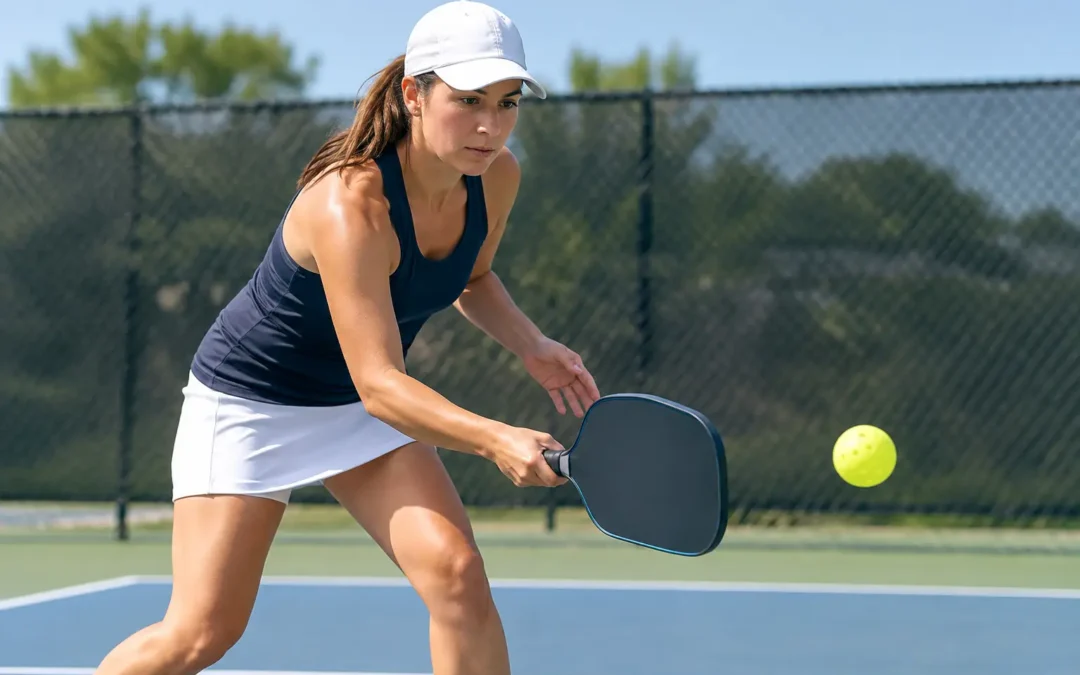
A short return gives the serving team exactly what it wants: an easy third-shot drop, a drive at your feet, and a quick path to the kitchen line. To improve pickleball return depth, focus less on hitting hard and more on sending a controlled ball deep through the middle or toward a backhand corner. A deep return buys your team time to establish position, which is one of the biggest advantages available in doubles.
For players across The Hamptons and Eastern Long Island, return depth is often the difference between feeling rushed all game and dictating the first several shots of every rally. It is a skill that works at every level, from a player learning court positioning to a 4.0 competitor trying to neutralize a strong serving team.
Why Return Depth Changes the Point
The returner has one job before the rally truly begins: make the serving team hit a difficult third shot. When your return lands near the baseline, the server has to move farther back, contact the ball lower or farther from the kitchen, and cover more ground before joining their partner at the line.
That delay matters. It gives you and your partner time to move forward after the return and establish yourselves near the non-volley zone. A return that lands around the service line may still go in, but it gives the serving team an inviting ball. They can drop it comfortably, drive it with more margin, or advance before you are ready.
Depth is not about painting the baseline every time. A ball that lands within a few feet of the baseline is excellent. Trying to hit the final inch creates unforced errors and does not meaningfully improve your position. The best return is deep, intentional, and repeatable under pressure.
Start With a Target, Not a Big Swing
Many players leave returns short because they swing harder when they want more depth. That usually produces a flat, rushed ball or a mishit. Instead, give yourself a large, smart target.
For most doubles points, the safest target is deep through the middle, especially toward the player whose backhand is less reliable. The middle reduces your angle risk and can create hesitation over who takes the third shot. A deep return to the backhand corner is also effective when you have enough control to keep it inside the sideline.
Avoid automatically returning down the line. It can be a useful variation, particularly against a player with a weak backhand or limited movement, but it gives that player a shorter route to the kitchen. Crosscourt and middle returns usually create more distance for the server to cover.
Before the serve, decide on one of two targets. This removes hesitation and keeps your stroke simple. If you change targets only because you see a weakness or a predictable serving pattern, you are making a tactical choice rather than guessing mid-swing.
Use Mechanics That Create Easy Length
A deep return begins with preparation. Split-step as the server contacts the ball, turn your shoulders early, and get your paddle back without taking it too far behind you. Late preparation forces a quick arm swing, and quick arm swings are one of the most common reasons returns float short.
Keep your contact point in front of your body. From there, use a smooth low-to-high swing with enough lift to clear the net safely. Think of sending the ball forward with shape rather than punching it flat. A little topspin can help the ball travel deep and dip inside the court, but it is not required. A controlled, moderately arcing return is far more valuable than a low ball that clips the net.
Your follow-through should travel toward your target. If your paddle finishes abruptly across your body, you may be pulling the ball wide or taking pace off it. Let the swing extend forward, then recover quickly.
Footwork is equally important. If the serve pushes you wide, move your feet first and create balance before you swing. Reaching with one arm while your weight falls away from the court almost always costs depth. Strong returns come from a stable base, whether you hit forehand or backhand.
Let Your Legs Supply the Distance
Players often try to manufacture depth with their wrist or shoulder. The more reliable source is a small weight transfer from your back foot toward your front foot. You do not need a dramatic step. You need your body moving through the ball instead of leaning backward.
On a deep serve, give yourself room. Back up if needed rather than crowding the bounce. Contacting the ball after it drops to a comfortable height may feel less aggressive, but it often gives you better length and direction. The goal is to start the point in control, not to win it with the return.
Move Forward Without Sacrificing the Shot
One of the most useful habits in pickleball is separating the return from the transition forward. Hit the return first. Then move.
Players who sprint toward the kitchen while swinging tend to contact the ball off balance and leave it short. Others admire a good return and stay near the baseline too long. Both mistakes cost court position. After contact, take two or three purposeful steps forward, then split-step as the serving team strikes its third shot.
How far you move depends on the quality of your return. If you drive it deep and the server is well behind the baseline, you can close ground confidently. If your return lands short or floats, stop sooner and prepare for a drive. This is not passive play. It is smart positioning based on the ball you actually hit.
Your partner has a role, too. The non-returning player should be ready at the kitchen line, watch the third-shot option, and communicate when a middle ball is theirs. Better return depth is most valuable when both players understand how it changes the next shot.
Three Drills to Improve Pickleball Return Depth
Practice needs a target and a consequence. Simply returning serves back and forth can build rhythm, but it does not always build accuracy under pressure.
The Deep-Zone Return Drill
Place cones, flat markers, or spare balls about three feet inside the baseline. Have a partner serve from the opposite court while you return ten balls to a chosen side. Count only the returns that clear the net, land in bounds, and reach the deep zone. Then switch sides and repeat.
This drill reveals whether your forehand and backhand returns have different tendencies. Most players will find that one side comes up short more often. That is useful information for focused practice.
Return, Advance, Split-Step
Start in the proper receiving position. Your partner serves, you return deep, move forward, and split-step as they hit a simulated third shot. Do not rush the movement. The purpose is to connect a quality return with the transition that follows it.
Add a realistic third-shot drive or drop once the sequence feels natural. If your partner can repeatedly drive the ball at your feet, check whether your return is actually landing deep enough or whether you are moving forward too early.
Pressure Points
Play short games where a return only counts if it reaches the deep zone. If it lands short, the serving team starts the rally with a bonus point or gets an immediate attackable ball by agreement. The scoring creates the mild pressure that practice feeds often lack.
This is especially useful for intermediate players who can hit a deep return in a drill but abandon the technique during a competitive game. Your goal is to make depth your default, even when the score is tight.
Adjust for the Serve and the Opponent
There is no single return that fits every point. Against a short, soft serve, you may take the ball early and return with more pace while still targeting depth. Against a deep serve that pushes you back, prioritize height, margin, and balance. A high, deep return is often the correct response.
Wind also changes the calculation on outdoor courts. Into the wind, you may need more lift and a fuller swing. With the wind behind you, use more spin or aim farther inside the baseline to prevent a long ball. On a fast indoor surface, a deep return can skid through and rush the server; on a slower outdoor court, shape and placement may matter more than speed.
Pay attention to your opponents. If one player struggles to move laterally, use depth to make them work before they approach the kitchen. If a player has an excellent third-shot drop, a deep return still matters, but you may also vary pace and placement so they cannot settle into the same rhythm.
At Around The Post Pickleball, certified instruction emphasizes these game-ready details because a better return is not just a prettier stroke. It is a positioning tool that helps players create more favorable rallies from the first ball.
The next time you receive serve, choose a generous deep target, prepare early, and let your legs carry the shot through the court. A return that gives you one extra second to reach the kitchen can change the entire point.