
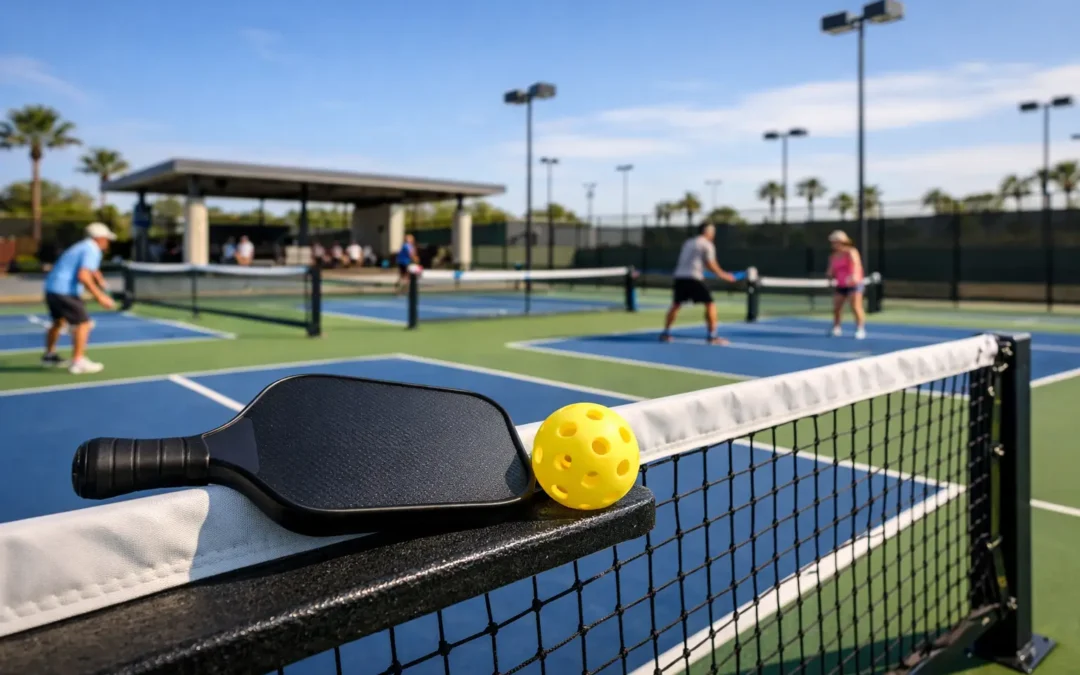
A pickleball court can fill quickly on a sunny Saturday in the Hamptons. The real test comes later: when players are waiting safely, the wind picks up, a lesson is running beside open play, and an event needs to stay on schedule. That is where pickleball infrastructure separates a painted surface from a dependable community asset.
For clubs, municipalities, homeowners, resorts, and private hosts across Eastern Long Island, the goal is not simply to add courts. It is to create a place people want to return to – for their first lesson, their weekly game, a competitive clinic, or a well-run tournament. The right decisions at the start protect the investment, improve the player experience, and make programming far easier to grow.
Pickleball Infrastructure Is More Than Court Lines
A court is the centerpiece, but it is only one part of a successful facility. Pickleball infrastructure includes the site plan, base preparation, surfacing, drainage, fencing, lighting, net systems, player access, seating, storage, and the operational details that determine whether the space works under real demand.
This matters because pickleball creates a different traffic pattern than many traditional court sports. Players rotate often. Friends gather before and after games. Instruction requires room for demonstrations and ball feeding. Events need check-in areas, clear court assignments, water access, and a place for people to watch without standing in a playing lane.
A beautiful court that lacks circulation space can feel crowded within minutes. A court with weak drainage can lose valuable playing days after a summer storm. A facility that overlooks noise management may create friction with neighbors, even when the courts are popular. Good planning anticipates these pressure points before concrete is poured or fencing is installed.
For a private residence, the priorities may be family play, a clean visual fit with the property, and flexibility for guests. For a club or public site, the emphasis may shift toward capacity, durability, scheduling, and safe movement for a larger player base. There is no one-size-fits-all build, but every project benefits from a clear vision of how people will actually use it.
Start With the Site, Not the Surface
The most expensive problems in court construction are often hidden below the finished color coating. Before choosing court colors or discussing accessories, evaluate the property itself: grade, soil conditions, drainage paths, utilities, sun exposure, nearby trees, access for construction equipment, and setback requirements.
Drainage Protects the Playing Calendar
Eastern Long Island weather asks a lot of outdoor courts. Rain, freeze-thaw cycles, coastal moisture, and seasonal temperature swings can expose weak site preparation quickly. Standing water is not just inconvenient. It can contribute to surface wear, slippery conditions, and disruptions to lessons, leagues, and events.
Proper grading and drainage should move water away from the court area without creating runoff issues elsewhere on the property. The right approach depends on the site. A flat backyard, a club property with multiple courts, and a municipal parcel each present different drainage realities. This is why a construction plan should be based on site conditions rather than a generic court diagram.
Orientation and Space Affect Every Rally
Court orientation influences visibility, comfort, and play quality. Sun angles can make serves and overheads difficult at certain times of day. Wind exposure can turn a friendly recreational game into a frustrating experience. Nearby landscaping may look appealing but can introduce leaves, roots, shade, and ongoing maintenance concerns.
Allow enough room beyond the playing lines for safe pursuit of balls and natural player movement. If multiple courts are planned, consider how players will enter, exit, and wait between games. A facility becomes more enjoyable when spectators have a designated place to gather and players are not walking through active courts to reach a bench or gate.
Build for the Players You Expect to Serve
The best pickleball infrastructure reflects the level and volume of play it is intended to support. A court used occasionally by a family has different demands than a venue hosting weekly clinics, corporate outings, and tournament brackets.
Surface selection should prioritize consistent ball response, traction, comfort, and long-term maintenance. A quality system can help reduce wear, but even the best surface needs an appropriate base and a realistic maintenance plan. Players notice uneven bounce, puddling, glare, and slick areas immediately. Those issues affect confidence, especially for beginners, and they limit the quality of higher-level training.
Fencing deserves the same attention as the court itself. Properly planned fencing contains balls, improves safety, and keeps adjacent courts from interfering with one another. Gates should be easy to access without opening into busy playing space. At a multi-court venue, thoughtful fence design can also support organized rotations and simplify event operations.
Lighting is another decision that should follow the intended use. If evening play is part of the plan, lighting needs to provide even visibility across the full court without creating distracting glare for players or unnecessary spill for neighbors. A project that adds lights later may face greater cost and more restrictions than one that accounts for electrical needs from day one.
Amenities do not need to be extravagant to make a major difference. Benches, shade, water, simple storage, visible court signage, and a nearby restroom plan all contribute to a polished experience. These details matter even more during peak summer weeks, when heat, player turnover, and guest traffic are high.
Design for Instruction, Events, and Community Use
Pickleball is growing because it is social, but social play still needs structure. Facilities that can support organized programming have a clear advantage over courts designed only for casual drop-in games.
For instruction, coaches need safe working space, clear sightlines, and room for players to gather without blocking active courts. For clinics and boot camps, multiple adjacent courts can create a more dynamic learning environment, allowing groups to rotate through drills, strategy work, and live play. For tournaments, the facility needs a practical flow from arrival to check-in, warm-up, competition, and spectator areas.
That planning is especially valuable for hosts who want their court to serve more than one purpose. A private court can become the setting for a memorable birthday, charity event, or corporate experience when there is room for guests, equipment, and professional organization. A club can increase court utilization when the layout supports lessons during quieter hours and events during high-demand periods.
Around The Post Pickleball has taught more than 3,500 players and produced sold-out events across the Northeast, so we see how quickly a strong court can become a gathering point. Players want great instruction and competition, but they also remember whether the experience felt organized, welcoming, and easy to enjoy.
Plan for Operations Before Opening Day
A new court often creates demand faster than owners expect. Once players know a quality facility exists, they will ask about lessons, group play, leagues, guest access, and events. Planning for operations early helps the court stay enjoyable as use increases.
Think through reservations, guest rules, storage access, cleanup, weather policies, and routine maintenance. Determine who will inspect nets, gates, fencing, and surface conditions. If the venue will host organized play, establish a check-in point and a simple communication system for court assignments. These processes do not need to feel formal or restrictive. They keep the experience fair and prevent confusion when demand is high.
Noise deserves an honest conversation as well. Pickleball has an unmistakable sound, particularly at a busy multi-court site. Court placement, fencing, landscaping, scheduled hours, and equipment choices can all play a role in being a good neighbor. The right solution depends on the setting, but ignoring the issue is rarely a smart option.
Maintenance should be treated as part of ownership, not an afterthought. Regular cleaning, debris removal, crack monitoring, net checks, and timely repairs preserve both safety and appearance. A court that is cared for signals that players matter. It also protects the larger investment behind the project.
The Best Court Is One People Can Use With Confidence
A successful project begins by matching the build to the experience you want to create. If your priority is family recreation, build for easy access and dependable play. If you want to host instruction or social events, protect room for gathering and programming. If you are developing a larger facility, prioritize circulation, scheduling, drainage, lighting, and durability from the beginning.
Great pickleball infrastructure gives players a reason to stay for one more game and a reason to come back next week. Build with that moment in mind, and the court can become one of the most active and valuable parts of your property or community.