
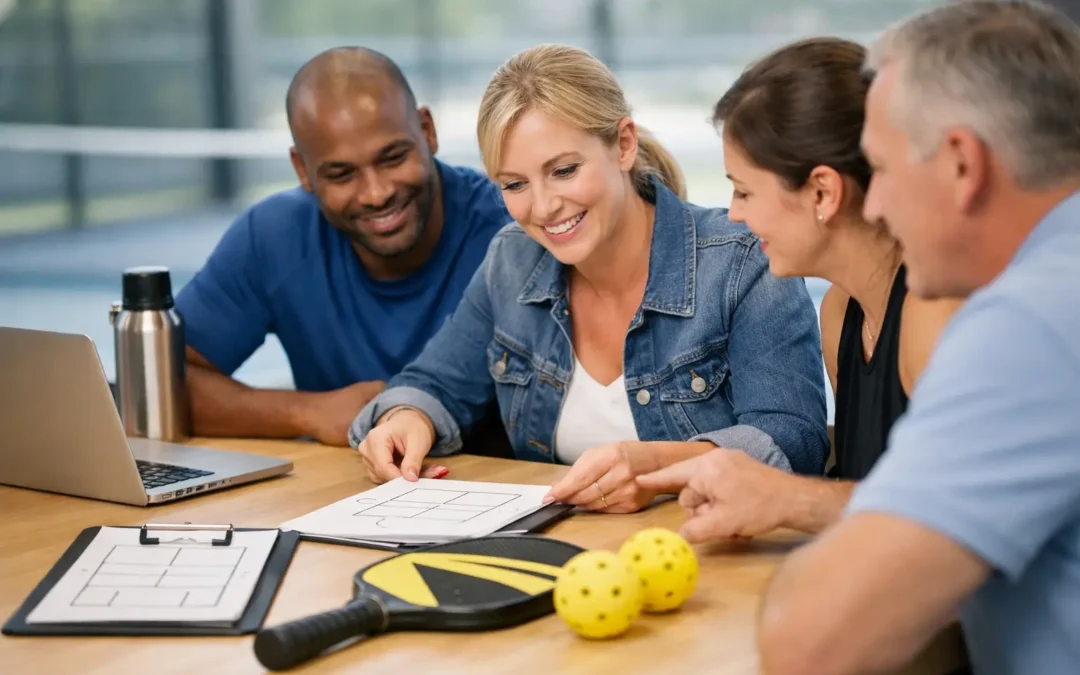
A team pickleball day can fall apart before the first serve if the format is wrong. Put twelve players of mixed ability on two courts with no rotations, no point person, and no plan beyond “let’s play,” and the strongest players take over while beginners spend too much time waiting. Planning pickleball team activities well changes that. The result is a high-energy experience where people move, improve, compete, and actually want to sign up for the next one.
For workplace groups, friend groups, clubs, and seasonal communities across The Hamptons and Eastern Long Island, pickleball works because it is social without requiring everyone to arrive as an athlete. The best events still need structure. A little preparation protects the fun.
Start With the Outcome, Not the Game List
The first question is not whether to run a round robin or a tournament. It is what the group should leave with. A corporate group may want easy conversation and a shared win outside the office. A tennis club may want a competitive but welcoming introduction to pickleball. A team preparing for a league or charity event may need partner communication, consistent returns, and pressure-tested game play.
That goal should shape every decision that follows, including court time, coaching, pairings, scoring, food, and prizes. A competitive group can handle more games and a visible leaderboard. A beginner-heavy group benefits from shorter play blocks, skill stations, and coaches who can correct positioning before bad habits settle in.
Ask participants about their experience level before assigning teams. “I’ve played a few times” and “I play three mornings a week” should not land in the same category. A simple intake can sort players into beginner, advanced beginner, intermediate, and competitive recreational groups. It also identifies injuries, left-handed players, and friends or coworkers who would prefer to partner together.
Planning Pickleball Team Activities Around Your Group Size
Court capacity is the practical limit behind every successful event. One pickleball court accommodates four active players, but a well-run event gives everyone a role even when they are not on court. For groups of eight to sixteen, rotating team matches are often the cleanest choice. With larger groups, a blend of instruction, drills, and short-format games keeps wait time from becoming dead time.
A useful rule is to keep play segments brief. Games to 7, 9, or 11 can work depending on ability and timing, but a hard time cap is essential. When the horn or designated organizer calls time, every court rotates. This prevents one long game from derailing the schedule and gives players a fair number of turns.
For a group with broad skill differences, do not treat equal as identical. Equal means every player has a meaningful chance to contribute. You may create divisions, use skill-balanced teams, or schedule beginner courts separately for the first portion of the event. Then bring the group together for a social finale where the stakes are low and the energy is high.
Three Formats That Create Real Engagement
A coached team challenge is ideal for companies, private parties, and new-player groups. Start with a concise introduction to safety, scoring, serve and return basics, and court positioning. Break the group into teams for skill challenges such as target serving, dink consistency, and cooperative rally counts. Finish with short games that reward teamwork, not just power. This format gives beginners early wins and gives experienced players a reason to stay involved.
A progressive round robin suits active recreational players. Partners change each round, scores follow the individual or team, and pairings are adjusted as the event develops. Players meet more people than they would in a fixed-team tournament, and organizers can avoid repeated mismatches. It is a strong option for clubs and communities where connection matters as much as the standings.
A team cup creates a bigger competitive moment. Each team has a name, color, captain, and a mix of skill levels. Matches may include women’s, men’s, mixed, or open doubles depending on the group. Add points for sportsmanship, a rally challenge, or a team trivia break to make the day feel like an event rather than a series of isolated matches. This format requires tighter operations, but it delivers excitement when run well.
Build a Schedule That Leaves Room for Fun
The most common event-planning mistake is assuming people will arrive ready to play at the exact start time. Build in a real check-in window. Players need time to sign waivers if needed, meet teammates, hydrate, receive a schedule, and learn where to put bags. Starting ten minutes late is manageable. Starting with confusion is not.
For a two-hour program, allow roughly 15 minutes for arrival and orientation, 20 to 30 minutes for instruction or warm-up, 60 to 70 minutes for organized play, and a final 10 to 15 minutes for awards, photos, and next steps. Longer events can include a refreshment break, but do not let a break become an unscheduled hour.
Make the schedule visible. Post court assignments and rotation times where players can see them, and have a host or court captain reinforce the next move. A polished experience feels easy to participants because someone else has already handled the details.
Weather deserves its own plan for outdoor events. On Eastern Long Island, wind, heat, and a fast-moving summer shower can change the day quickly. Confirm the rain policy in advance, decide whether the activity can shift to a covered or indoor setting, and communicate early if timing changes. A clear contingency plan builds trust even if it never gets used.
Make Coaching Part of the Experience
A team event does not need to become a formal clinic, but professional instruction raises the value immediately. The right coach can teach a group how to get the ball in play, explain why the non-volley zone matters, settle scoring disputes, and keep advanced players challenged without making newer players feel exposed.
Keep instruction practical. Players remember one or two usable cues far more than a long technical explanation. “Return deep and get to the line,” “keep your paddle up at the kitchen,” and “communicate the middle ball” are team-friendly ideas that show up in the very next game.
Certified coaching is particularly valuable when an organization is introducing pickleball to employees or clients. It helps protect the participant experience, improves safety, and gives everyone a credible foundation. Around The Post Pickleball has taught more than 3,500 players through certified instruction and professionally managed events, so the focus stays on both the quality of play and the atmosphere around it.
Design for Beginners Without Boring Stronger Players
The best mixed-level events avoid two extremes: throwing beginners into games they cannot enjoy, or isolating advanced players until they disengage. The answer is not always a strict division. It depends on the group’s goal and the number of available courts.
If you have enough space, separate skill-based courts during the main session and combine groups for a final social game or awards ceremony. If court space is limited, balance teams carefully and use challenges that are not purely based on winning. A beginner can help their team earn points in a target drill, a cooperative dinking contest, or a best-team-spirit category.
Avoid overcomplicated handicaps unless players are used to organized competition. Extra rules can slow down play and make scoring harder to follow. Simple adjustments, such as giving newer players an extra point at the start of a game or asking stronger players to use a specific tactical constraint, are usually enough.
Details Players Notice
Players remember whether the day felt organized and welcoming. Good balls, clear court markings, a first-aid kit, water, shade, and a place to set personal items are not glamorous, but they matter. So do music volume, parking instructions, restroom access, and a host who knows every player’s name or team.
Small branded touches can make a private event feel special without turning it into a production overload. Team wristbands, color-coded paddles, a simple photo backdrop, or a playful award for best communication can create a stronger shared memory than an expensive prize. If prizes are included, choose something useful or local rather than something that will be forgotten in a drawer.
Set expectations for sportsmanship before play begins. Pickleball is social, but close games can bring out line-call disagreements and uneven energy. Explain that hosts will resolve questions, encourage players to make fair calls, and reward the behavior that makes others want to return. A team activity succeeds when competition adds energy without taking over the room.
Measure What Worked Before You Plan the Next One
The scoreboard only tells part of the story. After the event, ask whether players felt included, whether the timing worked, and whether they would play again. For companies and organizations, also look at participation rate, repeat interest, and whether people from different departments or social circles actually connected.
Notice the operational lessons as well. Were there too many players waiting? Did the beginner orientation need more time? Did fixed partners create better chemistry than rotating partners? These answers will improve the next event far more than simply adding another game.
A well-planned pickleball team activity gives people more than a few matches. It gives them a reason to move together, laugh together, learn something new, and build a community that lasts after the paddles are put away.