
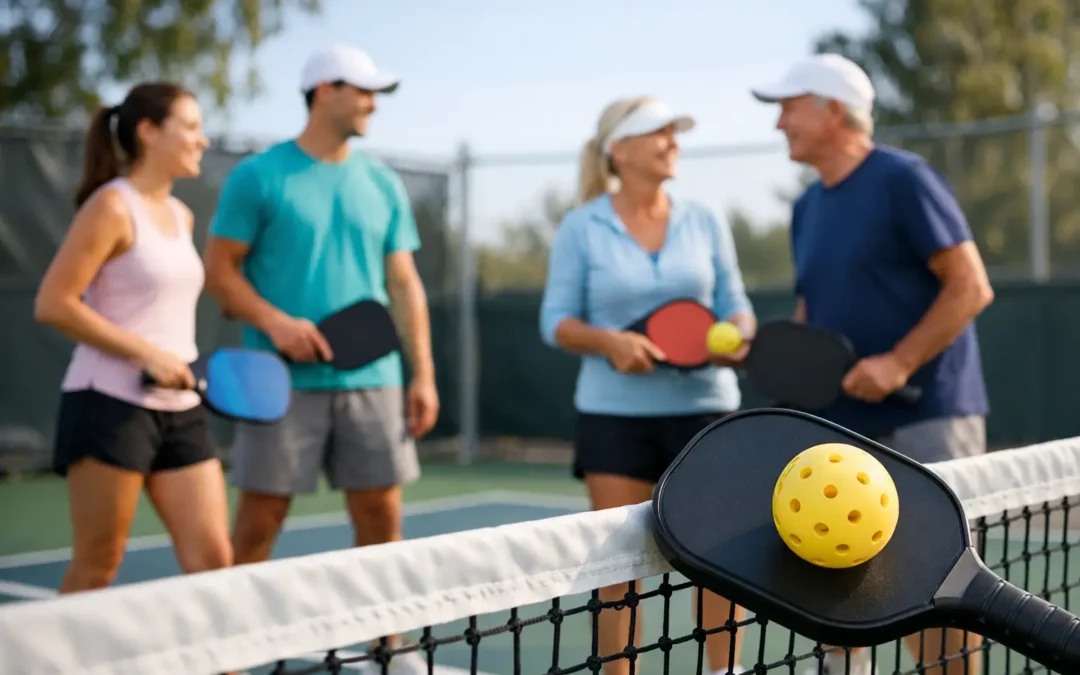
A new player’s first few games can decide whether pickleball becomes a weekly habit or a frustrating one-time experiment. The best pickleball formats for beginners are not necessarily the fastest or most competitive. They are the formats that give you enough repetitions to learn, enough structure to understand the game, and enough social support to want to come back.
At Around The Post Pickleball, we have taught more than 3,500 players across The Hamptons and Eastern Long Island. One lesson stands out: beginners improve faster when the format matches their stage of learning. Being dropped into a crowded open-play rotation before you know where to stand can feel intimidating. A well-run clinic or small-group game, on the other hand, gives you a clear role, useful feedback, and room to enjoy the rally.
What Beginners Need From a Pickleball Format
Before choosing a game, it helps to know what makes a format beginner-friendly. The right environment should provide predictable rotations, balanced partners, manageable scoring, and a pace that allows players to reset between points. You should be able to ask a question without feeling like you are holding up the court.
The best setup also creates real touches on the ball. Beginners need repetitions with serves, returns, dinks, volleys, movement, and communication. Standing at the back of a long paddle queue or sharing a court with three experienced players may be social, but it is not always the most effective path to confidence.
Skill level matters, too. A complete beginner learning the kitchen line and basic scoring needs something different from a player who can already sustain a short rally. There is no single best format for everyone. There is, however, a smart progression.
Best Pickleball Formats for Beginners
Coached Beginner Clinics
For most new players, a coached beginner clinic is the strongest starting point. This format combines instruction with controlled play, so you are not just told how a shot should work – you get a chance to practice it immediately.
A quality clinic generally starts with fundamentals: grip, ready position, serving, returning, score calling, and court positioning. From there, the instructor can build toward dinking, volley control, and the often-misunderstood transition from the baseline to the non-volley zone line. The best clinics keep players moving and touching the ball rather than listening to a long lecture.
The biggest advantage is correction. Small adjustments to your paddle face, footwork, or contact point are much easier to make early than after a habit has set in. Certified instruction also removes the guesswork that can come from copying whatever the player beside you happens to do. For players who value a clear foundation, this format delivers the most return on court time.
Small-Group Skill Sessions
Once you understand the rules, small-group sessions are an excellent next step. Usually built around a focused theme, these sessions might work on serving and returning, third-shot decisions, dinking consistency, or moving as a doubles team.
The smaller player-to-coach ratio is what makes this format valuable. You receive more individual feedback and can repeat a drill until the movement starts to feel natural. It is particularly helpful for beginners who are athletic but new to paddle sports, as well as players who have played casually but want to stop relying on instinct alone.
Small-group sessions are less game-like than open play, and that is the trade-off. They are not always where you will meet the most people in a single afternoon. But they make game play more enjoyable because you arrive with a stronger understanding of what to do when the ball comes your way.
Beginner Round Robins
A round robin is one of the best social formats for beginners who are ready to play games. Partners and opponents rotate each round, giving everyone a chance to play with different styles and personalities. In a true beginner round robin, the organizer groups players by a similar experience level and keeps the scoring and rotations simple.
This format quickly teaches the practical side of doubles pickleball. You learn how to introduce yourself to a new partner, decide who takes the middle ball, call the score, and recover after an error without letting one point derail the next. It also prevents the awkwardness of having to find your own group every time you arrive.
Round robins work best after a player has learned basic scoring and positioning. If you are completely new, take a clinic first or choose an event that specifically welcomes first-timers. The goal should be friendly competition, not trying to survive against players who are already driving every return at full pace.
Guided Open Play
Open play is the heartbeat of many local pickleball communities. Players rotate in and out, games are usually played to 11, and the paddle rack determines who is next. It can be a great way to find regular partners and experience the social energy that makes pickleball so popular.
For beginners, guided open play is far better than unstructured open play. A host, instructor, or experienced ambassador can organize courts by level, explain the rotation, help with scorekeeping, and make sure new players are welcomed into games. That structure changes the experience completely.
The challenge with standard open play is inconsistency. You may have one game with patient partners and another with players who expect a faster pace than you can offer. That does not mean beginners should avoid it. It means you should choose it thoughtfully, start during a designated beginner session when available, and let people know that you are learning. Good pickleball communities respond well to that honesty.
King or Queen of the Court, With Modifications
King or Queen of the Court is a fast-moving format where winners move up a court and other players rotate down. It can be energetic, motivating, and great for meeting people. For new players, though, the traditional version can become too competitive too quickly.
Modified beginner versions solve that problem. Rather than rewarding only winners, an organizer can rotate everyone after a set number of points, pair stronger players with newer players, or keep courts grouped by experience. The emphasis becomes movement and game exposure rather than climbing a ladder.
This format is best for beginners who already know the basics and enjoy a little friendly pressure. It is not ideal as a first experience, especially if the group is large or the rotation is unclear. Confidence matters more than court ranking at this stage.
A Smart Progression From First Lesson to Regular Play
The fastest route is usually not to jump straight into a tournament-style environment. Start with a coached introductory clinic, then add a small-group skill session or two. Once you can serve, return, call the score, and understand where to stand with a partner, move into a beginner round robin or guided open play.
That sequence gives you both competence and community. Clinics teach the mechanics. Structured games teach decision-making. Social play teaches you how to adapt to different partners, pace, and personalities. Each format fills a different gap.
If you are returning to sports after time away, give yourself permission to stay in the instructional phase longer. If you have a tennis, racquetball, or platform tennis background, you may move into games sooner, but do not let prior athletic experience convince you to skip pickleball-specific fundamentals. The kitchen, the soft game, and doubles positioning reward patience.
How to Choose the Right Local Session
Ask a few direct questions before signing up. Is the program designed specifically for beginners? How many players are on each court? Will there be instruction or only games? Are players grouped by level? Who is running the rotation?
Professional organization makes a noticeable difference. Certified instructors can explain not just what to do, but why a certain shot or position works. A thoughtful event host can keep matches moving without leaving new players confused on the sidelines. Those details are especially valuable in a sport where the etiquette and scoring can feel unfamiliar at first.
Also consider what you want from the experience. If your primary goal is technique, choose a clinic. If you want to meet other local players, choose a beginner round robin or guided open play. If you are hosting friends, coworkers, or family members with mixed experience, a professionally led private event can keep everyone involved while still giving newcomers a comfortable introduction.
Your first format does not need to be perfect. It simply needs to put you on a court where learning is encouraged, good habits are reinforced, and every player has a reason to take the next point with a little more confidence.