
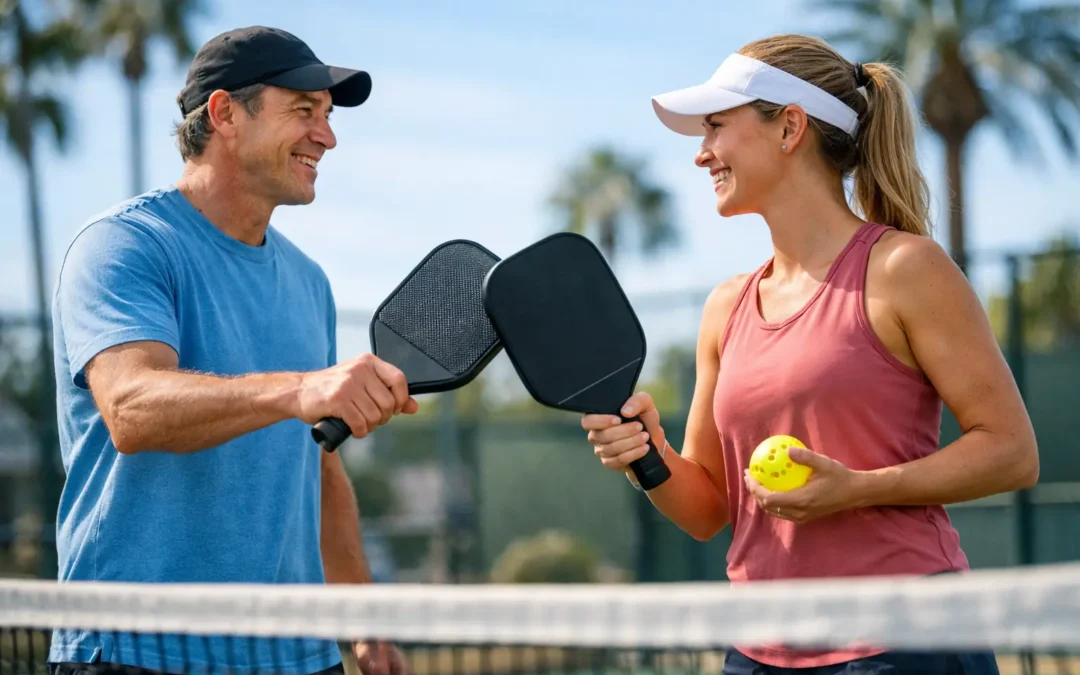
Your first pickleball game should not feel like an audition. Whether you are stepping onto a court in the Hamptons, Eastern Long Island, or your local recreation center, the goal is simple: get moving, understand the flow, and enjoy being part of the game. Learning how to start pickleball confidently is less about arriving with perfect shots and more about beginning with the right expectations, a few reliable fundamentals, and people who want you on the court.
Pickleball is famously welcoming, but it also moves quickly once the ball is in play. A little structure early on prevents the most common beginner frustration: standing on the court unsure where to serve, when to move, or why everyone is calling “kitchen.” Start with a smart foundation, and your first games become social, active, and genuinely fun.
Start With the Right Beginner Mindset
New players often assume confidence comes after they can hit hard, serve consistently, or win a game. In reality, confidence comes from knowing what you are trying to do on each point. At the beginning, that means getting the ball in play, staying balanced, and communicating with your partner.
Give yourself permission to be new. You will miss serves, hit a few balls long, and occasionally forget the score. Every experienced player has done the same. The players who improve fastest are not the ones who avoid mistakes. They are the ones who make a mistake, understand what happened, and take the next ball with a clear intention.
A useful first goal is to keep three balls in a row in play with control. Do not chase power before you can reliably send the ball over the net. Controlled contact builds rallies, and rallies are where you develop touch, timing, and court awareness.
Bring Simple Gear That Works
You do not need a garage full of equipment to begin. A basic paddle, comfortable athletic clothing, court shoes, and a few outdoor pickleballs are enough for your first sessions. If you are trying the sport for the first time, borrowing a paddle is completely reasonable. Once you know you enjoy playing, choose equipment that fits your hand and feels easy to maneuver.
Pay particular attention to footwear. Running shoes are designed for moving forward. Pickleball asks you to stop, shuffle sideways, change direction, and move forward quickly toward the non-volley zone. Court shoes with lateral support can make a meaningful difference in both comfort and safety.
For a confident first outing, bring these four essentials:
- A paddle with a comfortable grip size
- Court shoes with stable side-to-side support
- Water, sunscreen, and a hat for outdoor play
- A few balls suited to the court surface and conditions
You do not need the most expensive paddle. A lighter paddle can feel easier for beginners, while a slightly heavier one may provide more stability. The best choice depends on your strength, comfort, and any history of wrist or elbow discomfort. Try before you buy when possible.
Learn the Court Before You Learn Fancy Shots
Pickleball is played on a compact court, but positioning matters. The net divides the court, and the seven-foot area on each side of the net is the non-volley zone, commonly called the kitchen. You cannot hit a volley – a ball struck before it bounces – while standing in that zone or touching its line.
That rule creates much of pickleball’s strategy. Players cannot simply crowd the net and smash every ball. Instead, they learn to hit controlled shots, wait for the right ball, and work their way forward with their partner.
Before your first game, understand the basic sequence. Serve underhand and diagonally into the opposite service court. The receiving side lets the serve bounce, then the serving side lets the return bounce. This is the double-bounce rule. After those two bounces, either team may volley the ball outside the kitchen.
The score can feel confusing at first, especially in doubles, because it includes the serving team’s score, the receiving team’s score, and the server number. Do not let that hold you back. Ask another player to call the score clearly before each serve, and focus on learning it through repetition. Most beginner groups are happy to help when they know you are learning.
How to Start Pickleball Confidently With Three Core Skills
You do not need a full shot catalog to play a good beginner game. Start with a dependable serve, a controlled return, and a simple dink. These shots appear constantly, and each one gives you a practical way to stay in the point.
Serve Deep and Start the Point Calmly
A legal pickleball serve is underhand, with contact below the waist. For now, forget trying to ace anyone. Aim deep into the diagonal service box with a smooth, repeatable motion. A deep serve gives you time to move into position and can keep your opponent from immediately taking control of the point.
Use a short backswing and avoid squeezing the paddle too tightly. Tension makes the ball harder to control. Think of sending the ball, not hitting it.
Return Deep, Then Move Forward
When receiving, get the ball back deep and toward the middle or a comfortable target. Then move toward the non-volley line with your partner. New players often stay near the baseline after returning serve, leaving themselves vulnerable to shorter shots and giving up valuable court position.
You do not have to sprint recklessly toward the kitchen. Move with purpose, get balanced, and stop before the next ball arrives. Balanced feet lead to cleaner contact.
Dink With Patience
A dink is a soft shot that lands in the opponent’s kitchen. It may look simple, but it is one of pickleball’s most useful skills. It slows the point down, reduces unforced errors, and gives you a chance to build patience at the net.
For your first dinks, use a compact motion and keep the paddle out in front. Your target is not a perfect winner. Your target is a ball that clears the net, lands softly, and makes your opponent hit one more shot. That mindset changes everything.
Play Doubles First and Communicate Early
Doubles is the natural entry point for most adult players because it is social, manageable, and less physically demanding than covering the court alone. It also teaches an essential pickleball habit: move with your partner.
If your partner moves up to the non-volley line, you should generally move up too. If one player stays back while the other is at the net, a large gap opens between them. Opponents will find it quickly. Keep your spacing connected and avoid drifting into the same lane.
Communication does not need to be complicated. Call “mine” when you have the ball. Say “yours” if it is clearly your partner’s shot. Let balls go when they are headed long, and celebrate good decisions as much as good winners. A supportive partner can make a beginner’s first game feel completely different.
Choose Structured Play Over Random Repetition
Open play can be a terrific way to meet people, but it is not always the easiest first environment. Some sessions are beginner-friendly, while others move at a pace that can be intimidating for someone still learning the rules. There is no shame in choosing a beginner clinic, introductory lesson, or organized social session first.
A certified instructor can correct small habits before they become stubborn ones: gripping the paddle too tightly, swinging too big, standing too close to the baseline, or backing away from the non-volley line. The right coaching also gives you drills and language you can use during future games.
Around The Post Pickleball has taught more than 3,500 players through certified instruction, clinics, events, and programs across The Hamptons and Eastern Long Island. That experience matters because a quality beginner session does more than explain rules. It gives you a clear progression, the confidence to join games, and a community that makes you want to return.
Know the Etiquette That Makes You Welcome Anywhere
Pickleball has a strong social culture, and a few simple habits help you feel at home quickly. Introduce yourself when joining a court, ask about the local paddle rotation if you are attending open play, and return balls safely rather than rolling or hitting them through another game.
Call your side of the court honestly. If you are unsure whether a ball was in or out, give your opponent the benefit of the doubt. Avoid walking behind an active court until the point has ended. And when a game is over, thank your opponents and partners. These details are small, but they are how strong pickleball communities stay welcoming.
You will also encounter players with different priorities. Some want a relaxed social game; others are working hard on competitive skills. Neither approach is wrong. Ask what kind of game people are looking for, choose groups that fit your current level, and stay open to playing with people who can teach you something.
Build Confidence One Session at a Time
Your first few sessions should have a simple purpose. One day, practice getting every serve in. Another day, focus on returning deep. In your next game, pay attention to moving up with your partner. A narrow goal gives you a win even if the scoreboard does not go your way.
Keep expectations realistic. Pickleball is accessible, but improvement still takes repetition. A weekly clinic plus one or two play sessions can create meaningful progress, especially when you spend a few minutes practicing serves, dinks, and controlled exchanges instead of only playing full games.
The best time to start is before you feel fully ready. Bring a paddle, introduce yourself, ask one good question, and take the first point with a calm swing. The court will teach you the rest.