Showing up for your first pickleball session with the wrong gear is one of the fastest ways to make the game feel harder than it is. A solid beginner pickleball equipment guide should make your first decisions simple, not expensive. You do not need a bag full of premium gear to start well, but you do need a few smart choices that support comfort, control, and confidence from day one.
For most new players, the big mistake is either buying the cheapest option they can find or overspending on advanced gear they do not yet know how to use. The right setup sits in the middle. It should feel forgiving, comfortable in your hand, and practical for the courts where you actually play.
Beginner pickleball equipment guide: start with the essentials
At the beginner level, equipment matters most when it helps you learn clean mechanics and stay comfortable on court. That means your first priority is not power. It is consistency. A paddle that feels stable, shoes that support side-to-side movement, and the right ball for the surface will do more for your game than any flashy upgrade.
The essential equipment is straightforward: a paddle, court shoes, pickleballs, and a few small accessories that make sessions easier. Clothing matters too, but not in a complicated way. If you can move freely and stay comfortable, you are in good shape.
Choosing your first paddle
Your paddle is the one piece of equipment you will notice immediately. For beginners, the best paddle is usually not the lightest, heaviest, most powerful, or most expensive. It is the one that gives you a balanced feel and enough forgiveness when you do not hit the sweet spot perfectly.
Weight matters more than beginners expect
Most beginner paddles fall into three general ranges: lightweight, midweight, and heavyweight. Lightweight paddles are easier to maneuver at the kitchen line and can reduce fatigue, but they may feel less stable on off-center contact. Heavier paddles can add pop, yet they may stress the wrist or elbow if your mechanics are not efficient.
For most new players, a midweight paddle is the safest bet. It offers enough stability without feeling cumbersome. If you are athletic and already comfortable with racquet sports, you may like a little more mass. If you have a history of arm discomfort, a lighter or softer-feeling paddle may be the better call.
Shape and sweet spot
Elongated paddles can offer more reach, which sounds appealing, but standard-shaped paddles are often better for beginners because they tend to provide a more forgiving hitting area. That forgiveness matters when you are learning dinks, resets, and controlled serves.
A larger sweet spot usually helps newer players build confidence faster. You will feel fewer harsh mishits, and your contact will be more predictable. That translates into better control, which is what most beginners need.
Grip size and handle feel
Grip size is easy to overlook, but it affects comfort and control. If the grip is too large, your hand can feel tense. If it is too small, you may squeeze too hard. Most adults do well with a standard grip size, and an overgrip can fine-tune the feel.
Handle length also depends on your style. If you use a two-handed backhand, a slightly longer handle may feel better. If not, this is not something to overthink on day one.
Price range for beginners
A good beginner paddle does not need to cost top dollar. In most cases, the sweet spot is a solid mid-range paddle rather than a bargain-bin set or a tournament-level model. Very cheap paddles can feel dead, inconsistent, or uncomfortable. High-end paddles can be excellent, but many beginners are paying for performance features they are not ready to use.
If possible, try a few paddles before buying. That is one of the biggest advantages of learning in a strong local pickleball community or attending a structured clinic. You can feel the difference instead of guessing from a product description.
Shoes are not optional
If there is one area where beginners should not cut corners, it is footwear. Running shoes are built for forward motion. Pickleball is full of lateral movement, quick stops, and short recovery steps. Wearing the wrong shoes can leave you less stable and more likely to roll an ankle or feel sore after a session.
Court shoes are the right choice because they support side-to-side movement and give you a better connection to the court surface. Tennis court shoes often work well for pickleball, especially outdoors. For indoor play, choose shoes with appropriate non-marking soles and good grip.
Comfort matters, but so does support. If a shoe feels soft but unstable, it is not doing you any favors. A slightly firmer shoe with better lateral security is often the smarter option. If you play frequently, this investment pays off quickly.
Indoor vs. outdoor pickleballs
Not all pickleballs play the same. Indoor and outdoor balls are built differently, and using the wrong one changes the pace and feel of the game.
Outdoor balls are usually harder, with smaller holes, and they hold up better in wind and on rough court surfaces. They tend to play faster and bounce more consistently outside. Indoor balls are softer, have larger holes, and are designed for smoother indoor surfaces with less wind.
For a beginner, this matters because the ball affects timing. If you are practicing outdoors, use outdoor balls. If you are inside, use indoor balls. It sounds basic, but plenty of new players buy one random set and wonder why things feel off.
Durability is part of the decision too. Outdoor balls crack over time, especially in colder weather. If you play regularly, expect to replace them. That is normal.
What to wear on court
You do not need pickleball-specific apparel to start. You need athletic clothing that lets you move comfortably, manage sweat, and handle changes in temperature. Breathable tops, shorts or skirts with easy movement, and layers for cooler mornings are enough.
On outdoor courts in places like the Hamptons and Eastern Long Island, sun protection deserves real attention. A hat, sunglasses, and sunscreen are not extras if you are playing in summer conditions. They help you stay focused and comfortable through the full session.
Small accessories that actually help
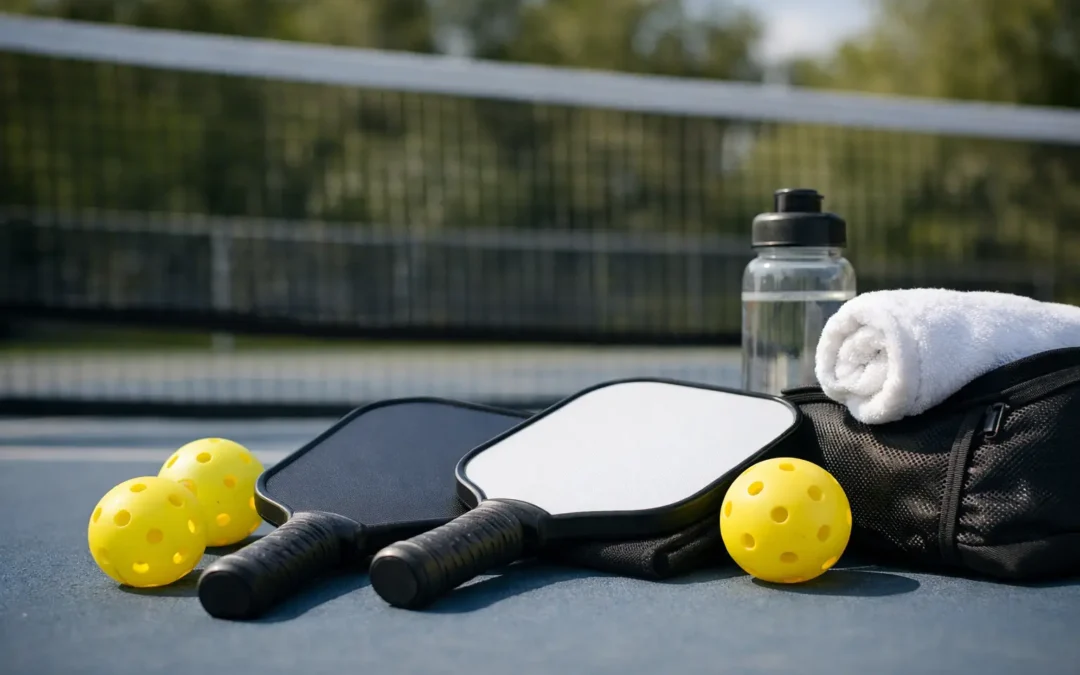
Most accessories are optional, but a few are genuinely useful. An overgrip can improve comfort and absorb sweat. A small towel helps during hot weather. A water bottle is basic but essential if you are doing clinics, drills, or longer open play sessions.
A paddle cover can help protect the face of the paddle during transport, though it is not a performance necessity. Protective eyewear is also worth considering, especially once you begin faster play or group drills where reaction time gets tighter.
What beginners do not need right away
New players often assume more gear means better preparation. Usually, it just means more confusion. You do not need multiple paddles, specialized weighted training tools, or a premium tournament bag when you are still learning scoring and court positioning.
You also do not need to chase power-focused gear because it looks advanced. Early improvement comes from clean contact, better footwork, and understanding the soft game. Equipment should support learning, not distract from it.
How to buy gear without wasting money
The smartest beginner equipment plan is simple. Buy one quality paddle, one good pair of court shoes, a few balls that match your playing surface, and only the accessories you know you will use. Start there, then upgrade based on experience rather than marketing.
If you are taking lessons or joining clinics, ask instructors what they see working for new players. Experienced coaches can usually spot whether a paddle is too heavy, a grip is uncomfortable, or a shoe choice is setting you up for trouble. That kind of guidance can save you money and speed up your progress.
At Around The Post Pickleball, we have taught more than 3,500 players, and one pattern shows up again and again: beginners improve faster when their equipment is simple, comfortable, and matched to their level. Fancy gear does not replace good instruction, but the right basics absolutely make it easier to build confidence.
A practical beginner setup
If you want a reliable starting point, think balanced paddle, court-specific shoes, outdoor or indoor balls based on where you play, breathable athletic clothing, and a water bottle. That is enough to begin well. From there, your preferences will get clearer as your game develops.
Some players eventually want more touch, more spin, or more reach. Others just want dependable recreational gear that holds up for weekly play. Both approaches are valid. The right equipment is the gear that fits your body, your goals, and the level of play you are actually stepping into.
The best first purchase is not the one with the biggest claims. It is the one that gets you on court feeling prepared, comfortable, and ready to learn the game the right way.