
A lot of players ask the same question right after their first few games or right before a ratings jump: should I book a private coach or clinic pickleball session? It sounds like a simple choice, but the right answer depends on how you learn, what you want to fix, and how quickly you want to improve.
If you are a beginner, the wrong format can leave you overwhelmed or stuck with habits that are harder to clean up later. If you are already playing at an intermediate level, choosing the right setting can be the difference between feeling busy on court and making real progress. In a market like the Hamptons and Eastern Long Island, where players want quality instruction and a polished experience, the format matters just as much as the coach.
Private coach or clinic pickleball: what is the real difference?
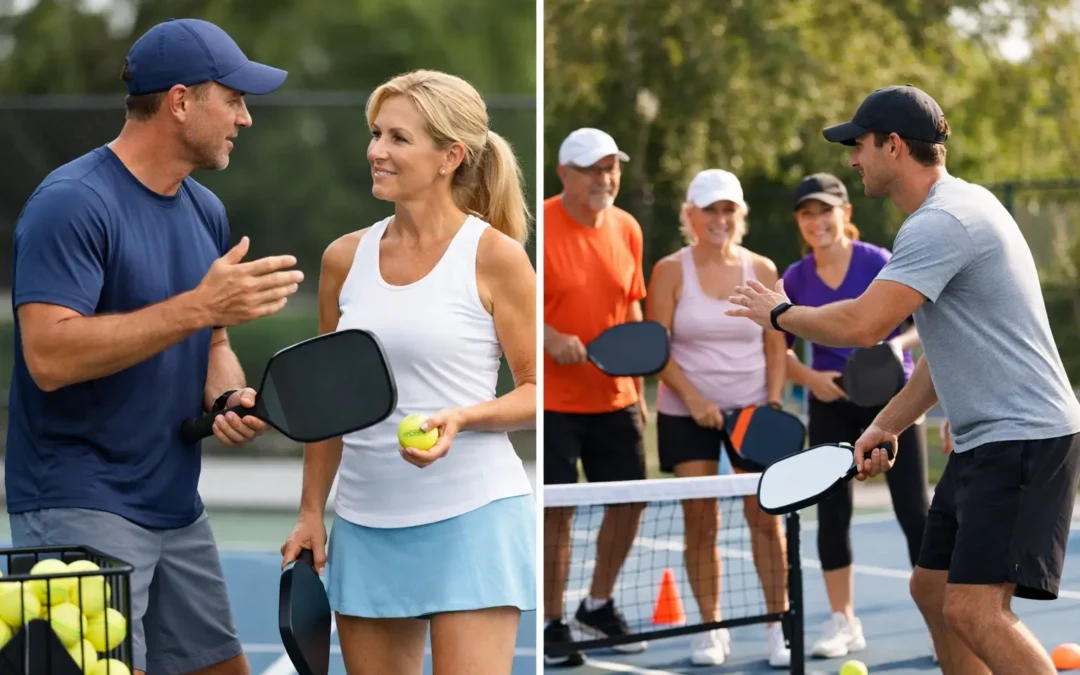
A private lesson is built around you. Your grips, your footwork, your serve, your transition game, your habits under pressure. The coach watches closely, adjusts in real time, and can spend an entire hour solving one issue if that issue is holding everything else back.
A clinic is structured for a group. That does not mean generic. A good clinic still has clear teaching goals, smart progressions, and direct feedback, but the attention is shared. You gain repetition, live reps with other players, and the energy that comes from learning in a social environment.
That difference is what should drive the decision. If your biggest need is individualized correction, a private lesson usually wins. If your biggest need is repetition, game exposure, and value, a clinic often makes more sense.
When a private coach is the better move
Private coaching shines when your game has a specific bottleneck. Maybe your third shot drop breaks down under pressure. Maybe your ready position is late, your dink contact is inconsistent, or your serve return keeps floating. In those cases, broad instruction is not enough. You need someone to isolate the problem, explain why it is happening, and give you the right sequence of corrections.
This is also the strongest option for players who improve best through direct feedback. Some players can hear one cue, apply it, and change quickly. Others need a coach to stop the drill, adjust body position, and rebuild mechanics one layer at a time. Private sessions create space for that kind of teaching.
For newer players, private instruction can be the fastest way to build confidence. Starting in a group is fun, but it can also be intimidating if you are still learning scoring, court positioning, and basic shot selection. A private lesson lets you ask every question without feeling like you are slowing anyone down. That matters more than people think.
Advanced recreational players also get a lot from one-on-one coaching because their issues are often more subtle. At that level, improvement is not usually about learning what a dink is. It is about disguising speed-ups, defending counters, making better transition decisions, and understanding patterns that hold up against stronger opponents. Those details are easier to teach in a private setting.
The trade-off is obvious. Private lessons cost more, and they can give a false sense of progress if they are not paired with live play. You may hit cleaner balls in a lesson, then struggle to execute the same shot in a real game. That does not mean the lesson failed. It means transfer takes time.
When a clinic is the smarter choice
Clinics are often the best entry point for players who want structure without the price of private coaching. A well-run clinic gives you instruction, repetition, and a group of players working on similar skills at the same time. That mix is especially useful when you are developing fundamentals.
If you are learning the soft game, net positioning, return depth, or partner communication, clinics create the kind of reps that make lessons stick. You are not just hearing the concept once. You are drilling it again and again, then seeing how it shows up in live points.
Clinics are also ideal for players who thrive in a social setting. Pickleball is a community sport. Many adults stay with the game because it combines competition with connection. A group clinic builds both. You improve, meet players, and become part of a local playing network at the same time.
That social element is not extra. It is a real benefit. Players who feel connected tend to play more, and players who play more usually improve faster.
For intermediate players, clinics can offer strong value when the group is level-appropriate. That last part is critical. A mixed-level clinic can work for broad themes, but if the range is too wide, someone gets shortchanged. Beginners may feel rushed, while stronger players may not get enough challenge. The best clinics are designed with a clear level in mind and taught by instructors who know how to manage pace, feedback, and progression.
How to choose based on your goal
The easiest way to decide between a private coach or clinic pickleball format is to stop thinking in general terms and look at your next goal.
If your goal is to fix one issue fast, choose a private lesson. If your backhand dink keeps sitting up, or your partner keeps telling you that you are backing off the non-volley zone line, you want targeted correction.
If your goal is overall development, a clinic may be the better fit. It gives you exposure to multiple game situations and enough reps to start building instinct, not just understanding.
If your goal is to get comfortable before joining open play, either can work. A private lesson is better if you feel hesitant or brand new. A beginner clinic is better if you want to learn with peers and get used to the rhythm of group play.
If your goal is competitive improvement, the answer is often both. Private coaching helps sharpen technical and tactical issues. Clinics help test those adjustments under pressure with other players on court.
Private coach or clinic pickleball for beginners, intermediate, and advanced players
Beginners usually need clarity first. They need proper grips, footwork basics, scoring confidence, and a simple framework for where to stand and what shot to choose. A private lesson can accelerate that process, especially for players who want a more comfortable on-ramp. But a beginner clinic can be excellent when it is organized, welcoming, and taught by certified instructors who know how to keep the game simple without making it feel watered down.
Intermediate players often benefit most from clinics with a strong instructional plan. At this stage, repetition matters. Players need to work through transition zone decisions, shot tolerance, court awareness, and consistency. A quality clinic gives them enough volume to build habits, not just hear advice.
Advanced recreational players tend to need precision. Their misses are narrower. Their windows are smaller. Their progress comes from better decisions and cleaner execution under speed. That often points back to private coaching, at least part of the time, because generic reps will not move the needle enough.
What quality instruction should look like
Whether you choose private lessons or clinics, do not judge the value by court time alone. Judge it by structure, teaching quality, and whether the instructor can actually improve your game.
Strong instruction is organized. The coach has a clear plan, communicates simply, and gives feedback that you can apply right away. Better yet, they understand how adults learn. They know when to correct mechanics, when to keep players moving, and when to shift from explanation to repetition.
Credentials matter too. In pickleball, certified instructors bring more than a badge. They bring training in teaching standards, player development, and lesson structure. That matters in private sessions, and it matters even more in clinics where pacing and group management affect everyone on court.
This is where local reputation matters. In a region like the Hamptons and Eastern Long Island, players are not just looking for someone to feed balls. They want a proven program, experienced instructors, and a professionally run environment. Around The Post Pickleball has taught more than 3,500 players across the region, and that kind of volume matters because it reflects real teaching experience with every type of player, from total beginners to 4.0 competitors.
The best answer is often a mix
If you are still stuck between the two, here is the most practical answer: start with the format that matches your biggest need right now, then layer in the other when it makes sense.
A beginner might start with one private lesson to build confidence, then join a clinic for reps and community. An intermediate player might spend most of the month in clinics, then book a private session to address a serve, reset, or transition issue that keeps showing up in games. A stronger player might use private coaching for refinement and clinics for pressure reps.
That approach tends to work because pickleball improvement is not linear. Some phases call for direct correction. Others call for volume, timing, and live problem-solving with other players. The smartest plan is not about picking one format forever. It is about knowing what your game needs next.
If you choose instruction that fits your level, your learning style, and your actual goals, progress starts to feel a lot less random – and a lot more repeatable.