
Showing up to a clinic unprepared is the fastest way to spend the first 20 minutes playing catch-up. If you are wondering how to prepare for pickleball clinic sessions so you feel confident, coachable, and ready to improve, the answer is not complicated – but it does matter. A great clinic moves quickly, and players who arrive physically ready, mentally focused, and open to feedback get more out of every rep.
Clinics are different from open play. You are not just there to get games in. You are there to build better habits, sharpen decision-making, and train with purpose. That means preparation should match the experience. The better the clinic, the more those details count.
How to Prepare for Pickleball Clinic Before You Arrive
Start with your body. The night before, get real sleep. Not aspirational sleep – actual sleep. If you are tired, your footwork slows down, your reaction time drops, and your focus disappears halfway through a dink progression.
Hydration matters too, especially during warmer months in the Hamptons and across Eastern Long Island where outdoor play can feel comfortable until it suddenly does not. Drink water before you are thirsty. If your clinic is longer, more intense, or played in heat and humidity, add electrolytes. Too many players wait until the first water break to realize they started behind.
Eat like you plan to move. A heavy meal right before a clinic can leave you sluggish, but showing up on coffee alone is not much better. Aim for something light and steady 60 to 90 minutes beforehand – yogurt, fruit, oatmeal, toast with peanut butter, or something similar that gives you energy without weighing you down.
Then think about your schedule. Arrive early enough that you are not rushing from the parking lot to the baseline. A clinic is a coached environment, and walking in flustered usually means you miss introductions, the first teaching point, or the warm-up that sets the tone for the whole session.
Bring the Right Gear, Not Every Piece of Gear
You do not need to show up looking like a touring pro. You do need the basics handled.
Wear court shoes with lateral support, not running shoes. Pickleball involves quick side-to-side movement, stops, and short bursts forward. The wrong footwear is one of the easiest ways to feel unstable or, worse, get hurt.
Bring your paddle, but bring the one you actually use. A clinic is not the best time to test three different paddles and rethink your setup every 10 minutes. If you are serious about improvement, consistency helps. The more familiar you are with your paddle, the easier it is to absorb coaching and connect it to feel.
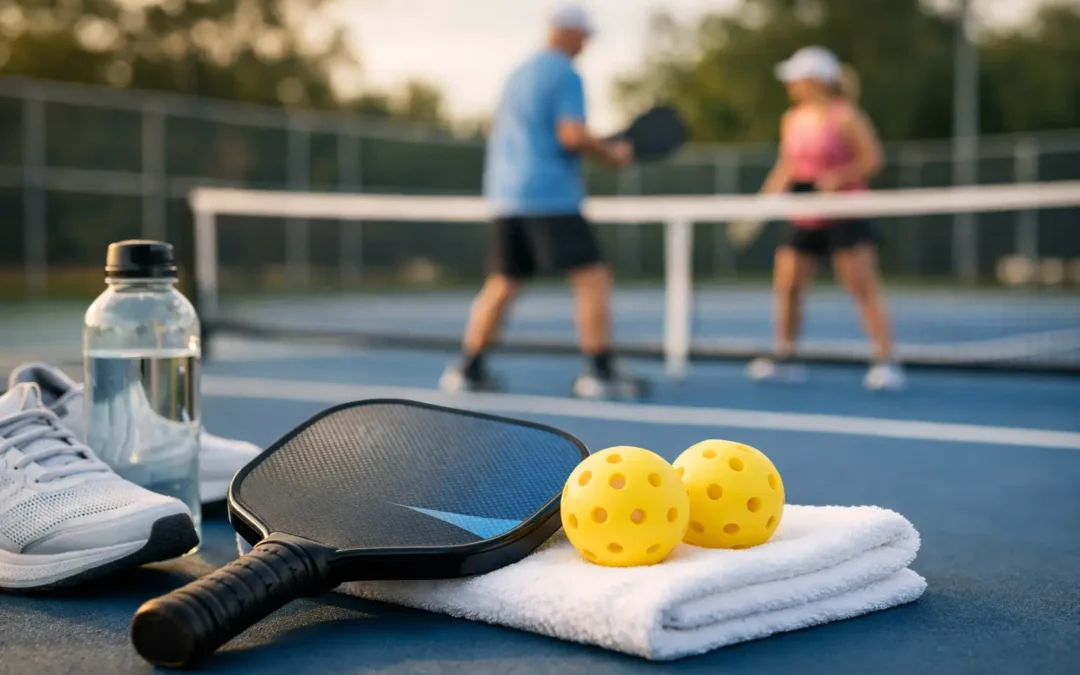
Toss a few extra essentials in your bag: water, a small towel, sunscreen, a hat or visor if you play outdoors, and an extra overgrip if your hands sweat. If you know you blister easily, deal with that before it starts. Small comforts become big distractions once drills get going.
If you are a newer player and do not know whether your gear is good enough, do not overthink it. A quality clinic should meet you where you are. Coaches can usually tell the difference between equipment issues and technique issues quickly. What matters more is that you show up ready to learn.
Know What You Want From the Session
The players who improve fastest usually come in with one or two clear goals. Not ten. Just enough to focus your attention.
Maybe you want better third shot consistency. Maybe you struggle at the kitchen and want cleaner dinks under pressure. Maybe you are a beginner who simply wants to understand positioning and keep score without feeling lost. All of those are valid. The key is to know what would make the clinic feel productive for you.
This is where preparation becomes more than logistics. If you walk in with no self-awareness, every correction can feel random. If you walk in knowing your patterns, the coaching lands faster. You start connecting drills to real match situations instead of just hitting balls because the group is hitting balls.
There is a trade-off here, though. Having goals is smart. Being so locked into your own agenda that you ignore the clinic plan is not. Good instructors build sessions for the group while still helping individual players. Stay focused on your priorities, but trust the structure.
Warm Up With Intention
If possible, do not let the first hard movement of the day happen in the first drill. A few minutes of intentional warm-up can make a noticeable difference in both performance and injury prevention.
That does not mean a full fitness routine in the parking lot. It means loosening the ankles, hips, shoulders, and wrists. A few bodyweight squats, side shuffles, arm circles, and light shadow swings are enough to wake things up. If you have time to softly dink with a partner before the session starts, even better.
Players often underestimate how much cleaner their hands feel when their body is already online. Your touch game is not just about soft hands. It is also about balance, posture, and being physically ready to react.
Bring a Coachable Mindset
This might be the most important part of how to prepare for pickleball clinic sessions, especially for intermediate and advanced recreational players. Skill helps, but coachability is what turns a clinic into real progress.
Be ready to hear something that conflicts with what has been working in your weekly games. That is normal. Casual success and long-term development are not always the same thing. A shot that wins points in one group may break down against stronger opponents. A habit that feels natural may limit your ceiling.
The best clinic players are not the ones trying to prove they belong. They are the ones willing to make an adjustment, even if it feels awkward for a few reps. Certified instructors look for patterns, not just outcomes. If they ask you to change your contact point, reset position, paddle preparation, or court spacing, there is a reason behind it.
A strong clinic environment should feel supportive, but it should also challenge you. Improvement is rarely dramatic in the moment. It is usually a few better decisions, a cleaner setup, and one technical change repeated enough times to stick.
Understand Clinic Etiquette
Part of preparation is knowing how to operate in a group training environment. Clinics move best when everyone respects the format.
Listen when instruction is being given. Rotate quickly. Keep side conversations short. Retrieve balls when it is your turn and stay engaged when it is not. You do not need to be serious in a stiff way – pickleball is social, and that is part of why people love it – but you do need to be present.
This matters even more in high-quality programs where coaches are balancing multiple skill levels and keeping the pace high. The more efficient the group is, the more reps everyone gets. And reps are where the value is.
If you have a question, ask it. Just make it relevant and well-timed. Good coaches want engaged players, not silent ones. But if every drill turns into a private lesson for one participant, the room starts to lose momentum.
Be Honest About Your Level
One of the biggest mistakes players make before a clinic is signing up based on ego instead of fit. If the clinic level is too advanced, you may spend the session overwhelmed and hesitant. If it is too basic, you may not be challenged enough to grow.
That does not mean you need a perfect self-rating. Plenty of players are still figuring that out. But you should have a reasonable sense of whether you are a true beginner, a developing recreational player, or someone ready for more competitive, drill-heavy work.
A professionally run program will usually define who the clinic is for and what players can expect. Trust that. Around The Post Pickleball has taught more than 3,500 players across different ability levels, and that kind of experience matters because the right grouping changes everything. Better pairings create better tempo, better feedback, and better outcomes.
What to Do Right After the Clinic
Preparation does not stop when the session ends. If you want the clinic to pay off, take 60 seconds afterward and note what stood out. One technical cue, one tactical reminder, and one thing you want to practice next time is enough.
Do not try to remember everything. You will not. Clinics often give players more information than they can fully absorb in real time. The win is leaving with one or two changes you can carry into your next rec game, lesson, or drilling session.
It also helps to reset expectations. Sometimes the clinic where you feel least comfortable is the one that helps you most. If a new technique feels awkward, that does not mean it is wrong. It may simply mean you are in the middle of changing a habit.
The best way to prepare for a pickleball clinic is to respect the opportunity. Show up early. Bring the right gear. Know your goals. Stay open to coaching. Then let the session do what it is supposed to do – push your game forward in a way casual play usually cannot. If you come in ready, even one clinic can change how you move, think, and compete on the court.