A missed serve is more than one lost point. It changes momentum, gives away a free start to the rally, and puts pressure on the rest of your game. That is why pickleball serving accuracy drills matter so much. If you can place your serve on purpose, not just get it in, you start points with more control and a lot more confidence.
At clinics and competitive rec sessions, we see the same pattern all the time. Players spend plenty of time on dinks, drives, and drops, but their serve stays on autopilot. Then match play gets tight, the arm gets tense, and the serve that felt fine in warmups starts landing short, wide, or deep. The fix is usually not more power. It is better repetition, better targets, and a practice structure that trains pressure as well as mechanics.
Why serving accuracy changes your whole game
A legal serve is the minimum. A purposeful serve is the advantage.
When you hit your spots, you can push an opponent off the line, send the ball to a weaker wing, or force a return from an uncomfortable contact point. That does not mean every serve needs to be aggressive. In fact, for many players, especially beginners and solid intermediates, the smartest serve is deep, repeatable, and low risk.
Accuracy also travels well under pressure. Big pace can disappear on a windy day or in a nervous moment. Reliable placement tends to hold up better. That is one reason structured serving work pays off for beginners through 4.0-level players. The goal is not to serve like a highlight reel. The goal is to own a repeatable motion you trust in real points.
The right way to practice pickleball serving accuracy drills
Random serving helps a little. Intentional serving helps much more.
Start by choosing a target before every ball. Deep middle, backhand corner, body line, or a safe margin inside the baseline all work. What matters is that you name the target first and judge the result honestly. If you just serve and hope, you are not really training accuracy.
It also helps to measure quality beyond whether the ball landed in. A serve that clips the service box by two inches may count, but it is not always the serve you want. A serve that lands deep with three feet of sideline margin is often the better competitive ball. The best drills reward both location and margin.
Drill 1: Deep zone ladder
This is the fastest way to build dependable depth.
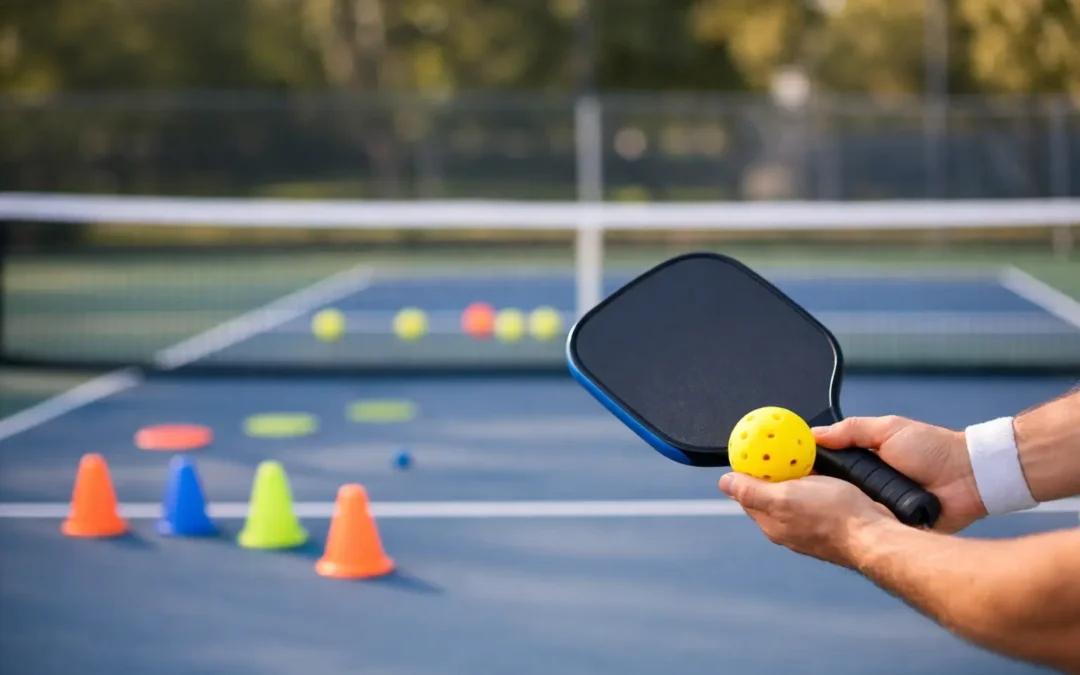
Place markers or visual targets in three lanes across the service box, but keep them in the back third near the baseline. Serve 10 balls aiming only for the deep middle. Then 10 to the deep forehand side and 10 to the deep backhand side. Score one point for landing in the correct lane and two points if the ball lands in the back third.
This drill teaches a simple truth. Most players miss depth before they miss direction. If your serve lands short, your opponent gets an easier return and a smoother path to the kitchen. Training the back third builds a serve that does more work without needing extra pace.
Drill 2: Two-in-a-row pressure drill
Consistency is not hitting one good serve. It is repeating one when it matters.
Pick one target and do not change it until you make two in a row. Then move to a second target and repeat. Finish with a third target. If you miss before getting to two, start that target over. Advanced players can raise the standard to three or four in a row.
This drill adds just enough pressure to expose your habits. If your tempo speeds up after a miss, you will feel it. If your toss or drop changes under stress, you will see it right away. That is valuable information. Match confidence comes from rehearsing those moments, not avoiding them.
Drill 3: Wide-and-middle pattern work
A lot of players aim only for the corners and ignore the value of the middle. That is a mistake.
Serve one ball wide, one ball middle, and repeat for 20 total serves. Then switch sides and do it again. The wide target stretches the returner. The middle target can jam indecision, especially against teams that have not settled their middle-ball communication.
The benefit here is tactical, not just technical. You are not training a single favorite serve. You are learning to change patterns with control. For intermediate and advanced recreational players, this is where serving starts to become part of strategy instead of just the start of the point.
Pickleball serving accuracy drills that improve mechanics too
The best drills do not just test outcomes. They clean up the motion that creates those outcomes.
Drill 4: Shadow swing and serve
Hit five shadow swings with no ball, then five actual serves to the same target. Repeat for four rounds.
On the shadow swings, pay attention to balance, contact out in front, and a smooth upward path. Then carry that exact rhythm into live balls. This drill works especially well for players who get jerky with the serve or try to steer the ball at contact.
If your mechanics break down when you add the ball, that tells you the motion is not yet stable. If the shadow swing and live serve feel nearly identical, you are building something match-ready.
Drill 5: Serve and hold finish
Serve the ball, then freeze your finish for two seconds.
That pause reveals a lot. If you are falling off to the side, pulling your head early, or losing balance through contact, your finish will show it. Do this for 20 serves and focus less on power and more on posture. A clean finish usually means the ball came off a cleaner swing path.
This is a simple drill, but it is one we use often because players can self-correct quickly. You do not need complicated swing thoughts. You need a motion that stays stable from start to finish.
Drill 6: Short-memory reset drill
Pressure serving is as mental as it is physical.
Hit one serve to a target. If you miss, step back, take one breath, and go through the same pre-serve routine before the next ball. If you make it, do the exact same routine anyway. Continue for 15 serves.
The purpose is to remove emotion from the previous ball. Many missed serves are not caused by bad technique alone. They come from rushing after a miss or getting too careful after a near-miss. A repeatable reset routine keeps your tempo steady and your decision-making clear.
For players in tournament settings or league play, this drill can be a difference-maker. It trains you to carry composure into the next point instead of dragging frustration with you.
How to scale these drills by skill level
Not every player should train the same target size or level of risk.
Beginners should prioritize margin first. Aim deep middle more often, use larger target zones, and focus on getting 7 or 8 out of 10 quality serves with a smooth motion. Trying to paint corners too early usually creates tension and inconsistency.
Intermediate players can start narrowing targets and alternating locations more often. This is where the wide-and-middle pattern drill and the two-in-a-row drill become especially useful. You are still protecting margin, but now you are learning to serve with intention.
Advanced recreational and 4.0 players should add consequence. If you miss a target twice, switch sides. If you miss short, repeat the rep. If you hit your target three times in a row, move to a tougher lane. Better players need decision-making pressure, not just more volume.
Drill 7: Scoreboard serving game
This is one of the best pickleball serving accuracy drills for turning practice into something that feels real.
Play a game to 11 with yourself. Give yourself one point for a serve that lands in the intended target zone and minus one for a fault. A serve that is in but outside the target gets zero. Your goal is to reach 11 before you fall to minus three.
You can also play this with a partner and alternate servers. That adds a social, competitive edge that often sharpens focus. In our experience, players tend to practice better when there is a clear score attached. It feels closer to match conditions, and that usually leads to better transfer.
Common mistakes that hurt serve accuracy
The first mistake is trying to hit every serve harder than necessary. Pace can help, but only if you can locate it. For many players, adding 10 percent more control creates more pressure on the returner than adding 10 percent more speed.
The second mistake is changing too many things at once. If your serve is off, check one variable first – contact point, balance, or target selection. Mechanical overload usually makes things worse.
The third mistake is practicing when fresh but never when tired. Serving accuracy late in a session matters because that is often when matches get sloppy. If you want your serve to hold up, train it after drills, not only before them.
What better serving should feel like
A more accurate serve usually feels calmer, not more violent. The motion is repeatable. The target is clear. The miss pattern gets smaller.
That is the standard worth chasing. Not a flashy serve, not a rushed serve, and not a serve you trust only on good days. Just one you can bring with you to open play, league nights, tournaments, and every pressure point in between. Around The Post Pickleball has built its coaching around exactly that kind of improvement – measurable, repeatable, and built for real match play. Start with one drill, track it for a week, and let your serve become something opponents notice before the rally even begins.