
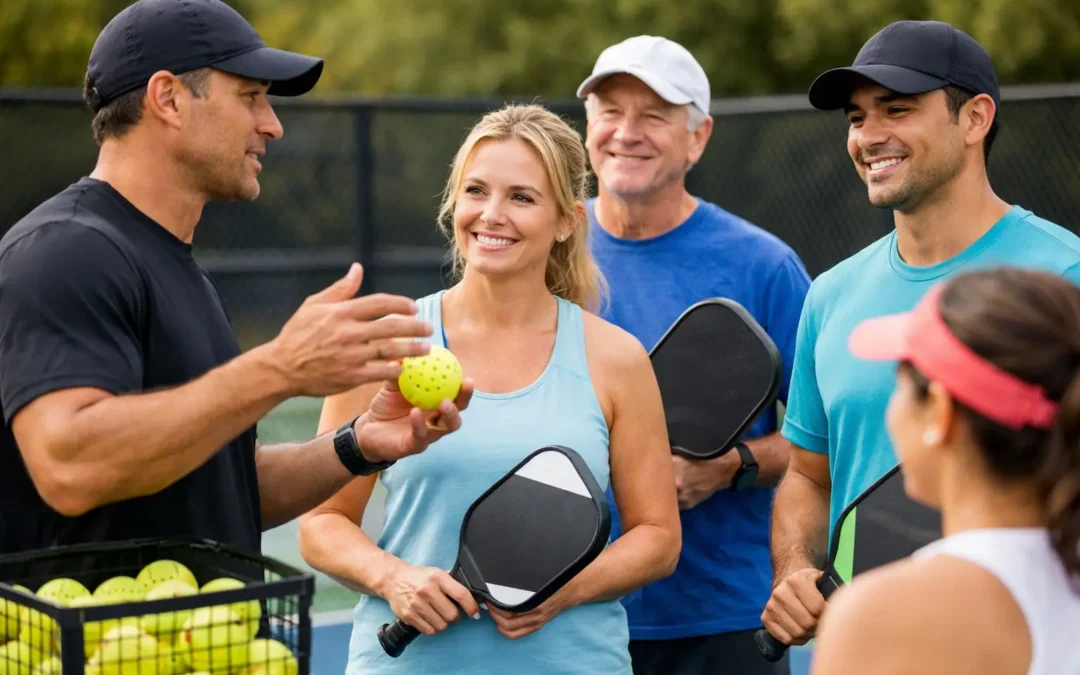
You can feel the difference within the first 15 minutes. Instead of waiting through a crowded clinic or trying to piece together tips during open play, small group pickleball coaching puts you in the right setting to actually improve. You get live feedback, meaningful reps, and a pace that keeps everyone engaged without turning the session into a private lesson price tag.
That balance is exactly why this format has become such a smart option for players across The Hamptons and Eastern Long Island. Beginners want a comfortable entry point. Intermediate players want cleaner mechanics and better decision-making. More competitive recreational players want drill-based training that sharpens specific parts of their game. A well-run small group gives each of those players more than court time – it gives them direction.
What small group pickleball coaching actually changes
The biggest advantage is simple: more touches, more feedback, less downtime. In a large clinic, even good instruction can get diluted because one coach is managing too many players with too many different needs. In a small group, coaching becomes much more precise.
A certified instructor can spot patterns quickly. Maybe one player is late getting set at the kitchen. Maybe another is overhitting third shot drops. Maybe the whole group needs better court positioning after the return. Those corrections can happen in real time, and because the group is small, players usually get enough repetitions to make the adjustment stick.
That matters because pickleball improvement is rarely about hearing one great tip. It is about applying the right correction over and over until the movement becomes natural. Small groups create the space for that process.
Why it works for more than one type of player
One of the common misconceptions is that small group coaching is only for beginners. It is a strong fit for newer players, but it also works extremely well for intermediate and advanced recreational groups when the session is built correctly.
Beginners get a friendlier on-ramp
For a new player, walking into open play can be intimidating. The scoring is unfamiliar, the movement feels rushed, and it is easy to pick up bad habits if nobody explains the fundamentals. A small group lowers that pressure.
Players can learn the basics of grip, serve, return, court positioning, dinking, and kitchen rules in a setting that feels social rather than overwhelming. They can ask questions without feeling like they are holding up a large class. That usually leads to more confidence, and confidence is what gets people to keep playing.
Intermediate players get better structure
This is often where the biggest gains happen. Players in the 3.0 to 4.0 range usually know the rules and can keep a rally going, but their progress starts to slow because they are repeating the same habits. They need targeted coaching, not just more games.
A small group session can isolate one or two priorities – transition zone movement, soft game control, serve and return depth, speed-ups, partner communication – and build drills around them. That kind of focused work is hard to replicate in casual rec play, where the goal is usually to rotate in and keep games moving.
Advanced recreational players get competitive reps
For stronger players, the value is in intensity and specificity. A small group can run high-rep drills, scenario-based points, and fast feedback loops that push decision-making under pressure. If the players are matched well, the quality of the reps stays high. That is where coaching becomes less about general instruction and more about tightening execution.
The real value is the group itself
Not every group format works automatically. The quality of the coaching matters, but so does the makeup of the group.
When players are reasonably aligned by skill level and goals, the session gets sharper. A beginner group can focus on fundamentals without feeling rushed. A more advanced group can move quickly into competitive patterns and tactical adjustments. If the range is too wide, one side can feel lost while the other feels held back.
That is why experienced program design matters. Good coaches do not just show up with a basket of balls. They organize groups in a way that makes the hour productive for everyone on the court. That means clear progressions, purposeful drilling, and enough flexibility to adjust based on what they see from the players in front of them.
Small group pickleball coaching vs private lessons
Private lessons are excellent when a player wants full individual attention or has a very specific issue to work on. If you are rebuilding a serve, dealing with a recurring footwork problem, or trying to accelerate improvement quickly, one-on-one coaching can be the right move.
But small group pickleball coaching often gives players a better blend of value and realism. You still receive individual feedback, but you also train in the situations pickleball actually creates – partner movement, live exchanges, competitive patterns, and reaction-based decision-making. The social energy helps too. Many players learn better when they can watch others make adjustments, then apply the same concept themselves.
For a lot of adults, especially those balancing work, family, and a packed summer schedule, that combination of quality coaching, shared energy, and practical pricing makes small groups the easiest format to stick with.
What to look for in a coaching program
If you are comparing options, the strongest sign of quality is not just enthusiasm. It is coaching credibility paired with a proven track record. Certified instructors matter because pickleball teaching is not just about being a good player. It is about diagnosing mechanics, structuring progressions, and communicating clearly to different learning styles.
It also helps to choose a program with real local traction. In a market like The Hamptons and Eastern Long Island, players want more than a one-off lesson. They want consistent programming, organized events, and a community they can return to. Around The Post Pickleball has built that kind of trust by teaching more than 3,500 players, running successful tournaments and events, and delivering instruction through certified coaches with IPTPA and PPR credentials.
That kind of experience shows up on court. Sessions run cleaner. Group placements make more sense. Players leave with clear takeaways instead of vague advice.
What a strong session should include
The best small group sessions are not random collections of drills. They follow a sequence. Players warm up with purpose, work on a specific technical or tactical theme, then apply it in live play.
Maybe the theme is resetting from the transition zone. A strong coach will break down body position and paddle angle, feed enough balls for repetition, then move the group into point play where that same reset has to happen under pressure. That progression is what turns practice into improvement.
There should also be room for adjustments. Some groups need more work on fundamentals than expected. Others are ready to move faster into competitive play. Good coaching stays organized without becoming rigid.
Why this format fits the social side of pickleball
Pickleball is competitive, but it is also social. That is part of the appeal, especially in communities where people want both activity and connection. Small groups respect that side of the sport without letting the session drift into unstructured play.
You get the camaraderie of learning alongside others, the accountability of showing up with a group, and the motivation that comes from seeing everyone improve together. For couples, friends, seasonal residents, and private groups, it is an especially strong format because players can build chemistry while still getting real instruction.
That social element is not a bonus feature. For many adults, it is one of the reasons they stay committed long enough to improve.
Is small group pickleball coaching right for you?
Usually, yes – but it depends on your goal. If you want a welcoming place to start, small groups are ideal. If you already play and need structure to break through a plateau, they are often the most efficient choice. If you want highly personal attention on a single issue, a private lesson may be the better fit.
The key is finding coaching that matches your level and respects your time. The right program should feel organized, energizing, and clearly worth showing up for. You should leave knowing what you worked on, why it matters, and what got better.
That is what keeps players coming back. Not hype, not endless court time, but visible progress in a setting that is fun, credible, and well run.
If you have been playing without a clear plan, a small group may be the moment the game starts making a lot more sense.