
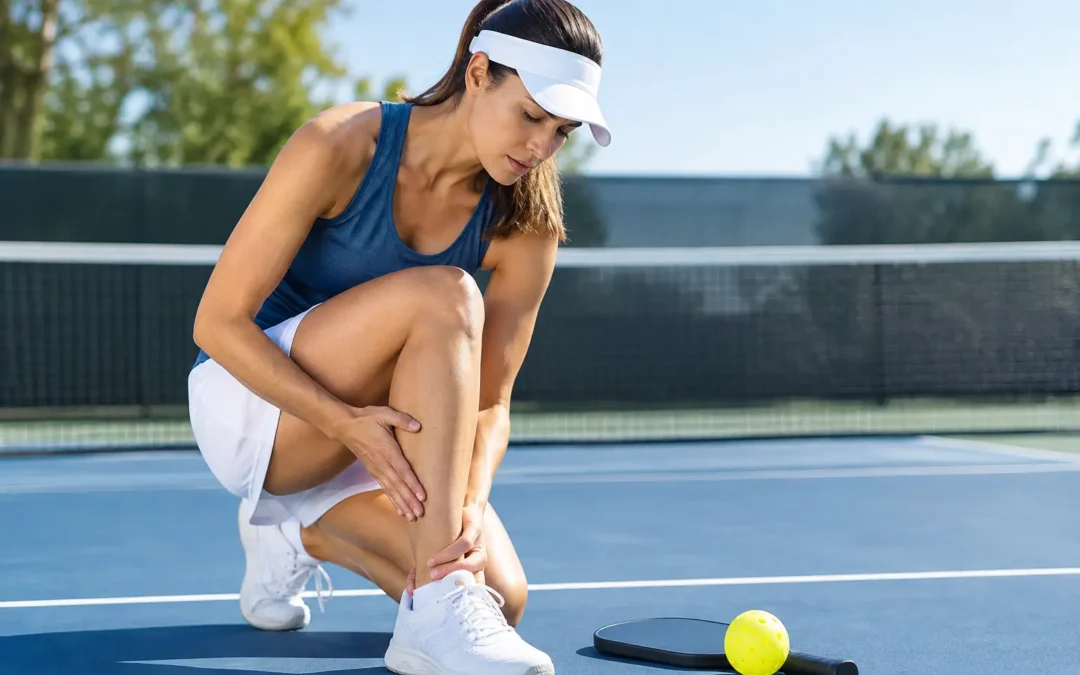
A great Saturday session in the Hamptons can turn quickly when a player lunges for a dink, plants awkwardly, and feels a pull in the calf or a sharp twinge in the knee. Pickleball is social, fast-moving, and accessible, but preventing common pickleball injuries takes more than showing up with a paddle and good energy. It takes preparation, efficient movement, and a realistic approach to how much your body can handle.
At Around The Post Pickleball, our certified instructors have taught more than 3,500 players across Eastern Long Island. We see a clear pattern: most avoidable injuries do not happen because someone lacks athletic ability. They happen when players rush into games cold, chase balls they cannot safely reach, or repeat flawed movement patterns for hours.
Why Pickleball Injuries Happen So Often
Pickleball asks for constant short bursts of movement. You stop, start, shuffle, pivot, reach, rotate, and react – often on a hard court and often in a competitive game that feels too fun to leave. Because the court is smaller than a tennis court, players sometimes assume the sport is easy on the body. The opposite can be true when quick changes of direction are paired with limited warm-up time.
The most common trouble spots are the calf and Achilles tendon, knees, ankles, shoulders, elbows, lower back, and wrist. Falls are also a concern, particularly when players backpedal for a lob or cross into a partner’s path. A smart prevention plan does not remove every risk, but it dramatically improves your odds of finishing the day feeling strong.
Start Every Session With a Real Warm-Up
Walking from the parking lot to the court is not a warm-up. Neither is hitting two serves before a game begins. Give yourself at least five to 10 minutes to raise your body temperature and prepare the joints and muscles you will use.
Begin with an easy walk or light jog, then add movements that resemble pickleball: side shuffles, controlled backpedals, high knees, gentle leg swings, arm circles, and torso rotations. Finish with a few soft dinks, volleys, and groundstrokes before increasing pace. Dynamic movement is generally more useful before play than holding long static stretches, which can be saved for after the session if they feel good for your body.
Players who arrive late are often tempted to skip this step. If that is you, start the first game at a lower intensity rather than treating the opening rally like match point. Your body needs a few minutes to catch up to your enthusiasm.
Build Safer Footwork Before You Need It
Stay balanced through the split step
The split step is one of pickleball’s simplest injury-prevention tools. As your opponent strikes the ball, make a small, light hop so you land balanced on the balls of your feet with knees softly bent. From there, you can move in either direction instead of reaching from a flat-footed position.
This does not need to look dramatic. The goal is to avoid being caught upright, locked at the knees, or leaning the wrong way when the next shot comes. Better balance improves court coverage and reduces those desperate, twisting reaches that can strain a knee, hip, or lower back.
Move your feet instead of reaching with your back
At the kitchen line, many players overextend for balls that are only a step away. Rather than folding at the waist and reaching your paddle arm as far as possible, take a small shuffle step and keep your chest tall. When a ball is outside your comfortable range, communicate with your partner or let it go.
That last part matters. A ball is not worth an injury. In recreational play, the point ends and another one begins. In tournament play, smart shot selection still beats a risky lunge that takes you out of the match.
Do not backpedal for lobs
Backpedaling is a frequent setup for falls and Achilles problems. When a lob goes over your head, turn and run or use a crossover step to get behind the ball. If you cannot get there under control, let the ball go. Trying to hit an overhead while falling backward is rarely the high-percentage play and never the safest one.
Use Technique to Protect Your Shoulder, Elbow, and Wrist
Good technique is not just about hitting cleaner shots. It distributes force through the larger muscles of your legs, core, and torso instead of asking your elbow or wrist to do all the work.
For dinks and volleys, keep the paddle out in front and use a compact stroke. Big backswing motions can create late contact and force the wrist to flick at the ball. That habit often contributes to soreness around the elbow or forearm, especially for players who play several days a week.
On serves and returns, rotate through your body rather than arm-swinging from the shoulder. Keep your grip pressure relaxed enough that you are not squeezing the handle through every rally. A death grip can fatigue the forearm quickly and make elbow discomfort more likely.
If shoulder pain appears during overheads, do not simply hit harder to work through it. Check your mechanics, reduce the number of overheads, and consider whether fatigue is causing your form to break down. A certified instructor can often spot the issue before it becomes a longer interruption.
Increase Your Playing Load Gradually
The fastest way to aggravate a tendon or muscle is to go from occasional games to three hours of pickleball every day. New players are especially vulnerable because the sport feels manageable while adrenaline is high, even if the body is not accustomed to the repetitive demands.
Build up your schedule over several weeks. If you normally play once a week, add a second session before you add longer sessions, intense drilling, or a full tournament weekend. Pay attention to how you feel the next morning, not only while you are on court. Mild muscle fatigue is expected. Persistent joint pain, sharp pain, swelling, or a limp are signals to stop and reassess.
Recovery should be part of your pickleball routine. Hydrate before and during play, particularly during humid Long Island summer conditions. Eat enough to support active days, sleep consistently, and give demanding muscles time to recover. Strength work also helps: simple exercises for calves, glutes, quads, core, and upper back can improve the stability you rely on when changing direction.
Wear Court-Ready Gear and Respect the Surface
Running shoes are designed for forward motion. Pickleball involves lateral movement, which means a court shoe with side-to-side support is the safer choice for regular players. Shoes should feel stable, fit securely through the heel, and have a sole appropriate for the surface you are playing on. Worn-down tread is not a minor detail when you are stopping quickly on a dusty or damp court.
Take a quick look at the court before play. Sand, leaves, loose balls, wet spots, poor lighting, and cracked areas change the risk level. At organized events, professional court setup and clear play areas make a meaningful difference. In casual settings, players should take the same responsibility rather than assuming someone else will notice the hazard.
Know When to Stop Instead of Pushing Through
Competitive players pride themselves on toughness, and social players do not want to leave friends short-handed. Still, there is a difference between normal effort and pain that deserves attention. Stop play and seek evaluation from a qualified healthcare professional if you experience any of the following:
- A pop, snap, or sudden sharp pain in a joint or muscle
- Swelling, bruising, instability, or an inability to bear weight
- Numbness, tingling, weakness, or pain that travels down an arm or leg
- Pain that continues to worsen, changes your gait, or does not improve with rest
For smaller aches, a short break may be enough, but do not return at full speed simply because the pain has faded. Resume with a gradual warm-up and lower-intensity play. If a problem keeps returning, it is worth getting professional guidance on both your body and your movement patterns.
Preventing Common Pickleball Injuries Is a Skill
The best players do not only train their hands. They train their feet, decision-making, body awareness, and recovery habits. A well-run clinic can help players develop those pieces in a structured setting, with coaching that reinforces safer movement before speed and competition take over.
Make your next game a little smarter: arrive early enough to warm up, move with control, choose the ball worth chasing, and leave the court with enough in the tank to enjoy the next session too.