
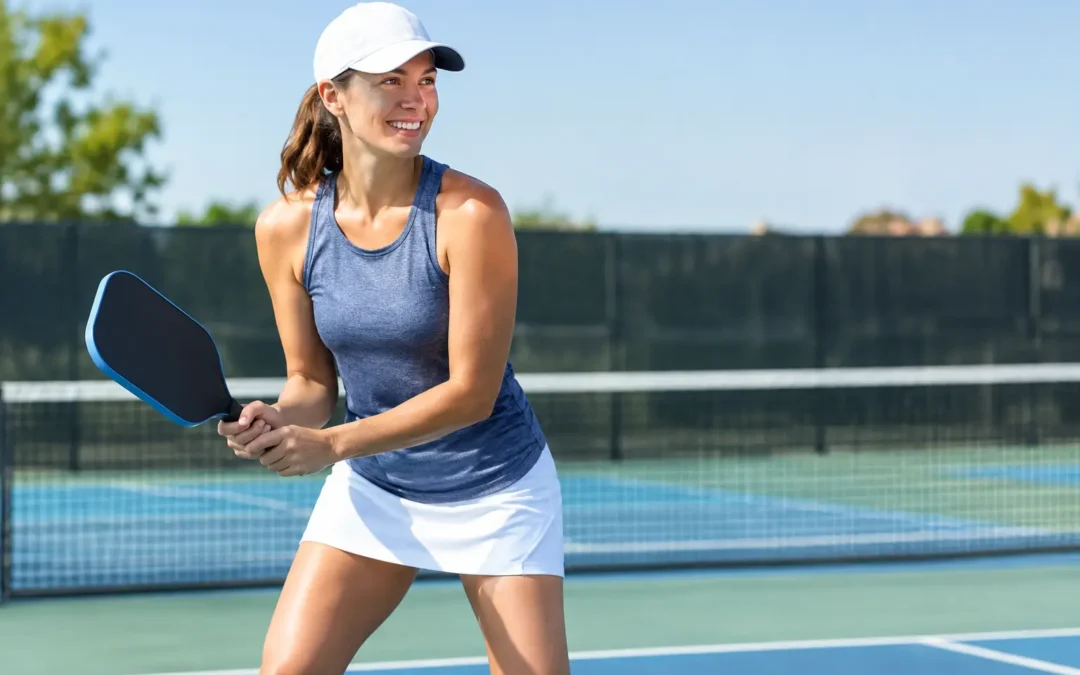
Your first pickleball outfit does not need to look like it came from a pro shop. It does need to let you move, stop, reach, and recover comfortably. The question, “what should beginners wear for pickleball?” comes up often in our clinics because the wrong shoes or an overheating layer can distract from the real goal: learning the game and enjoying your time on court.
For most first-time players, the answer is simple: wear breathable athletic clothes, court-appropriate shoes, and layers you can adjust. Pickleball is social and approachable, but it is still a quick-moving court sport. You will shuffle laterally, bend for low balls, reach overhead, and make plenty of short sprints. Dress for that movement first, then bring your personal style into the mix.
What Should Beginners Wear for Pickleball on Day One?
Start with clothes you would trust for a light tennis workout, fitness class, or brisk walk – not jeans, sandals, or heavy cotton loungewear. A moisture-wicking T-shirt or athletic top paired with shorts, a skirt or skort, leggings, or comfortable athletic pants is a reliable starting point.
Fit matters more than matching. Your shirt should stay put when you raise your paddle arm. Your bottoms should let you squat and take a wide step without pulling at the waist or restricting your stride. If you are constantly adjusting an outfit, you are not focused on your feet, paddle position, or the next ball.
For women, a supportive sports bra and a skort, shorts, or leggings are all practical choices. For men, athletic shorts with a secure waistband and a performance tee or polo work well. Many players prefer bottoms with pockets, especially once they begin carrying an extra ball between points. It is convenient, but not essential for a first session.
Avoid overly loose pants, long open cardigans, dangling jewelry, and anything that can catch on your paddle or affect your balance. Pickleball is welcoming, not a fashion inspection, but functional clothing helps beginners feel more confident immediately.
Your Shoes Matter More Than Your Shirt
If there is one item worth getting right, it is footwear. Running shoes are comfortable for moving forward, but pickleball requires frequent side-to-side movement, quick stops, pivots, and changes of direction. A shoe designed for tennis, pickleball, or indoor court use provides more lateral support and a more stable base than a typical running shoe.
The best choice depends on where you play. Outdoor pickleball courts are often textured and abrasive, so durable outdoor court shoes are the smart option. Indoor play may call for non-marking court shoes with traction suited to gym floors. Ask the organizer what surface you will be playing on before you arrive.
A proper court shoe should feel secure through the heel and midfoot without squeezing your toes. Leave a little room at the front, since feet can swell during activity. You should be able to make a small split step, move laterally, and stop without your foot sliding inside the shoe.
Do not feel pressured to buy premium shoes before you have played once. Clean, supportive athletic shoes may get you through an introductory clinic. But if you plan to play regularly, court-specific shoes are a worthwhile early upgrade. They support safer movement and tend to hold up better under the demands of the court.
Socks Are Small but Significant
Choose athletic socks that stay in place and manage moisture. Thin socks can be comfortable in warm weather, while a slightly cushioned pair may feel better for players who are new to court movement. Avoid worn-out socks that bunch under the arch or slip down at the heel. A blister can turn a great first session into a frustrating one.
Dress for the Court, the Weather, and Your Comfort
In The Hamptons and across Eastern Long Island, conditions can change quickly. A morning clinic may start cool, warm up fast in the sun, then end with a coastal breeze. Lightweight layers make the difference.
For cool weather, begin with a breathable base layer and add a quarter-zip, light athletic jacket, or sweatshirt that is easy to remove. Once play begins, most beginners warm up faster than expected. Heavy fleece, bulky jackets, and restrictive outerwear are better left off the court.
For hot, humid days, choose lightweight performance fabrics over thick cotton. Cotton can feel fine at first, but it holds sweat and becomes heavy as play continues. Moisture-wicking materials dry faster and help prevent that sticky, overheated feeling during longer games.
Sun protection is equally practical. A hat or visor can improve visibility when the ball is high against bright skies, while sunglasses made for sports can help some players. The trade-off is that poorly fitted sunglasses may shift during quick movement, so test them before playing a full session. Sunscreen, a refillable water bottle, and a small towel belong in your bag even when your outfit feels perfect.
Pickleball Clothing Should Help You Move Freely
Beginners often underestimate how low they will need to get. The kitchen line rewards players who can bend their knees, stay balanced, and react to soft shots. Before heading out, do a quick movement check at home: squat, step sideways, reach overhead, and bend toward your shoes. If anything pinches, rides up, or feels too loose, choose something else.
There is no required pickleball uniform. You will see players in athletic dresses, polos, sleeveless tops, joggers, shorts, skorts, and coordinated outfits. At professionally run clinics and social events, the shared expectation is simply clean, comfortable, court-ready attire and respect for the facility’s rules.
Confidence also counts. If you feel good in a bright top, a classic polo, or a favorite athletic color, wear it. Pickleball is competitive enough to keep you engaged and social enough to let personality show. The key is choosing clothes that support the game instead of making you self-conscious about every movement.
What to Bring Beyond Your Pickleball Outfit
Your clothes get you ready to move, but a few essentials make your first experience easier. Bring water, sunscreen for outdoor play, and a light layer if the forecast is uncertain. If you have your own paddle, bring it, but do not worry if you do not. Many beginner programs provide loaner paddles so new players can focus on learning before purchasing equipment.
A small bag is helpful for keeping personal items off the playing area. Keep valuables secure and avoid leaving loose items near the baseline, where they can create a tripping hazard. If you wear a watch, bracelet, or ring that distracts you while gripping a paddle, leave it in your bag.
As your schedule becomes more regular, you can refine your gear based on what you notice. Maybe you need more breathable tops for summer sessions, warmer layers for spring mornings, or shoes with better cushioning. Your first outfit is not a permanent commitment. It is a starting point.
A Smart First Outfit for a Beginner Clinic
For a first clinic, a simple formula works: moisture-wicking top, athletic shorts or leggings, supportive court shoes, athletic socks, and a removable light layer if temperatures are cool. Add a hat or visor for sunny outdoor courts, plus water and sunscreen.
That combination works because it removes unnecessary variables. You can listen to instruction, practice your serve, learn court positioning, and meet new players without wondering whether your outfit can keep up. At Around The Post Pickleball, our certified instructors have taught more than 3,500 players, and we see the same pattern every season: beginners learn faster when they arrive comfortable, prepared, and ready to move.
You do not need expensive apparel or a perfect pickleball look to earn a place on the court. Wear clothes that let you move with confidence, choose shoes that support your feet, and save your energy for the satisfying moment when your first clean rally starts to feel natural.